• Elizabeth Woolcock

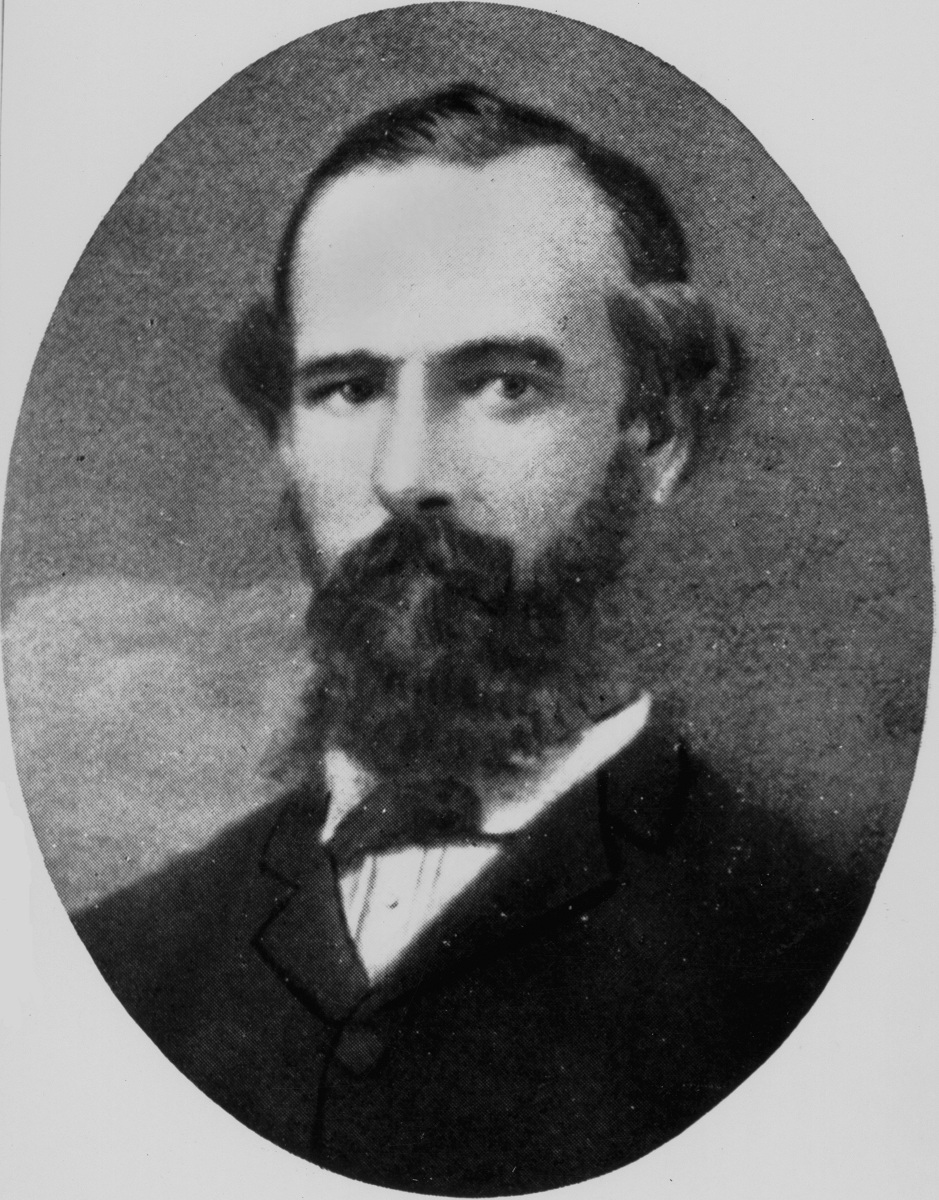
    Elizabeth Woolcock

    by Greg Barron

    The Old Adelaide Gaol stands on the south bank of the River Torrens, massive and silent. The thick stone walls, guard towers and block-like cells leave visitors in no doubt that from 1841 to 1988, this was a prison designed to dehumanise and isolate its inhabitants; those that the justice system had decided, for their crimes, to remove from society.

    It was here, in the year 1873, that Elizabeth Lillian Woolcock was given just twenty-six days to live. Twenty-six days to ponder her sins. Twenty-six days to imagine how the rope would feel around her neck, and to reflect on the life and eventual crime that had made her a household name – the talk of every household in the state.

    Elizabeth was born in Burra, South Australia, in April, 1848, to Cornish parents, John and Elizabeth Oliver. Like many of his countrymen, John had mining in his blood, and the family enjoyed the camaraderie of a strong community, tapping rich copper reefs in the dry hills around the town.

    Like many others, the Olivers lived in a home burrowed into the banks of Kooringa Creek. In June 1851, a major flood swept down the waterway, sending a churning wave of destructive water through these underground abodes. At least one man was drowned trying to retrieve his belongings, and it’s likely that the Oliver family lost everything they owned. These were tough times, and neither of Elizabeth’s younger siblings, John and Catherine, survived early childhood.

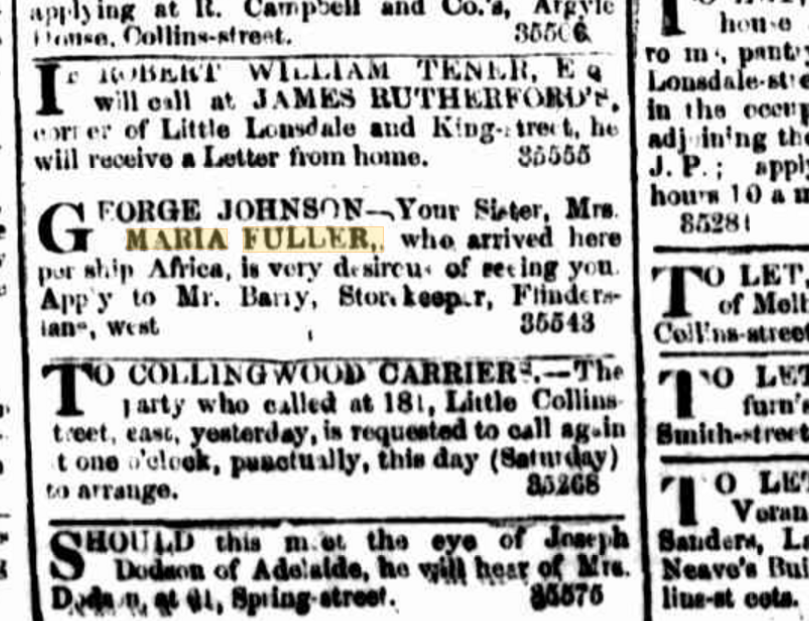
    When Elizabeth was five years old, her mother left home. John, living at least temporarily at Tynte Street, North Adelaide, placed the following advertisement in the South Australian Register: This is to certify that my wife, Elizabeth Oliver, has left her home without any just cause or provocation. I will not be accountable for any debts she may incur or contract after this date.

    Unable to stay away from the mining way of life for long, John followed thousands of other gold seekers across the border to Ballarat, hunting the yellow metal while trying to care for his little girl. He staked a claim at Creswick Creek, and Elizabeth was often left in the tent alone when he went out to work, though she was likely to have attended the local school after it opened in 1854.

    It was a difficult time. Elizabeth was still a child when the Eureka Rebellion swept through the area. John Oliver played at least a minor role. It seems likely that his daughter was a witness to at least some of the violence that erupted between the diggers and police.

    When Elizabeth was seven, she was alone in the tent when an itinerant by the name of George Shawshaw came to the flap and asked for a smoke. Elizabeth gave him her father’s pipe, and when he had finished smoking he seized her by the throat, half suffocating her. He then raped her, a crime so vicious that the judge called it “one of the most atrocious cases” he had ever presided over.  Shawshaw was sentenced to death by hanging, though this was commuted to a long jail term.  

    Elizabeth’s injuries were so severe they left her unable to bear children. A local doctor gave her opium for the pain, the beginning of a lifelong addiction, and more changes were on the way. While still a girl she was engaged as a servant to a Mr Lees, a Creswick chemist. Through her early teens Elizabeth had a steady supply of the drug she craved. At fifteen she left her employment and moved to Ballarat, living in a boarding house that may have doubled as a brothel. She was using opium and supplying it to prostitutes, a trade in which she may have been employed herself.

    Elizabeth’s mother, during this period, had remarried. A few years later, despite facing bankruptcy in 1862, the elder Elizabeth started looking for the daughter she had abandoned so many years earlier.

    After receiving a message from a travelling minister, in 1864 Elizabeth moved in with her mother and stepfather at another Cornish mining stronghold in South Australia, Moonta. At this point, for a while at least, the young woman had something of a normal life. Her mother and stepfather were active in the Wesleyan Church, and Elizabeth became a Sunday school teacher. She also took up employment as a servant to a local widower, Thomas Woolcock.

    When Elizabeth’s stepfather heard rumours that Woolcock was enjoying sexual favours from her, he threatened to break her legs. Undeterred by the threat, she married her employer, despite warnings from her stepfather that he was a bad type of man. During this time her drug addiction continued, using morphine obtained legally from local chemists.

    Woolcock, however, was strict, violent and unpredictable. He found fault with her housekeeping, and accused her of having an affair with a boarder called Tom Pascoe. Then, when his dog died suddenly, he suspected that Pascoe might have poisoned the animal. The canine’s rotting body was later exhumed and tested, with high levels of mercury found in its internal organs.

    Pascoe was certainly Elizabeth’s co-conspirator in obtaining opium, along with a powder that was most likely precipitate of mercury. He sometimes acted as her representative, using handwritten notes in false names. Her stepson, Thomas John, was also enlisted for this purpose.

    As Elizabeth later wrote: “I was not married long, before I found out what sort of man I had got, and that my poor stepfather had advised me for my good. But was too late then so I had to make the best of it. I tried to do my duty to him and the children but the more I tried the worse he was. He was fond of drink but he did not like to part with his money for anything else and God only knows how he ill-treated me. I put up with it for three years, during that time my parents went to Melbourne and then he was worse than ever.”

    Periodic attempts to leave home and run for Adelaide did not help, for Woolcock tracked her down and dragged her back. Addicted to opium, and trapped in an abusive marriage, Elizabeth tried to hang herself. The plan would have succeeded but for the weakness of the beam she tied her rope to – it broke when she kicked away her chair.

    When Woolcock fell ill, Elizabeth consulted a series of doctors, giving at least the appearance of trying to save her husband. Nothing seemed to work.  Thomas slid towards death, and on the 4th of September 1873 the undertaker called to collect his body.

    The local rumour mill went into overdrive. After all, Elizabeth’s desperate need for opiates was well known, and rumours of an affair with Tom Pascoe had kept tongues wagging for months. An inquest was convened and the finger was pointed at Elizabeth. She was charged with murdering her husband by mixing toxic mercury powder into his food, and sent to trial.

    The jury had no trouble finding her guilty, and she was sentenced to be hung by the neck until she was dead. It is ironic that Elizabeth’s rapist was granted clemency, and spared the rope, but she herself was not, despite a recommendation for leniency from the jury. 

    Most death sentences were carried out after twenty-one days, but Elizabeth had twenty-six because they did not want to hang her on Christmas Day. On December the 30th, Elizabeth was led from her cell in the company of her last confidant, Reverend Bickford. The hangman placed a noose around her neck, allowing the regulation amount of slack, then finally released the trigger that caused the trap door to fall away. After hanging for the prescribed period of one hour, she was pronounced as deceased, then buried between the inner and outer gaol walls.

    Over the years, some researchers and historians have argued that Elizabeth was convicted on the flimsiest of evidence. A petition was circulated to have her conviction posthumously quashed. The suggestion received short thrift from the attorney general, but some doubt does remain.

    The physical evidence that Thomas Woolcock (and his dog) died from mercury poisoning was not conclusive by modern standards. The cause of death was initially given as “pure exhaustion from excessive and prolonged vomiting and purging.” Mercury was found, however, in dangerous levels in his organs, particularly his stomach, much more than could be attributed to the small amount in some of the medicines he was prescribed.

    A letter from Elizabeth, addressed to Reverend Bickford, was handed to the Adelaide Observer after the hanging. The newspaper published it in full, with this damning confession only adding to the public’s interest in the case: “I was so ill-treated that I was quite out of my mind and in an evil hour I yielded to the temptation. He was taken ill at the mine and came home and quarrelled with me and Satan tempted me and I gave him what I ought not.” Believers in her innocence assert that she only made the confession to impress her penitence on Reverend Bickford, who had been the minister at Moonta and whom she admired.

    Whatever happened, Elizabeth was a tragic figure: the victim of careless parenthood, a savage crime and a violent marriage. Years of substance abuse may have been her way of coping with the demons of the past. She remains the only woman to be executed by the South Australian government, and a figure of mystery, sadness, and intrigue.

    This story is available in the book, Galloping Jones and other true Stories from Australia’s History by Greg Barron. Get it at ozbookstore.com

  • The Tragedy of Joe Flick

    The Tragedy of Joe Flick

    by Greg Barron

    When Joe Flick barricaded himself in a galvanised iron hut at Lawn Hill Station in 1889, then shot a police constable in the heart, killing him instantly, he was touted in the newspapers of the day as murderous. But what was the history behind those three terrible days when Joe killed two men, and wounded another?

    Joe was born in around 1867, in New South Wales. His father was a German-born stockman called Henry Flick, and his mother a traditional Kamilaroi woman. It’s likely that she was abducted by force, and she soon bore him a son, Joe. For part of Joe’s childhood he was looked after by police families while Henry was in prison for the violent kidnap of another Indigenous woman.

    Working as a stockman, drifting northwards through Queensland, Henry ended up on Lawn Hill Station, at first as a stockman, then as a miner in Frank Hann’s fledgling silver mining enterprise. Young Joe grew up on horseback, learning his formidable bush skills along the Gregory River, and Lawn Hill Creek.

    As a young man Joe had the reputation for being quietly spoken, avoiding alcohol and tobacco. He was also regarded as a superb horseman. In early 1888 he had a bitter dispute with the owner of the nearby Brook Hotel, Jim Cashman. Most reports suggest that the problem occurred over Joe’s interest in a housemaid at the hotel. Other contemporaries relate that Joe’s mother, or at least his father’s current woman, was assaulted by a male employee of the hotel and Joe confronted the owner.

    Whatever the reason, Joe drew his revolver and fired a shot at Cashman, narrowly missing the hotelier’s wife, a former house maid herself. This wild act set Joe on a collision course with police, and he was soon convinced to give himself up. After his arrest, Joe was chained and taken to Normanton lock up, though he soon escaped. With the police in close pursuit he ran for the Territory border. There, in the upper Nicholson, he was speared in the leg by Waanyi tribesmen, who were fighting a frontier war against the pastoralists and drovers. Joe, being on horseback and dressed as a white man, was a target.

    After a few weeks of recuperation, healing at a cattle camp on Cresswell Creek, Joe rode to Hodgson Downs Station, on a tributary of the Roper. There he became one of the best stockman that the manager, Lindsay Crawford, had seen, and he might have stayed there indefinitely as a peaceable, hard-working ringer.

    The Roper Police, however, were tipped off that Flick was nearby. Troopers Stott and Haedge arrested Joe, and prepared to ride with him for Palmerston, as Darwin was called in those days.

    Travelling along the Roper, they camped near McMinn’s Bluff, and there Joe made a run for the bush. Chained as he was, including a neck-ring fasted with a Yale lock, his progress was slow. Stott and his trackers came up to Joe in thick scrub that evening.  A warning shot rang out, then another aimed at Joe. He fell to the ground, wounded in the back.

    What followed is a sad indictment of the justice system of the day. Only half healed, Joe rotted in Fannie Bay Gaol, while Palmerston’s Chief Justice Pater all but begged the Queensland Police to come and get their prisoner. Sixteen times over four months, Joe was forced to front court, only to be remanded in custody again.

    When a Queensland policeman, Harry Hasenkamp by name, finally arrived, he failed to bring the correct extradition warrant, and the exasperated Pater released Joe. He was, unfortunately immediately rearrested, and charged with a different offence, one that was covered by the warrant. Joe was taken by steamer to Normanton, via Thursday Island.

    Back in the Normanton lockup, it seems incredible that Joe could have escaped again, yet he used a small saw, smuggled in by sympathisers, to remove sections of the floorboards. Despite his cell-mate turning informer, Joe was soon on the run again. After a few weeks in the upper Gregory, he arrived at Turn-off Lagoon, where pub owner Mary Theresa Anderson reported his presence after her gardener spotted Joe “lurking” around the house.

    Locating the police horse paddock, Joe took the ones he wanted, then mustered the others onto the road, drove them two miles out of town and shot them. It was at this point that the Queensland police realised that they had a dangerous man on the loose. The idea that they had created this escalation, partly through their own actions, must not have occurred to them.

    Senior Constable Alfred Wavell, originally from the Isle of Wight, took up the challenge of bringing Joe in. Alfred made his last Will and Testament, collected his tracker, Garrie, and set off in pursuit. At Bannockburn he found a wide-awake resident who complained of Joe riding up in the middle of the night and throwing rocks at his roof.

    Soon after Alfred met up with a comrade, Constable Gunn, who gave him a second tracker, Trooper Noble.

    On Joe’s trail, in the headwaters of Widdallion Creek on Lawn Hill country, they came upon the fugitive, who abandoned his packhorse and made a run for it. The police gave chase, but lost Joe in the wild country to the south.

    The next morning, while Wavell and his men breakfasted in the dining hall at Lawn Hill Creek, Joe was seen trying to catch a new mount in the house paddock there. The police galloped down to confront him, firing wildly, managing a lucky shot that took Joe’s horse out from under him.

    Running to the station itself, Joe holed up in the old dining room, now quarters for the head stockman, where he found a “choke bore shotgun” and a revolver along with hundreds of cartridges. He opened the shutter and prepared to defend himself.

    Constable Alfred Wavell made the mistake of trying to parley with Joe, and received a fatal wound in the chest when he stepped from the cover of the station store. Frank Hann, the station owner, tried the same tactic and was badly, though not mortally wounded.

    A build-up season storm set in, during which the two leaderless troopers, and a neighbour, Fred Doyle, desperately tried to hold Joe in the room until reinforcements arrived. In the meantime they fired repeatedly into the hut, and Joe was struck in the ankle and stomach. 

    Despite these wounds, he slipped out that night, down the steep escarpment that led to the creek. There he took up position between two huge paperbark trees, where he waited for the police party to come after him. He watched, the next morning, as they followed his blood trail down the cliff. Their numbers had swelled with a couple of stockmen, Harry Shadforth and Dan Carlyon, who had arrived to help. Frank Hann had also shown his legendary toughness by rising from his bed to exact revenge.

    Joe’s first shot from cover killed Nym, one of Frank Hann’s Waanyi servants. The rest of the party took cover. A long stalemate ensued. Through the afternoon they fired hundreds of rounds into Joe’s hiding place, and even set fire to the grass in an attempt to burn him out.

    That night, Joe Flick, struck by at least nine bullets, passed away. He was buried upside down, facing hell, in an unmarked grave next to the white man he had killed, Alfred Wavell. Nym was buried some eighty metres away.

    Outlaw: The Story of Joe Flick, by Greg Barron, is a novelised version of the story. It’s available at storiesofoz.com

  • The Great Murray River Paddle Steamer Race

    The Great Murray River Paddle Steamer Race

    by Greg Barron

    In 1851, twenty years after explorer Charles Sturt’s journey from the Murray River’s headwaters to the mouth, it was obvious that the waterway had potential as a transport artery. Railway technology was still in its infancy, but marine steam engines were opening rivers up to shipping and trade across the world, including the Mississippi and the Rhine.

    The wool industry in Victoria, New South Wales and Queensland was developing at a frantic pace, and land transport options simply could not keep up. Piled bales of the world’s best wool often took three months to cart from remote stations to the city by bullock dray, but could, thundered champions of the river, be moved by water in mere weeks. In addition, the newly-discovered goldfields required vast quantities of supplies, much of which could be transported by river.

    South Australia, keen to gather revenue from both quarters, decided to kick-start the river trade. The legislature of that state offered a reward of four thousand pounds to the owners of the “first and second iron steamers, of not less than forty horsepower, and not exceeding two feet of draught, that shall navigate from the Goolwa, at least as far as the junction of the Darling, a distance of some 490 miles.”

    Scotsman Captain Francis Cadell, always looking for opportunities to heighten his fame and improve his finances, heard the call. An experienced mariner, having started as a midshipman at the age of fourteen, he was in South Australia as captain and owner of the clipper, Queen of Sheba. He was intimate with the governor, and he dined at the finest tables in Adelaide.

    The other main player in this drama was not as well-connected but just as interesting. William Randell, at just twenty-nine years of age, was already deeply committed to building a paddle steamer for river trade. His family owned a flour mill at Gumeracha in the Adelaide Hills, and farmland at Noa No near Mannum. He dreamed of trading up the river in his own vessel.

    Thus, partly by chance, and partly by design, in August 1853 two paddle steamers became rivals for the title of the first steam-powered vessel to navigate the Murray to Swan Hill.

    William Randell’s Mary Ann was home-made from pit-sawn river red gum logs in the Kenton Valley, Adelaide Hills, and assembled on the banks of the river at Noa No. The work was done by two bush carpenters and three brothers who had never seen such a vessel in their lives. The Mary Ann’s seven-horsepower engine was made by a local engineer, and her boiler by a blacksmith employed at the family flour mill. When the newly completed vessel set out to conquer the river she was a rough but elegant little vessel, fifty-five feet long with a “wine-glass” stern.

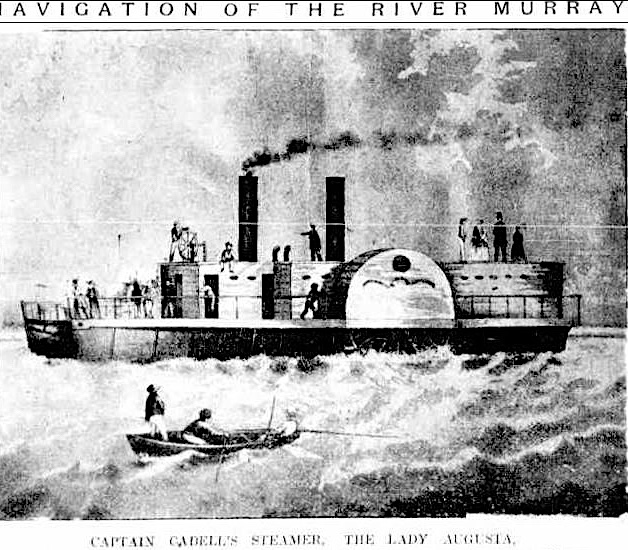
    Captain Cadell’s Lady Augusta, on the other hand, was constructed by Thomas Chowne, one of Sydney’s best shipwrights, in a Darling Harbour yard. At just under one-hundred feet she was almost twice the length of the Mary Ann with many times the tonnage. She had twin twenty-horsepower steam engines, and had been built with no expense spared.

    Given that the Mary Ann didn’t meet the criteria set down by the South Australian government there is no certainty that William Randell cared much about the cash prize offered by the South Australian government. Yet, he most certainly knew about the plans being laid by the much-lauded Captain Cadell and his Lady Augusta.

    Captain Randell’s first trip up the Murray was thwarted by an understrength boiler and the terrible drought of the early 1850s. When the river finally rose enough for him to set off on the journey north, Captain Cadell in his much bigger boat had already rounded the New South Wales and Victorian coasts, and was braving one of the world’s most dangerous river bars, just a hundred miles behind.

    Even so, with bullock chains wrapped around her boiler to keep it together, the little Mary Ann was the first to reach the Darling River. It was after that point that the real race was to begin. One evening William Randell and his crew were asleep, some on board the boat and others on the bank, when a shocking noise broke their sleep, and a bright light headed upriver towards them.

    It was the Lady Augusta with a grinning Captain Cadell at the helm. Her decks were crowded with accommodation for forty – crew, passengers and dignitaries including the Governor of South Australia and his wife. Many of them lined the rail. The barge Eureka was lashed to one side – a vessel almost as big as the paddle steamer that propelled her.

    Somehow, it was proposed, or at least understood, that the two boats should race to Swan Hill. William Randell had not travelled so far to let the arrogant Scotsman beat him. If Cadell could travel by night so could he, and it was dawn when he finally passed the Lady Augusta, which he found tied up to a snag.

    The lead changed multiple times over the next few hours, and in the heat of the chase the Lady Augusta took a wrong turn up the Wakool River and the Mary Ann followed. In the battle to return to the main channel both vessels sustained damage from overhanging branches. All night and into the following day they raced, but in the end it was a decision by Captain Cadell to leave the bulky barge Eureka behind with her crew, and race on without it that spelled the difference.

    When William Randell finally berthed his Mary Ann on the riverbank at Swan Hill, the Lady Augusta had beaten him by several hours, and the rivalry was shelved for group celebrations, and a morning service the next day.

    Over the following weeks, Captain Cadell cruised upstream as far as the mouth of the Loddon, while Randell and his much smaller vessel continued as far as Moama. Both men were able river navigators, with a deep knowledge of their craft, but William Randell went on the become the true founder of the river trade, a development so important that the Victorian town of Echuca became Australia’s third busiest port.

    Cadell’s river trading company steadily lost money and credibility. He left the country in near disgrace, captained a vessel in the Maori Wars of New Zealand, became a notorious blackbirder and was eventually murdered by one of his own crew members off Banda Island.

    Both men are remembered with the names of towns, suburbs, and roads. A replica of the Mary Ann is situated inside the museum at Mannum, South Australia, where William Randell and his wife Elizabeth had a residence. Randell went on to become a member of parliament, and a living reminder of the days when the river became the lifeblood and economic salvation of south-eastern Australia.

    Beyond the Big Bend by Greg Barron is a new novel that tells the historic story of Randell and Cadell and their famous voyage up the Murray River. It’s available at ozbookstore.com

  • Nicole Alexander

    Nicole Alexander

    We asked Australian author Nicole Alexander to tell us about her life and how she started writing:

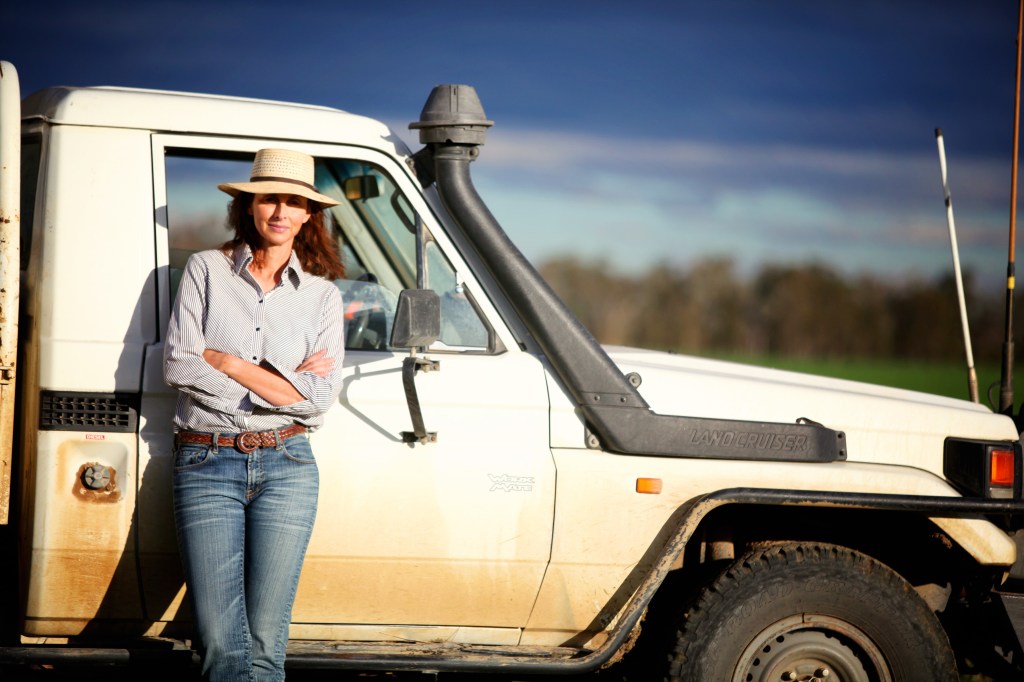
    When my great-grandfather first selected our property in 1893 he chose a site for the homestead near the banks of the Whalan Creek, a major waterway in our area, days later local Aboriginals approached him and told him that the area was subject to heavy flooding and so on their advices he selected a new site some miles to the north on a high ridge. Just as well he did. Over the last 121 years we’ve experienced our fair share of droughts and floods but during the great flood of ’76 although the water lapped the homestead floorboards for six weeks and the flood boat was tied up at the back gate, the water never entered the house. Although we did have a lot of other visitors, snakes, spiders, centipedes … 

    Our property is located 110 kilometres north-west of Moree, near the village of Boomi, population 75. It’s a great place to live and work if you don’t mind putting up with the vagaries of the weather. Running an agricultural business in times of, ‘drought and flooding rains’ is not for the faint-hearted. Life here often reminds me of a line from the classic western, Red River. ‘I don’t like it real good and I don’t like it real bad. I just like it somewhere in-between’.

    My commute to work involves a forty-five kilometre round trip along a dirt road to the main property, Murki Station where my parents live. With spring already sprung and hoped for rains yet to eventuate the road is pretty busy with kangaroos, foxes and wild pigs all out and about looking for feed, and it can become something of an obstacle course as I get closer to the main homestead with cattle and sheep also vying for road space. A typical work day for me starts at 7.30 am and could involve anything from mustering sheep and cattle, working in the stockyards, doing bookwork in the station office or checking cultivations with our agronomist. Murki is a mixed-agricultural property and we produce Hereford Beef, Merino wool, white Suffolk fat lambs, and our dry land crop programme includes: wheat, barley, oats, sorghum, faba beans and chickpeas.

    I grew up on Murki and my early education included lessons through the mail via the Correspondence School in Sydney. My mother taught myself and my siblings around the dining room table as by that stage the old school-house on the property, which still stands had been converted into extra accommodation for jackeroos. Previously the schoolhouse was used up until the mid-1940s when my father and his sisters were educated there by a series of governesses. I say series as there were 15 of them and apparently only one left due to the isolation. What a worry.

    I haven’t always lived in rural Australia. I spent time in the corporate world in both Sydney and Singapore before deciding to return in the early 1990s, for twelve months. I have to say that the longer I stayed on the property the more I appreciated working in the family business and I certainly didn’t miss the politics that can go with being involved with a large corporate. When I first returned to the bush, agriculture was still very much a male-dominated industry however I was fortunate as I was working with and for my father with a team of men, some of whom had been with us on and off for 40 years. We’re no different from any other industry. Granted our office ceiling is the sky but as with any job, timely management decisions, ability and perseverance delivers in the end.

    We’re nine hour’s drive from Sydney, 6 hours from Brisbane and a good six hours from the coast, but despite the isolation, it’s a bush life for me.

    Nicole Alexander is the author of five novels, including The Great Plains which is out now. Discover more about Nicole at www.nicolealexander.com.au or join her on facebook https://www.facebook.com/AuthorNicoleAlexander

  • Wilder than the Wild West – Gold Rush on the Palmer River

    Wilder than the Wild West – Gold Rush on the Palmer River

    By Greg Barron

    If you wanted to cook up an adventure story, start with a Queensland river blessed with rich alluvial gold. Throw in a bunch of self-reliant prospectors, an uncontrolled stream of Chinese diggers, Martini-Henry rifles, spirited horses, and a tough indigenous nation that resented and fought the intrusion. Throw it all in a pressure-cooker of Cape York heat, and you’ve got the Palmer River Gold Rush.

    In 1872, two brothers from Victoria, William and Frank Hann, along with a botanist, a geologist and others travelled north on a Queensland Government sponsored expedition to investigate the country “North to the 14th Parallel”. Rugged country even now, in those days Cape York was an area even the toughest settlers and adventurers avoided.

    Hann located a river beginning in the hills west of Port Douglas, flowing westwards for six-hundred-kilometres before it emptied into the Mitchell River, ultimately reaching the Gulf of Carpentaria. He named this waterway the Palmer River after the Chief Secretary of Queensland, Arthur Palmer. Hann and his comrades were the first to pan gold from the river in 1872. The amounts were not significant, but enough to excite some interest back in civilization.

    The lure of a brand-new find attracted James Mulligan, a tough Irishman scraping a living on the Etheridge fields, but dreaming of better things. Staking everything on the venture, he outfitted an expedition with five solid mates and rode north into the wilderness.

    They returned to Georgetown, on the Etheridge fields, after weeks of panning the Palmer River gravels. It was September 1873, when the Mine Warden posted a notice on the walls of his hut: “JV Mulligan reports the discovery of payable gold on the Palmer River. Those interested may inspect at this office the 102 ounces he has brought back.”

    Within a few days, just about every miner in the worked-out Etheridge field had started on the five-hundred-kilometre trek north. Prospectors knew that getting in early on a rush was the key. Some rode horses or perched on a wagon box. Others walked. Many pushed barrows loaded with all their tools and possessions.

    Word went out by ship, telegram, word-of-mouth and mail. News reached Brisbane, Sydney, Melbourne, then Shanghai and San Francisco. The rush was on.

    With the wet season not far away, authorities warned of fever, flooded rivers and trouble. Even Mulligan himself wrote to the Queenslander newspaper: “I do wish to stop this before it grows any more. Already exaggerated accounts and too much excitement exist here. If people rush the place without rations they must perish.”

    Yet nothing dimmed the excitement, and when the Government opened a landing on the Endeavour River the gold-seekers poured in by boat as well.

    From beginning to end, the Palmer River yielded a fantastic amount of gold. One hundred tons was the official count, but much more was taken away by the Chinese (gold prices were better in China) or carried home by diggers. It was a genuine El Dorado, but harsh beyond belief, and wild by any standards.

    The local Merkin people were not nomadic by nature, rather in villages of bark-lined huts on the ridges near good hunting and fishing grounds. They went from living in a relatively unspoiled domain, to a hell-hole of shafts, camps, mullock heaps and fires. Trees fell to the axe, waterholes were muddied, and white men and their guns were everywhere. Some shot blacks on sight, and the strong, able spearmen retaliated.

    A letter dated October 5, 1873 from an early arrival stated: “At present the blacks are very bad. It is war to the knife between the whites and them.”

    Unsuccessful diggers, handy with their weapons, hired themselves out as bodyguards, standing sentry with their Martini-Henry or Snider rifles, watching for Merkin raiders. Two such characters were “Sam the Tracker” and Jack Martin, better known as “The Orphan.” Bored of earning a pittance standing guard for a party of Chinese diggers, the pair instead murdered and robbed the Chinese gold courier headed for Cooktown on his weekly run. With the law on their trail, the pair doubled back and stole seven of the pursuing police horses.

    “The Orphan” was later noted for causing trouble, including cattle stealing, in the Gulf, but was never arrested for the Palmer River crimes. In Borroloola, during a drunken fight, he accidentally shot off his own thumb and forefinger.

    The town of Palmerville slowly took shape with two stores. Stock was at a premium in the early days, however, and commodities like flour and beef sold out almost as soon as it arrived. The first pubs were basic affairs, little more than bark sheds, filled to capacity with brawling miners and echoing with arguments over territory, for there was no mine warden in the early days. The miners were prospecting for themselves in a free-for-all, centred mainly on the river itself. Gold lying in shallow depressions in the rapids could often be collected by hand. Exclusive territory came only through the use of fists, knives, and revolvers.

    As the mining frenzy moved upstream, a new administrative and service centre was formed. This prosperous little settlement was called Maytown. The numbers of Chinese on the fields also exploded. In 1877 the population of the more important settlements was reported by Warden Selheim as follows:

    Maytown, 900 Europeans and 800 Chinese.

    Palmerville, 12 Europeans and 600 Chinese.

    Jessop’s, 6 Europeans and 1000 Chinese.

    Stony Creek, 16 Europeans and 1200 Chinese.

    Byerstown, 16 Europeans and 800 Chinese.

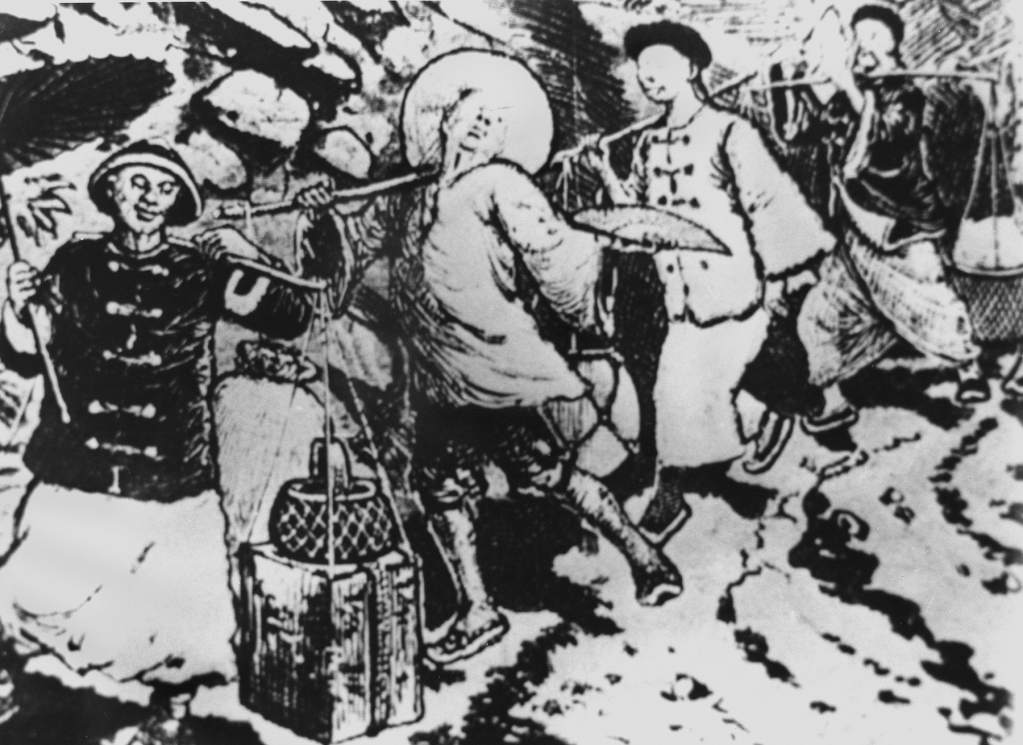
    The large numbers of Chinese compared to Europeans was a feature of the fields. They kept to themselves, to a large degree, often re-working areas that the whites had already picked over. They built their own little Chinatowns, with joss houses and opium dens in narrow alleys amid mullock heaps.

    The Chinese presence on the fields was not all incense and opium, however. At one stage, the Pekinese and Cantonese elements turned on each other in a frenzied battle that lasted for several days. It culminated in the building of a fort by miners from Macao, who moved in on disputed ground while the others were busy fighting.

    With the fort under siege by up to 2000 Chinese miners, hundreds were wounded or killed, and only a determined troop of police stopped the fighting. Thirty ringleaders were arrested and charged, while the fight, known as the Battle of Lukinville, was largely ignored by the Australian public and later historians.

    Despite the relatively small number of white miners remaining on the fields as the rush went on, the area continued to produce brash, larger than life characters.

    The Palmer River was the birthplace of “Australia’s Annie Oakley,” Claudie Lakeland. Claudie’s father Billy was a goldfields character famous for battling both black and white, and prospecting deep into the wilds of Cape York where few other gold-seekers dared to go. Claudie grew up on horseback, and with a gun in her hand.

    Her fame as a dead-shot grew, and as a young teen she was challenged to, and won, a shooting contest against the policeman from Coen, Roly Garraway. One of her tricks was shooting, with a rifle, pennies thrown into the air.

    The notorious “Maori” Jack Reid and his wife Henrietta operated a store on the fields. Reid had crewed on a notorious blackbirder, the brigantine Carl in the South Pacific waters. This murderous career culminated with the slaughter of sixty captives when the crew saw a British destroyer approaching. The Carl’s officers, first mate and some other seamen were charged, though all had their death sentences commuted to life imprisonment. “Maori” Reid escaped these unpleasant consequences and enjoyed life in the wilder parts of Australia for many years, before dying alone in a hut near Pine Creek, NT, in the 1930s.

    While reflecting on the adventurous characters who answered the call of gold, the saddest aspect of this gold rush was how it tore both a river system and the Merkin people apart. For the survivors and the landscape itself, nothing would ever be the same.

    Gold was a terrible lure, and in reality, only a few diggers got rich in a life-changing way. For many, prospecting became a way of life, listening for the next whispered talk of a “find” in some distant and remote location; time to pack the saddle bags and head off, always in the hope of that elusive fortune.

    The novel Wild Dog River by Greg Barron is set in and around the Palmer River Goldfields. Learn more at ozbookstore.com

  • The Ragged Thirteen

    The Ragged Thirteen

    “Tea and Sugar” Bushrangers

    by Greg Barron

    Part legend, part fact, their adventures embellished and exaggerated around a thousand campfires, the story of the Ragged Thirteen has been beloved of bush story tellers for a hundred and thirty years.

    The Ragged Thirteen were brilliant horsemen, fugitives, consummate bushmen, lovers of bush poetry and champions of the underdog. They embodied the new Australian nationalism of the latter part of the nineteenth century, with all its colour, larrikinism, love of the bush and suspicion of authority.

    The story begins when a party of men travelling to the Hall’s Creek goldfields via Queensland, led by Tom Nugent, joined up with another group heading for the same destination from South Australia and the Centre. The second group were led by a giant of a man, Alexander McDonald, better known as Sandy Myrtle. The two groups met up at Abraham’s Billabong, on the Roper, just upstream from Mataranka’s Bitter Springs, and the rum was soon flowing.

    Tom Nugent took over as “captain” of the gang, now thirteen in number, and promised his new mates some serious mischief. From the Hunter Valley originally, Tom had moved to Queensland, working his way up to head stockman at Carandotta Station on the Georgina River. Later, cattle magnate John Costello hired Tom to manage Lake Nash Station on the Territory/Queensland border, but Tom always had a wild streak, and enjoyed life “on the cross” more than working for a salary. He was, incidentally, good mates with Harry Readford, Australia’s most famous cattle duffer.

    There are a few different perspectives on how the name “Ragged Thirteen” came about. One story is that famous drover Nat Buchanan had seen the South Australian contingent camped at Johnston’s Waterhole, further south, and called them a ragged bunch. Another contemporary credits a boundary rider named Steve Lacey with tagging them as “The Thirteen.” Either way, the Ragged Thirteen they became, and they would soon be the most talked-about characters in the North.

    Few accounts of their exploits agree on the names of those who made up the gang, but the most credible record, written by stockman Billy Linklater, records the names as Tom Nugent, Sandy Myrtle, Larrikin Bill Smith, Jim Fitzgerald, Bob Anderson, Hugh Campbell, Tommy the Rag, “Wonoka” Jack and George Brown, “New England” Jack Woods, Jim Carmody, Jack Dalley and Jimmy Woodford.

    All were fine bushmen, with a passion for the outback. They looked down on members of the establishment, and most had Indigenous partners who rode with them on the journey west. A plant of at least forty good horses followed in their wake, controlled by young stock boys. The Ragged Thirteen loved good horses above all else.

    The gang kicked off their exploits by walking from their campsite on the waterhole to the Abraham’s Billabong store. Taking advantage of a “new chum” storekeeper, they proceeded to ring up a fortune in worthless cheques, then made off with most of a beef carcass that was hanging on a gallows nearby.

    When one of the store owners, renowned pugilist Matt Kirwan, arrived, he challenged the Thirteen to produce their best man to fight him. Hughie Campbell, a Scots seaman who had jumped ship in Port Augusta, volunteered, not only winning the fight, but breaking Kirwan’s arm in the process. One observer claimed, however, that Kirwan was only just getting over a bout of malaria. “Had he been in trim he would have whipped any one man in the bunch.”

    Customs officer and policeman, Alfred Searcy relates in his book, By Flood and Field, that he and his partner, O’Donohue, first heard of the gang on the Roper.

    When at the shanty at Abraham’s Billabong, the keeper informed us that word had come from the Bar (Roper) that a gang of cowardly ruffians, known as “The Ragged Thirteen,” were making their way to Kimberley “on the nod,” that is, helping themselves to cattle from the stations, food from travellers and shanties,  and using their revolvers when resisted. He greatly feared a visit, which he subsequently received, the scoundrels leaving him nothing but what he stood up in, and that, in the tropics, is precious little.

    Searcy claims that he and his partner apprehended the gang, surprising them by offering tobacco, and then drawing their revolvers. The innovative lawmen apparently then cut their prisoners’ braces so they were forced to hold up their trousers, making it hard for them to cause any trouble.

    The timing of this coup, however, doesn’t seem to fit with the facts. At best Searcy and O’Donohue held up only the Queensland crew, on their way west from Roper Bar. Either way, the gang members were soon released, for it turned out that there were no formal charges pending, on which they could be held.

    Proceeding on their journey, the Thirteen robbed Jim Cashman’s store in Katherine, then trekked down the Flora and Victoria Rivers to the huge Fisher and Lyon pastoral run, Victoria River Downs. Here, Tom Nugent posed as a land speculator to infiltrate the station, eating a slap-up dinner on the homestead verandah while the rest of the gang made off with several fine horses, and emptied the station store of horseshoes, nails, flour, tea and sugar.

    Despite pursuit from the Territory police, the gang crossed the Negri River, into Western Australia, well provisioned and still ready for fun. They reached Hall’s Creek when the gold rush was past its peak; but the town was still flourishing, with police, post office, numerous stores, hotels and grog shanties. Stories of gold nuggets lying around like chicken’s eggs, were soon proved to be false.

    Taking up a couple of claims, the Ragged Thirteen traded rifles for shovels and cradles. While digging for gold by day, however, the gang kept themselves afloat by duffing cattle from nearby stations at night; butchering them and selling the meat to hungry miners. “New England” Jack Woods was the ringleader in these expeditions, and the nearby Durack cattle stations lost many a bullock to the Ragged Thirteen.

    The gold mining itself, however, was proving to be much tougher than expected. It was certainly not as much fun as roving the country and skylarking. The gang’s days were numbered, in any case. They were wanted in the Territory, and the WA “traps” were also keen to pin horse-stealing charges on Tom. After six months or so of hard work and little return the gang dispersed.

    Bob Anderson took up Tobermorey Station on the Eastern edge of the Territory, where he fathered a brace of children. A fall from a horse cut short his life. Sandy Myrtle returned to Central Australia where he set up a pub at the new Arltunga Goldfields. He reputedly grew so fat that he had to be lifted on and off his wagon by four strong assistants. Jimmy Woodford made a living finding and selling meteorites. George and Jack Brown worked as saw-millers before returning south. Hugh Campbell worked as a camp cook for a while, but grew ill and went home to Scotland to die. Jack Woods followed the goldfields, butchering other people’s livestock wherever he went, and drinking the proceeds. The others spread out all over the north, including poor Jim Carmody, who drowned in the Katherine River while fishing.

    Tom Nugent made a new home for himself on Banka Banka Station, near Tennant Creek, running the property successfully for many years, with a Garrwa (Borroloola) woman called Alice who became his life partner. He died in 1911, from dropsy, and his grave is still visible near the Telegraph Station today.

    Greg Barron’s book, Red Jack and the Ragged Thirteen, is available at ozbookstore.com

  • Nat Buchanan – The Greatest Drover

    Nat Buchanan – The Greatest Drover

    by Greg Barron

    When Irishman, Lieutenant Charles Henry Buchanan and his wife, Annie, emigrated to Australia and took up a New England station called Rimbanda, they had no idea that their son Nathaniel would one day become known as the greatest drover the world had ever seen.

    Nat ‘Bluey’ Buchanan grew from a cheerful and adventurous lad into a competent man, with an even temper, incredible organisational skills and an unerring sense of direction. He was a bushman par excellence with a passion for new horizons. He single-handedly opened up more country than some of our most famous explorers.

    In 1861, for example, Nat Buchanan and his business partner Edward Cornish were out exploring in Western Queensland. Having taken up land to create Bowen Downs Station, they decided to poke around much further to the west. Penetrating all the way to the Diamantina River they discovered the tracks of a camel train. The tracks were, it turned out, made by one of the most expensive expeditions in the history of white exploration: Burke and Wills on their way from the Cooper Creek Depot to the Gulf of Carpentaria. That Buchanan and Cornish came upon those famous men and their entourage, while ‘poking around’ out west, with just one tracker and some packhorses, is a good illustration of the difference between independent bushmen and government sponsored explorers.

    A few years earlier, Nat’s working life started out with the taking up of a station north of Guyra called Bald Blair, in partnership with his brothers Andrew and Frank. The trio also embarked on an unsuccessful trip to the Californian goldfields. When they returned, Bald Blair was laden with debt and had to be sold.

    Nat polished up his droving skills, taking herds of sheep or cattle to the goldfields and interstate, following this profession for at least a decade before heading for Queensland and the vast frontier. His first real foray into Western Queensland was from Rockhampton with William Landsborough in 1860. Within a year they had formed Bowen Downs station on the Thomson River, and Nat was installed as manager.

    Nat met the attractive brunette Catherine Gordon when by chance he rode into her family’s campsite, on the Burnett River near Rockhampton. According to Bobbie Buchanan, Nat’s grand-daughter, Kate was ‘a natural horsewoman, and an accomplished rider.’ She was also a stunning young woman, and Nat was captivated.

    The young couple were married soon after, and Nat took his bride out to Bowen Downs in a buggy.

    Married or not, Buchanan had no intention of living a settled life. After checking out much of Western Queensland he started exploring the Gulf country around Burketown, looking for suitable pastoral land for his business partners.

    The strain of constant travel did tell on him, and Kate was by then pleading for some normality. In 1870 Nat and his brother Andrew took up a selection of land on Deep Creek, near Valla, NSW. This was still wild country then, frequented by cedar-getters and fugitives. The brothers and their families built bark and slab houses on the river bank, where they raised goats and chickens, planted a few acres of corn and cleared land for cattle. The plentiful fish in the creek varied the diet nicely.

    Essential supplies were purchased via a fifty-mile ride to Kempsey, and mail was delivered into a letterbox nailed to a tree on Valla Beach, accessible by a long row downstream. Kate must have hoped that her man had grown roots, but Nat’s adventurous years were barely getting started.

    Pining for open country, and sick of the humidity, Nat moved Kate and their sons Gordon and Wattie north again. He managed Craven Station for a while, then took on his first big droving contracts. He was the first European to cross the Barkly Tablelands in 1877, sparking an explosion of land speculation. Most lease contracts, moreover, stipulated that the run had be stocked within two years. The owners were crying out for cattle and men to drove them.

    Now in his fifties, Nat led the largest cattle drive in history – 20 000 head from St George in Queensland to Glencoe in the Northern Territory. He made the record books again a few years later, delivering the first cattle to the East Kimberley. One of his most harrowing achievements was the blazing of the bleak Murranji Track, from near Daly Waters to Victoria River Downs.

    Nat’s descendant and biographer, Bobbie Buchanan, described him as a ‘confident, strong-willed and uniquely self-sufficient man of great integrity.’ His organisational skills were legendary, and his ability to keep tough men on track and working together no less impressive.

    Nat Buchanan’s rules on cattle drives were inviolate:

    1)            Travel at speed. This was a technique he referred to as, ‘giving the cattle the gooseberry,’ or just ‘the old gooseberry.’

    2)            No alcohol in camp. In 1883 when he took over a drive to the Kimberley for W.H. Osmand and JA Panton, his first act was to tip out the demijohns of rum he found hidden in the drays. He was a teetotaller himself, and knew well the effect of grog in cattle camps.

    3)            Never let ‘first-contact’ Indigenous people into a camp, male or female.

    4)            No man should be left in camp alone.

    On a drive through the Gulf in 1878, Nat was forced to head back to Normanton for provisions. He was away for some weeks, and the man he left in charge, Charles Bridson, relaxed these last two rules. Some very insistent local Aborigines who knew a few words of pidgin talked their way into the camp. This error was compounded when Bridson rode off and left another man, Travers, alone in the camp.

    Travers was making damper, dusted to the elbows in flour, when a steel hatchet that had been lying around the camp cleaved deep into the back of his skull. The event set off days of drama and revenge killings. Buchanan, on his return, was understandably incensed.

    Nat’s next plan was to bring his family together on one of the largest cattle runs in history – Wave Hill Station – one of several leases Nat took up in partnership with his brother. Unfortunately the skills that made him a great drover and adventurer did not extend to management. Distance to markets and attacks on stock by the local Gurindji people were the two most important issues.

    Nat, by the way, was known for a generally conciliatory approach to Aboriginal people, and was spoken of fondly by Indigenous workers in oral histories from the region. Cattle, fences and men were not welcomed by traditional owners – the Europeans were invaders after all – and conflict was a fact of the frontier. Buchanan, however, was never party to the ‘shoot on sight’ mentality of some frontiersmen.

    In the 1920s Territory bushman, and chronicler Tom Cole came across an old Jingali man on Wave Hill Station, who the whites called Charcoal. Charcoal had worked on Wave Hill and in droving camps with Nat Buchanan as a boy and young man.

    During an attack by wild blacks on the station, Charcoal used his rifle to shoot one attacker out of a tree. Bluey Buchanan, or Old Paraway, as his men called him, was furious, Charcoal had never seen him so angry. ‘You shot one of the poor bastards dead?’ Bluey roared. ‘Jesus Christ! You shouldn’t have done that!’

    Even at the age of seventy Nat was out exploring again, searching for a stock route from the Barkly Tableland to Western Australia. His health was poor by then, and in 1899 he retired to a small property near Walcha, New South Wales, with his beloved and long-suffering Kate. He died two years later, and his gravestone stands in the Walcha cemetery, along with a plaque commemorating his life. Kate lived on until 1924, at which time she was buried beside her husband.

    The most fitting epitaph for this great man is perhaps the words some of his contemporaries wrote about him. Charlie Gaunt wrote: ‘Buchanan had the gift of bushmanship and location. He was a fine, genial companion to have; you only had to look at Nat Buchanan to see in his physique, actions and general appearance a thorough typical bushman with the face showing dogged determination and strong will power; one who would stand by you until the bells of eternity rang.’

    Stockman Billy Linklater, in his memoir, Gather No Moss, wrote of Nat Buchanan: ‘His willpower was indomitable, yet he was mild-mannered and of a most kindly disposition.’

    Finally, in the words of singer/songwriter Ted Egan.

    Nat Buchanan, old Bluey, old Paraway

    What would you think if you came back today?

    It’s not as romantic as in your time, Old Nat,

    Not many drovers and we’re sad about that.

    Fences and bitumen and road trains galore.

    Oh they move cattle quicker, but one thing is sure

    Road trains go faster, but of drovers we sing

    And everyone knows Nat Buchanan was King.

    Written and researched by Greg Barron

    More books and stories are available direct from the publisher at ozbookstore.com

  • Chapter Four – The Murder of John Weir

    Chapter Four – The Murder of John Weir

    The Tranter percussion revolver was an outdated weapon – a forty-year old design. Thousands had been imported from the United States of America after the Civil War. They were cheap and readily available. Everyone from drovers to brumby runners carried them.

    Obsolescence, though, did not negate the terrible efficacy of the .442 calibre projectile, pushed by twenty grains of premium black powder, that the Tranter guns fired. At close range they were a murderous weapon.

    It seemed to Will that Sullivan’s Tranter revolver became motionless for a moment, as if the assassin was making a final decision. Likewise, the room itself seemed to pause in time. Pipes or cigarettes in mouths, cards in hand, cowards face down on the floorboards while others, like Will, attempted to stop something that now seemed inevitable.

    Sullivan jerked the trigger, and the discharge was sharp and ear-numbing in the contained space. The revolver kicked back, while the lead ball punched through the middle of John Weir’s chest, destroying his lungs and heart. He made the transition from sleep to death throes in a single bloody moment.

    Burned powder smoke filled the room, blurring the drama, and bringing the stink of war and mayhem to that peaceful room. Blood spattered the Irishman’s arms and face, making him appear like a monster from the cover of a lurid gothic novel.

    Will reached him first, smashed the revolver out of his hand, and dragged him back. The killer uttered a shout of triumph. ‘Got him, t’e dog. Just what he deserved. Let t’at be a lesson.’

    Lainey was one of the first to try to help John Weir, but the time for help was past. ‘Oh the poor bugger,’ she was heard to cry.

    Sullivan was still crowing as Will dragged his arms behind his back, then took a grip of his hair with one hand, immobilising him. The poker players and drinkers were on their feet by then, and there was a rapid movement to disarm Sullivan’s two companions, subduing their struggles with brutal force. Kennedy sent Lenny to the adjoining store for rope, and in the continued absence of the law, the three men were bound by wrist and ankles.

    ‘Why are you tying me up?’ snarled the scarred man. ‘That Irish bastard forced me and Eddie to help him – we weren’t but victims of the mongrel too.’

    Sullivan laughed, ‘That’s a lie, but I don’t care one whit, for at least that ape lies dead.’

     Will was among the dozen or so men who half-dragged, half-carried the offenders through the front door and outside into the rain. They fought and strained every step of the way, slick with sweat, mud, and in Sullivan’s case, the blood of the dead man.

    The police lock-up, four lots along, was a makeshift structure, but solid, clad with saw-pit rounds and corrugated iron. The doors were made of the same material, but with a square hole up high in the centre, about the width of a man’s outstretched hand. Someone had run to fetch the Postmaster, who had the keys. When he arrived, Sullivan was shoved into one of the two cells, and his accomplices in the other.

    When the two doors were securely shut, the Irishman started kicking at the walls, swearing and blaspheming, avowing that he had done no wrong, but simply delivered justice to a man who had carried on above his station.

    The scarred man stood close to the door of the other cell, his face in the opening, staring silently out at Will. ‘I do know you,’ he said. ‘I never forget a face.’

    Will, in no mood for conversing with the accessory of a killer, turned and walked towards the other men from the pub, now standing in a group, armed and organising themselves, rostering a guard duty detail over the prisoners. He accepted the quiet thanks of Kellick and some of the others for his assistance. It had been a harrowing experience. Feeling drained, he walked back to where Lainey, Jim, Sam and Little Blue waited on the verandah of the pub.

    ‘Let’s get the horses and find somewhere to camp,’ Will said.

    ‘What about stores?’ asked Lainey.

    ‘Tomorrow will do for that,’ said Will. ‘We’ve got enough tucker left for tonight. I just want to get out of this damned place.’

    ***

    It was still raining as the four riders turned off from the main street onto a well-worn track, Little Blue trotting beside them. The area behind the main street of Camooweal was covered with an assortment of rubbish and cast-off junk – broken wagon springs and wheels, old tubs, rusted roofing sheets and various ironmongery.

    A short ride away, they reached the Georgina River’s wide bed – still no more than a chain of waterholes until the real rains came. They passed by a well-organised market garden, with rows of green, and a couple of coolies in conical hats, standing under the shelter of a rough bough shed, watching protectively as the riders moved past.

    Heading downstream, Will urged his horse onwards, brushing through speargrass and light scrub along the high bank, soon reaching the waterhole that was at times so vast that it was called Lake Francis.  

     They came to a dead river red gum, old and grey with age – with a clearing around it that appeared to have hosted many a camp. There were a few handy saplings that could be used to erect shelter, and a fire-ring of blackened stones.

    ‘How’s this fer a spot?’ Will asked.

    ‘Easy walk to the water and plenny feed,’ said Jim. ‘Good enough.’

    ‘Anything to get out of this blessed rain,’ agreed Lainey.

    Dismounting and settling the horses, they strung a sheet of canvas between saplings and unloaded, stacking saddles and gear underneath. With the horses restrained, they sat miserably under the shelter, their minds busy with the murder they had just witnessed, and its implications.

    Will was thinking about the scarred man. His face was certainly familiar, but where from? For a while the answer hovered on the edge of his mind, and then he remembered.

    ‘Hey. I just recalled where I seen that scarred barsted before,’ he said aloud.

    ‘Lyver Hills,’ said Sam, who had already worked it out.

    ‘Yeah. That’s what I reckon. He worked at the company battery, always scrapping or causing trouble.’ His name was something European, German maybe, and Will searched his mind for it. ‘What the hell was he called again?’

    ‘His name were Kahl,’ said Jim. ‘I remembers him too.’

    ***

    Towards dusk, the rain moved on, and they left the shelter. Jim, who could light a fire underwater, soon had a good blaze going. Then, while Sam made johnny-cakes with the last of their weevilled flour, Will, Jim and Lainey led the horses down the bank, and into the shallows. They baulked a little at the mud, but soon relaxed, while the sun sank low, blazing yellow orange.

    Together, they washed and brushed the horses, taking their time and enjoying the feel of the water, the scents of mud and hard-worked animals in the nostrils and the shared relief at a break from the unrelenting road. They laughed when a freshened mount left the water and rolled on the bank. As they finished each one, Jim hobbled and belled them for the night.

    Later, when they were quiet around the fire, all with their own thoughts, Will got cold and fetched his coat from his bag.  This was his most valuable item of clothing – a dark serge jacket – won in a game of cards from a Royal Navy officer on shore leave, from a ship-of-the-line anchored off Garden Island, Sydney, a few years earlier.

    Lainey looked morose. ‘I’ve been thinkin’ about this job you’ve signed us up for. Is a eight hunnerd mile ride in the rainy season worth it for twenty quid? Could be a bitch of a trip, an’ it ain’t really started too well with that poor bugger back there coppin’ a bullet.’

    ‘We need the money,’ said Will. ‘Just cheer up. It weren’t nice, what happened back there at the pub, but it aren’t the end of the world either, and there was nothing we could do about it.’

    ‘Oh but there was,’ said Lainey. ‘You could’a shot that damnable Irishman yourself, an’ saved the carpenter fella’s life.’

    Will raised an eyebrow, ‘Saved a man by killin’ a man? Well, sure enough, but what did Sullivan do to me that deserved a bullet in return?’

    Lainey ignored the question, but stood up and turned her back to the fire, hands out to warm them. She had taken off her hat, and her long hair fell free and unrestrained. ‘I jined up with you barsteds for adventure,’ she said wistfully. ‘Back home we had the traps on our tail an’ the world at our feet. What’ve I got ever since? Six months of digging a hole in the ground, then the rest of the year wanderin’ around Queensland, half-starved. I wanted to be a bushranger, not a beggar.’

    Will, Jim and Sam looked uncomfortable as she went on, fidgeting with the handles of their mugs.

    ‘I say stuff the Territory mail. Let’s rob that bloody store, or even better the post office, I bet they’ve got plenty more of them gold sovereigns.’

    ‘In the normal run o’ things,’ said Will, ‘I might’ve walked that line. But we needs to think ahead.’ He tapped his temple, above the ear, with a forefinger to underline the point. ‘We’ve got enough gold buried, eight hunnerd miles from here, to buy and stock a cattle station of our own. That won’t happen if there’s a price on our heads. We keep our noses clean for a while, until the New South Wales traps forget about us. When we’re good and ready we can take up land without worrying about the barsteds riding in and buggering everything up.’

    ‘I get it,’ said Lainey. ‘But I ain’t a farmer. That cattle run we get’ll be my home too, but I won’t stay there all the time – I’ll go on by meself and be famous. I’ll ride buckjumpers, and rob banks, and lead the traps on a merry chase all over the North.’

    There were times when even Will had to admit that his sister was beautiful. Right then, with the moon peeking out from a brilliant ribbon of clouds, and her hair turning the shade of a pearl newly won from the sea, she looked a sight indeed.

    No one said any more. There was more to say. Will had committed them to the mail run, and they would do it. The cattle station was a dream that looked different to each of them, inside their hearts and minds.

    Besides, it was time for sleep, with the rolling thunder and flashes of lightning now way off to the west – too far for even Jim’s acute hearing.

    Will rolled out his swag then laid down and invited Little Blue in close. The patch of blanket the dog was allowed seemed to increase each night, but Will didn’t mind.

    Before Will slept, he followed the usual ritual. He dug in his satchel and removed something small and rectangular. He angled it so it caught enough light from the fire and the moon to see. The image was a daguerreotype of a woman who had come to symbolise everything he wanted in life.

    The version he imagined of the station he and the others would one day own was never complete without the girl in the postcard standing beside him. There, on the banks of the Georgina River, the air still thick with the smell of rain and the drone of insects, he conjured a family and a life of meaning and joy, in the dark space between the present and the future.

    ©2025 Greg Barron
    Continued next Sunday
    Read previous chapters here.
    Get previous Will Jones books, Will Jones and the Dead Man’s Letter, and Will Jones and the Blue Dog, here: https://ozbookstore.com/

  • Chapter Three – Kennedy’s Hotel

    Chapter Three – Kennedy’s Hotel

    Behind Kennedy’s Hotel there was a yard, shaded in part, by a bough shed. It wasn’t exactly cool, Will decided, but it was better than open sunlight. There were four or five horses there, hitched to rails with rope halters. Others, presumably the publican’s own plant, were nearby, in covered stalls. A trio of stable boys sat on stumps in the shade, laughing and smoking.

    With the horses tethered, and Little Blue on guard duty over the swags, packs and saddles, Will waited while Lainey checked again that no stray wisps of long hair had escaped from under her hat. ‘You’ll pass fer a bloke, any day,’ he said. ‘There’s so much dirt on yer face they’d need to scrub you up to see any difference.’

    ‘You ain’t exactly clean yerself,’ retorted Lainey.

    On the way in, they passed through a loading area, churned by the hooves of bullocks and the wheels of drays, alongside the open rear doors of the store next to the pub. Looking inside, Will could see shelves packed with goods. Stores in the bush were not always fully stocked, and he was pleased to see that this one was well provisioned.

    Passing through the door, then down a corridor, the four of them walked into the hotel interior, taking stools side by side, and laying their weapons down. Kennedy had been leaning on the bar talking to Lenny Newman, but broke off when Will and the others took their seats.

    ‘Ah,’ said Kennedy. ‘You’re back to pay for that drink. Lenny here was starting to doubt you.’

    Lenny threw his head back and laughed. ‘Never doubted you, mate. Not for a minute.’

     Will laid a golden sovereign on the bar. ‘No need to doubt me. Take the money you need, then add four rums and a tin of that Goodwin tobaccer you’ve got stacked up over there. Then, give us the drum on what tucker yer babbler’s got handy.’

    Kennedy took the coin off the bar and flipped it, catching it neatly. ‘I for one, am happy to serve drinks to any man who can pay, but there’s some who would look askance at two white fellas travelling with such company.’ He lowered his voice and waggled a finger at Jim and Sam. ‘I can abide the Chinaman, but why don’t you send the boy out the back? Lenny will bring him out a glass of ale, if that’s what he has the taste for.’

    Will threw an arm around Jim’s shoulder. ‘No chance of that,’ he said. ‘This is Gamilaroi Jim – a legend in his homeland. He’s not a boy, he’s a mate, an’ there’s an important difference between the two. As a mate, he goes where I go.’

    ‘Could he at least put on a shirt?’

    Jim spoke up for himself. ‘Hey bloke, I don’t own no shirt. I can’t hardly wear what I don’t got.’

    Lennie Newman slapped his leg, laughing. Kennedy said nothing, just looked perturbed.

    ‘Let’s say no more about it,’ said Will. ‘Anyhow, look, you’ve took our money, so what’s on the plate?’

    Kennedy’s face remained ugly for a few moments, then recovered. ‘Roast meal for sixpence – two shillings for the bunch of you, and I’ll throw in a jug of ale to wash it down.’

    ‘Generous of you,’ said Will.

    Kennedy’s eyes glittered. ‘I take it that Mr Kellick was able to oblige you with an offer of employment?’

    ‘That he was. In two days’ time the four of us will take the Territory mail to the Gulf town of Borroloola, then return with the same, Queensland-bound.’

    Sam looked up in surprise, his brown eyes at first alarmed, then amused. ‘One more mail run?’ he asked.

    Lainey was likewise alarmed, but she remembered to keep her voice low and male-sounding. ‘Didn’t we do something like that before? It weren’t exactly our finest hour.’

    Will cracked a crooked grin. Lainey was referring to the time they had ridden six hundred miles, taking a parcel to a man, who at first refused to part with the fifty pounds they’d been promised, then finally caved in, and opened the package, with fatal consequences. ‘Well … that just means we’re experienced,’ he said.

    When no further wisdom was offered on the topic, Kennedy grabbed the tin of tobacco, sat it in front of Will, then poured four measures of rum into glasses. ‘I’ll get the tucker ordered,’ he said, then wandered away to the kitchen.

    The food, when it arrived, was eagerly set upon – roast beef with a thick layer of fat, potatoes and green peas, all covered with gravy. The whole was served with slices of fresh, crusty bread, spread thickly with salty butter. There was scarcely a sound between the four of them, as the meal was completed. The level in the glasses of rum, then the ale jug, fell steadily.

    When it was done, and the plates cleared away, Will eased back in his stool, and opened the tobacco tin. He rubbed a good, long flake between the palms of his hands in a slow and deliberate circular motion. After filling the bowl of his pipe, he passed the tin around. While they smoked, Sam started to take an interest in the poker game still current at the big table, watching out of the corner of his eye and tapping his fingers.

    ‘Don’t even think about it,’ Will warned. ‘There’s no cash to spare, for you to gamble away.’

    Sam’s eyes darkened. ‘Just look-see. No play.’

    Will poured the last ale from the jug, sharing it judiciously between them, then was side-tracked by the tall, well-built black man who had provided such a spectacle out the front, earlier on. He came up to the bar and asked Kennedy for a watered whisky.

    Once this was received, the newcomer planted himself beside Will. ‘I recognise you and your friends from out on the street there … I hope those drunks weren’t a trouble to you also.’

    ‘Not much, in the way of things,’ said Will, ‘but I wish they’d go to hell – anywhere but here.’

    ‘Likewise. My name’s John Weir, formerly of Kingston, Jamaica.’

    ‘You handled those rascals well,’ said Will, taking a large, work-hardened hand in a firm grip.

    ‘They’ll have aching heads when they finally stop drinking.’

    Will smiled his agreement. ‘You’re a bloody long way from Kingston, Jamaica, aren’t ya?’ He wasn’t sure where that town was located – only that it was indeed a great distance away, over the seas somewhere.

    ‘I’m travelling,’ said Weir. ‘I figured I’d see the world while I’m still young. Being a carpenter, I can pick up work nigh on anywhere.’ He pointed around the bar, ‘I’ve been felling trees, milling, and building for Mr Kennedy. I did much of this here timber work myself. At the moment I’m running a gang of sawyers on the O’Shannassy. Once we’ve milled a wagon load, we’ll be back down here to finish off the store and build a few boarding rooms.’

    ‘John is a fine carpenter,’ said Kennedy, who had been loitering and observing. ‘You have my word on it.’

    ‘Deserves a pay rise, eh?’ suggested the Jamaican with a sparkle in his eye.

    Kennedy gave a wry smile, then wandered off to serve another customer.

    Weir drained his glass, sat it back on the bar, and took his leave. ‘Now, I’m going to rest for a time, then ride back later tonight with a couple of packhorses loaded with provisions – there’ll be a good moon once these showers pass through, and it’s easier on the horses in the cool of the night.’

    ‘Fair enough,’ said Will. They had done some night riding themselves over recent weeks. He watched as Weir took himself towards the furthest wall of the room, selected a sofa chair and sat down, soon falling asleep.

    After a while there was a peal of thunder from outside, then the patter of rain on the tin roof; light at first, then steady.

    Lainey touched Will’s forearm, ‘I think it’s time we headed off.’

    ‘Might as well let this storm pass through – one more ale.’ said Will. ‘I figure we need it to make up for all the damn water that’s been added.’ He lifted the glass, ‘I swear you can see the river clay swirling around in it.’

    ‘All ale has sediment,’ said Kennedy, who was lurking again. ‘That’s all it is. Do you want another one or not?’

    There was no time for Will to answer, for at that moment the drunk Irishman, Sullivan, appeared from the unguarded back corridor, followed by his two mates. They had abandoned their bottles, but still brandished revolvers. The scarred man came last, now wearing a collarless Henley shirt. Like the others he was wet from the rain, shedding water in all directions as he came.

    The Irishman sauntered into the bar area and flicked his eyes left and right, looking for something or someone. Where’s t’at cursed ape?’ he shouted. ‘He’s about to be learned that no man crosses a Sullivan of County Cork.’

    When a couple of drinkers tried to stand, the Irishman’s mate, the scarred man, shouted, ‘Stay in those seats – heads down.’ He held his weapon high, heading for the other side of the bar, where the door guard was standing. He’d been caught by surprise and was slow to react, turning to bring his shotgun to bear on the newcomers. Moving at a run, the scarred lag covered him with the revolver, yelled a warning, and the shotgun clattered to the floorboards.

    The Irishman saw the man he was seeking, his eyes lighting on the sleeping form of John Weir in the sofa chair.  He hurried in that direction, raising the revolver as he approached.

    Will, now understanding what the Irishman intended to do, came to his feet in defiance of the scarred man’s order, his glass hitting the floor and shattering into a thousand shards. He had nine or ten strides to cover – trying to stop what he knew, with dread in his heart, might happen next.

    ‘Stop there, you cur,’ shouted Kennedy, who had retrieved a long Colt revolver from under the bar. Yet, for an inebriated man, the Irishman moved fast as a cat, and just as murderous. There was no way to shoot him from that distance without the likelihood of hitting others.

    Will was the front runner to reach him, but before he could get there, the Irishman extended his weapon, aiming down at the centre of John Weir’s chest.

    ©2025 Greg Barron
    Continued next Sunday
    Read previous chapters here.
    Get previous Will Jones books, Will Jones and the Dead Man’s Letter, and Will Jones and the Blue Dog, here: https://ozbookstore.com/
  • Chapter Two – The Postmaster

    Chapter Two – The Postmaster

    Will, with Little Blue at his heel, walked past the three drunks, who were now sitting in the dust. The man with the scarred back stared as Will went by.

    ‘Hey you,’ he called, ‘don’t I know you from somewhere?’

    Will gave the man a hard stare. He remembered the face, but did not recall where they had met. The voice was familiar. It carried a trace of an old accent. European perhaps? Maybe German?

    Saying nothing in reply, but disturbed at this development, Will walked on to the Post Office, where he lowered the rifle, so the barrel pointed at the ground, and pushed open the door. The postmaster was behind the counter, checking small packages on a balance scale. He was a well-built fellow, bald on the top of his head, but with dark hair, combed with Macassar oil, on the sides and back. He wore an impressive moustache, and was formally dressed, in defiance of the heat.

    ‘Good day,’ he said. ‘I wasn’t expecting any customers – our rowdy friends outside seem to have scared everyone indoors. Rather a bother, overall.’

    ‘Would you be Mr Kellick?’ asked Will.

    ‘That’s me. How can I help you?’

    ‘The feller at the pub reckoned you’ve got some work going.’

    ‘That would have been Kennedy himself – quite a scoundrel, did you know?’

    ‘Nah,’ said Will, ‘but it don’t surprise me much.’ In his experience, a dose of the scoundrel in a man’s makeup was necessary for survival.

    ‘Well, he’s right. I do require a man or two, but it’s not easy work, and I need the right applicant.’

    ‘Go on,’ Will encouraged him.

    Kellick put the weight he had been checking down on the counter with a click, then gave Will his full attention. ‘Tom Maconsh of Buchanan Downs has the Territory mail run between here and the Macarthur River – Borroloola they’re calling it now. D’you know Tom?’

    ‘No mate,’ said Will. ‘We’ve come from over Clermont way.’

    ‘Well, he’s crook with malarial fever – by all accounts the Gulf settlements are rife with it. Right now Tom’s laid up in my spare room, with my missus feeding him soup and quinine.’ The postmaster narrowed his eyes. ‘A little too enthusiastically, in my opinion – Maconsh is a handsome devil. Anyway, the poor beggar is too sick to ride, but that mail has to get through, and I need someone to take it.’

    ‘How much is the job worth?’ Will asked.

    ‘Ten pounds to get the new bags through to the Macarthur – and all stations along the way. Ten to bring the Territory mail back here.’

    ‘That’s a long haul for twenty quid. What is it, four hundred miles each way?’

    Kellick didn’t miss a beat. ‘About that, maybe a little more.’

    Will considered this carefully. Eight hundred miles on a hard bush track and the wet season thrown in. Yet, twenty quid was enough to stake his little gang as far as Palmerston, if they chose to take that route.

    ‘I’ll do it,’ he said, at length.

    Kellick stared at Will for a moment, then squinted. ‘It’s wild terrain – up by the Playford River, along Creswell Creek, and on to the Macarthur. Too big a job for one man who doesn’t know the country, no matter how good a bushman he is – specially with the Wet underway. Even worse, the Irishman and his mates out there are just a sample of the ruffians at large. There’s a gang of cattle and horse rustlers operating in the border country. If troopers from one colony get on their trail they just skip over the line. Then there’s the possibility of catching a spear in the chest. Don’t even think about taking this on unless you’re well-armed and willing to use your weapons to deadly effect.’

    ‘There’s four of us – and one of me mates worked on the goldfields around Pine Creek, so he’s been this way before.’ It was true, Fat Sam had been on the Top End goldfields before having a serious falling out with his countrymen. He’d been terrified of meeting up with his fellow Cantonese ever since. ‘All of us can shoot,’ Will added, ‘and aren’t no strangers to trouble.’

    The postmaster walked to the window, looked down the street at a sharp angle and saw Jim, Sam and Lainey and their horses at the public trough. ‘This lot your mates?’

    ‘That’s them,’ said Will. A long silence followed, which seemed to indicate that Kellick was not impressed. Will sighed, not interested in begging, but keen to plead their case. ‘We need the work. It’s been a month since we managed more than a few days – now the Wet looks like setting in no one needs men – even the drovers are off the track now.’

    Kellick smiled, ‘Well … you seem like a sturdy fellow, used to the outdoor life. The job’s yours, but you don’t get paid until you’re back here with the return mail. By then Tom should be on his feet and ready to take over again.’

    ‘Fair, I s’pose,’ said Will, ‘but I’ll need five quid up front fer supplies.’

    The postmaster scratched at his beard for a moment, opened a drawer, removed five sovereigns, and counted them into Will’s hand, each one landing on his palm, with the heavy authority of gold.

    ‘That comes off the total. Can you leave tomorrow morning?’

    ‘No mate, we need to get some feed into our horses, an’ a couple of days rest …’ Will inclined his head at the window and the drinkers outside. ‘But the sooner we’re out of this town and on the track the better, so how ‘bout Friday?’

    ‘That’ll have to do. I’ll be out the front at sunrise, with the mailbags.’

    Will started to leave, then turned again. ‘That Tom Maconsh feller. I’d like to talk to him, before we go. There’s bound to be things he can tell us about the route that might be worth knowing.’

    Kellick paused for a moment. ‘Worth a try, if you can get any sense out of him. Maybe leave it ‘til tomorrow – then pop into the house. It’s just next door. Doctor Blamey has been coming in at about ten, so maybe after eleven. Here, shake on the deal and consider it a contract.’

    After the handshake, Will walked out through the door and onto the street. As he headed towards the rest of the crew, who were standing around the public trough with the plant, he saw a man on a horse riding down the street towards him. This was unusual sight, partly because the horse was a fine thoroughbred stallion, of sixteen hands at least, and looked to be in peak condition. The man in the saddle had the bearing of a natural horseman. His skin was very dark, but he was not, Will realised, of local stock, but of African heritage. Altogether, he was an impressive-looking man, and that made him stand out all the more.

    The rider, now almost adjacent to Kennedy’s Hotel, also piqued the interest of the drunk Irishman, who Will now knew as Sullivan. He staggered out from the shade of his tree, holding a bottle by the neck in one hand, and his revolver in the other. He stared stupidly for a moment, his lower lip pushing like a bulbous tube against the upper. Then he started laughing.

    ‘Look at this!’ he cried. ‘An ape on a horse. A foin lookin’ horse at that.’

    The black man stopped his mount, then turned and stared at the Irishman, saying nothing aloud, but speaking volumes with his eyes. Back down the street, a loud and rhythmic hammering started up from the blacksmith’s shop.

    The Irishman started making ape noises, scratching at his armpits and screeching. His two mates were laughing now too. The man with the scars near doubled over with mirth. It was a childish display, a ridiculous thing for grown men to do. Will felt a surge of annoyance, but he could not keep his eyes off the newcomer’s face, which was now blank – as if he had pulled down the shutters on his emotions.

    That might have been the end of the encounter, but then, with scarcely any sign apart from a sharp dig of his spur-clad heels, the black man slowly and deliberately set his horse on a collision course with Sullivan and his mates. The stallion pushed off his back legs and into a gallop, straight at the three drunks. First the Irishman scrambled out of the way, then the others found their feet and sprang out of the path of the horse which was, to all appearances, about to trample them.

    Drunk as he was, the Irishman tripped on a tree root, and fell sideways to the ground, dropping his revolver and the bottle, so the whisky spilled. His elbows and hip struck the ground hard, and there was a grunt as air left his chest.

    As Will watched, a smile tugging at his lips, the rider stopped his horse so abruptly that it was as if his mount had hit a wall. Now it was his turn to laugh – a rich chuckle, full of manly strength and the enjoyment of life. Before the victims of his fiery charge could react, he turned his mount and rode off at a walk, heading towards an alley that led up behind Kennedy’s pub.

    Will admired the man – for charging at three armed, drunk and unpredictable strangers, with no intention to hurt or main, with as much a sense of fun as anything. This kind of devil-may-care behaviour had always amused him.

    The Irishman, realising that he had been humiliated, scrambled to his feet, gathering his wounded courage. ‘Hey ape, you’ll regret that caper.’ The black man did not turn, just led his horse around to the rear of the hotel building.

     Will walked on past the tree, towards the trough where his mates were waiting, while Sullivan blathered on. His face had turned as red as a beet. His trousers were covered with dust and old piss-stains.  

    ‘Hey you. Did you see what that dog did to me?’ Sullivan screeched at Will. ‘I’ll have him, you wait and see.’

    Will had the feeling that whatever he said would cause offence to the drunken man, so he said nothing and walked on, keeping his grip tightly on his rifle so that he could respond quickly, if necessary.  

    As soon as Will came up to his mates, Lainey turned on him. ‘That Irishman is off his head – he’s scarin’ the tripe outta me. Let’s get out of here.’

    Sam and Jim said nothing, but Will could see that their nerves were stretched.

    ‘Probably not a bad idea,’ said Will, ‘but how did you go at the store?’

    ‘No chance of credit in this town,’ said Lainey.

    ‘We don’t need it now,’ Will said, thrusting a hand in his pocket and jiggling the coins the postmaster had given him. ‘But let’s take the horses away from this lot – go and have a rum or two, then we’ll buy rations. Here, let’s lead the horses round the back of the pub where that feller just went, must be stabling there.’

    ‘If we’re gonna go, let’s shake a bloody leg,’ said Lainey. ‘This place makes me nervous, and I’d rather be on our way.’ She inclined her head at the storm clouds building up on the horizon. ‘Looks like it might bucket down again before long, too.’

    As they crossed the road the three drunks stopped to watch them, wary enough of the rifles not to interfere. The Irishman had a strange expression on his face by then – something hard, bitter and callous that comes to some men when they have been drinking grog for many days. Something that Will had seen before.

    ‘I’ll have that dog,’ Sullivan shouted again. ‘You’ll see if I don’t.’

    ©2025 Greg Barron
    #serialfiction @followers
    Continued next Sunday
    You can read this, and previous chapters on the website: https://www.storiesofoz.com/category/will-jones-and-the-territory-mail/
    Get previous Will Jones books, Will Jones and the Dead Man’s Letter, and Will Jones and the Blue Dog, here: https://ozbookstore.com/
  • Chapter One – Camooweal

    Chapter One – Camooweal

    They looked like scarecrows in the saddle, riding out of the plains and into the township of Camooweal. It was the twentieth of December, 1887, and the combination of heat and humidity made the air so thick it could be cut into sections with a cross-cut saw. The riders were tired, road-weary, and exhausted. Even Gamilaroi Jim had stopped whistling – for the birds he liked to mimic lacked the energy to sing.

    Will Jones came first, his eyes creased with tiny wrinkles after eight months of travelling under the Queensland sun. His cheeks were dark with heavy stubble, and his forehead shone with sweat. Behind him came Fat Sam and Lainey, then Jim in the rear, bare-chested as usual, trailed by two pack horses, the same number of spares, and one bony chestnut mare that had started following them a week or so back.

    Little Blue, the cattle dog that ambled along on the road beside Will, had also lost condition. His head looked too big for his body, but he was young, tireless, and alert. His nostrils flared at the smells of the town ahead.

    ‘I told ya we’d reach Camooweal before Christmas,’ said Lainey, urging her mount into a trot, and coming up beside Will.

    ‘Well, you was right for once,’ Will conceded. A fly had lodged itself in the corner of his left eye. He removed it with his thumb and forefinger, before flicking it away to the ground. He’d been looking forward to Camooweal – the chance to pick up some work and provision themselves for the next stage – the Territory border was only a few miles away. There would be no spree, however, the little gang had scarcely a coin to spend between them. They had resources, in a safe place near Clermont, seven hundred miles to the southeast, but it was as useless to them here as shares in the Royal Mint.

    As they entered the town, a gunshot sounded from up ahead, followed by the tinkle of breaking glass. Will stopped his horse and listened, then looked at the faces of his companions. Only Fat Sam gave nothing away. Jim raised an eyebrow and Lainey looked alarmed.  

    Another gunshot, and some distant laughter.

    ‘Jesus,’ Lainey said, ‘what in blazes is goin’ on?’

    ‘Fair question,’ said Will, ‘but we can’t let a bit a’ shootin’ spook us. We need work. We’re too skint for a bag of flour, and tea, an’ I ain’t had a lungful a’ smoke in three weeks.’

    ‘You think it’s been a picnic for me?’ hissed Lainey.

    ‘No one arksed you to come along – you’ve got a husband. You should go back to him.’

    ‘No fear,’ said she. ‘I’d rather get bit by a brown snake than wear meself out in a farmhouse raisin’ brats and cleanin’ dishes.’ She rolled her green eyes skywards. ‘Makin’ beds and sweepin’ floors like some kind of wretch. That ain’t me, dear brother, and well you know it.’

    ‘Well, stop ya bellyachin’.’ He lowered his voice. ‘And keep those bleedin’ curls of yours under yer hat, and yer chest sucked in – better if people think yer a man than have every hot-blooded cove in town chasin’ after you.’

    The riders passed a saddler’s shop, and a smithy, from which a smell of smoke, slag and molten iron drifted, along with the clang of a hammer on metal. Further on they saw three men under the shade of a small and twisted coolabah tree in the middle of the street. They were stumbling around and calling out. All had revolvers, and appeared to be taking turns shooting at an empty whisky bottle – only a few paces away from them, nestled against the trunk of the tree.

    An Irish voice rang out, ‘Ah, ye rotten beggars. My turn.’

    There was another gunshot, but no shattering glass this time. A clean miss. The other two men guffawed. The sound, up close, was loud and startling. Will’s gelding nickered, then crow-hopped, and needed a moment to settle before moving on. The horses were all used to occasional gunfire, but they were thirsty and irritable. The merciless sun had evaporated all trace of the previous night’s rain. Not a puddle had remained by mid-morning, and the horses had not drunk since then.

    Will spotted the public trough up ahead, on the left side of the street, past a general store and the post office. The horses could smell the water, but they were wary of the three drunks and their high-jinks, and needed urging to keep going.

    ‘Let’s get down the river and find a camp,’ Lainey said. ‘Then come back when these mongrels have gone.’

    ‘No, bugger it,’ said Will, ‘I won’t run from a few drunken cows under a tree.’

    As if by agreement, the four of them bunched in together, and rode close to the buildings. The oppressive heat seemed to magnify.

    ‘Where’s the law in this barsted town, anyway?’ Will asked.

    ‘That’s funny,’ whispered Lainey. ‘I ain’t ever heard you wish there was a walloper around in your life.’

    ‘Well, people don’t generally start blastin’ away at bottles in the middle of a town, neither.’

    Reaching the trough, Will dismounted, followed by the others. The activity captured the attention of one of the men under the tree, who walked out of the shade, holding his pistol at his side, staring as they allowed the horses to drink.  

    Little Blue was close against Will’s legs, hackles up, a growl emanating from deep in his chest. The dog, Will had found, was a reliable judge of human character.

    ‘What’s this bally turnout?’ shouted the gunman in a strong Irish accent, turning to his mates. ‘You never know what’s gonna roid in off the track, do ye? Now we’ve got a Chinaman, a myall, a pretty youth too young t’shave, an’ a wild-lookin’ white man.’ The other two, swigging from bottles in the shade, laughed. Addressing Will, the Irishman went on, ‘Strange company, ye’re keeping t’ere, sonny, wouldn’t ye t’ink?’

    Quick as a whip, Will reached up and plucked his rifle out of its scabbard with his left hand, transferred it to his right, then worked the lever in one smooth motion. It was a new .44 calibre Winchester repeater, purchased in Winton with some of the proceeds of the Blue Dog gold mine. It was a top-shelf weapon, and Will’s pride and joy.

    ‘Oooh,’ came the Irish voice, ‘we’ve got a foisty one, have we? Well an’ all, don’t make t’mistake of startin’ a foight.’

    Will wanted to say that he had just seen the Irishman miss a bottle at five paces, and that, if it came to the crunch, he could probably shoot all three of them with the Winchester before they got close enough to be sure of their aim with their revolvers, but he kept his mouth shut.

    By then Fat Sam had his Snider out, and Jim had grabbed the Henry repeater he had, more than a year earlier, ‘borrowed’ from the New South Wales constabulary. The latter weapon, Will was aware, had just two cartridges remaining, for they were difficult to find. But even so, this was a considerable armoury compared to three revolvers. The Irishman stared for another moment or two, then roared with laughter, and took a huge swig from the bottle in his left hand, as if ignoring them of his own accord – not because he was out-gunned.

    ‘Bugger it all Will,’ hissed Lainey. ‘We’ve only been in town five minutes and you’re tryin’ to get in a shootout with a bunch of armed inebriates.’

    ‘Settle down, we’re just showin’ them that we’re not easy game. I agree that gettin’ out of here’s a smart move, but we got things to do first. If Jim and Sam can stay here and watch the horses, you could dart into the store and try to get credit for some flour, tea and tobacco.’

    ‘Fat chance of that – we just blew into town lookin’ like beggars,’ Lainey opined.

    ‘It’s worth a try. We need to eat – and there’s barely two days’ worth of flour left.’

    ‘Yeah, orright. I’ll give it a go.’

    ‘There’s another store across the road – and a pub with it – I’ll duck in there and ask if there’s any work around.’

    ‘Don’t stay there all blasted day,’ warned Lainey.

    ‘I wish I bloody could,’ he said.

    Still carrying his rifle, Will strode away across the street, with Little Blue keeping hard beside his calf. Passing the tree, he studied the three drinkers closely. The Irishman was well into middle age, with sandy hair and a bald spot in the middle. He wore filthy dungarees, a collared shirt, and suspenders. He had rough moustaches and a fleshy face, and was missing several teeth. The second man was young, barely twenty, but with a wooden look. He was big in the shoulders and neck. A follower, Will decided.

    The furthest back of the three was an older man, with a cannonball-shaped head, and a face overgrown with unkempt whiskers. There was something familiar about him that Will couldn’t quite place. He, alone among the three, had discarded his shirt, and the skin on his back was a mass of old scars – deep-riven gouges on multiple channels that could only be the legacy of a flogging with a whip.

     Reaching the other side of the street, Will saw that the pub was newly built, of fresh timber, with a handsome sign proclaiming it as Kennedy’s Hotel. He stepped onto a veranda, and passed through the open door of the pub, while Little Blue took up station beside the threshold. The interior felt hotter than the outside, with heat radiating down off the tin roof and turning the place into an oven.

    A man stood near the door – an enormous fellow with a curling black beard, and a shotgun in his arms. Will passed him with a nod and looked around at the drinkers sitting at tables, some playing cards or eating a meal. It was obvious that the Irishman and his mates had everyone rattled here – which was why no one was availing themselves of the tables and chairs outside.

    ‘Are you one of them riders what just came in?’ asked the bearded man.

    ‘Yeah mate, that’s me.’

    ‘Put the rifle down on the bar, you’ve got nothing to fear in here.’

    ‘What a bloody town,’ Will said under his breath as he walked inside, his eyes slowly adjusting to the low light. There was a long bar made of smoothly-sanded, lacquered boards. Half a dozen tables were scattered around, made of the same material, some occupied and some not. A card game was underway at the largest of these. The furthest, darkest part of the room held more formal dining tables and a couple of sofa chairs. A breezeway, level with the front door, led down a corridor to a yard out the back, and somewhere down that way was a kitchen – Will could smell hot cooked food. This was a torment, and his belly grumbled in longing.

    Heading to the bar, he laid the rifle down gently, and his sweat-stained hat beside it. He pulled out a stool and sat down, inhaling the smell of tobacco smoke in the room, feeling the hunger for tobacco almost as strong as for food.

    Even before the barman had a chance to serve him, another man, a little fellow with a nicotine-stained beard, hastened from his own seat to sit next to Will.

    ‘Hey there Mister, welcome to Camooweal. I’m Lenny Newman.’

    Will regarded the man for a moment then stuck out his hand. ‘Cheers mate. I’m Will Jones.’

    The barman laid the tea-towel he was holding over a rack and joined in the greeting. He wore dark trousers, white shirt and vest, with an apron covering his mid-section. He sported a fine black moustache, and carried a full head of hair of the same colour. ‘Nice to meet you, I’m Jack Kennedy and this is my pub. Just hit town, have we?’

    ‘Yeah,’ breathed Will. ‘With a coupla mates. What in blazes is goin’ on outside?’

    ‘Some travelling ruffians rolled into town two days ago – made some money on the Palmer fields – or stole it. The mouthy bastard is a cocky little Irishman called Sullivan. They drank here until I kicked them out, then they bought a case of whisky from the Landsborough, down the street. They’ve been off their stupid heads ever since.’

    ‘Aren’t there any traps in this town?’ Will asked. He was still wanted, himself, in the state of New South Wales, and Queensland’s finest had tried to extradite him a couple of times, so he was more than usually interested in the answer to this question.

    ‘We’ve got one policeman,’ said Kennedy. ‘Constable Gibson is his name – but he’s not expected back from up the Barkly for a few more hours. Hopefully those three ruffians don’t kill anyone before then. Now, I can see that you’ve got a thirst, what’ll it be?’

    ‘A tenner of ale,’ said Will. There were many names for beer glasses and porcelain pots around the country, but a ten fluid ounce glass, or close enough, was universal.

    Kennedy reached for a glass from a rack without hardly looking, then half filled it with froth and golden-brown ale, letting it sit for a good half minute before finishing off the job, and placing it down on the bar. Will took a sip. It was watered, certainly, but cool and refreshing.

    ‘Me mates and I are lookin’ for work. Ya heard of any?’

    ‘Not much with the rains coming in, but you could try Andy Kellick. He’s the postmaster, magistrate, JP, and government paymaster. I heard that he’s lookin’ for a man. You’ll find him at the post office, just next to the store on the other side of the street.’

    Will drained his glass, picked up the rifle and stood up.

    ‘You gonna pay for that beer?’ asked Kennedy.

    ‘Directly,’ said Will. ‘Darn purse is out in me saddle bags.’

    The barman watched Will as he headed out, then crossed the road towards the post office.

    When Will had gone Lenny said, ‘Looks like our new mate is doin’ a runner on ya.’

    ‘I’m watching,’ drawled Kennedy. ‘He won’t leave town until he pays for that beer.’

    ©2025 Greg Barron
    Continued next Sunday
    Read previous chapters here.
    Get previous Will Jones books, Will Jones and the Dead Man’s Letter, and Will Jones and the Blue Dog, here: https://ozbookstore.com/

  • Tom Kilfoyle

    Tom Kilfoyle
    Tom Kilfoyle (Photo: Durack Homestead Museum)

    Tom Kilfoyle, a cousin of the pioneering Durack family, was Charlie Gaunt’s boss for much of the 1883-6 overland drive from the Channel Country in Queensland to Rosewood Station in the Kimberleys. Tom was born in County Clare, Ireland in 1842 but became a highly skilled bushman. Interestingly, he later married Catherine Byrne, a close relative of Joe Byrne from Ned Kelly’s gang.

    Charlie Gaunt described Tom Kilfoyle as:

    “a splendid bushman, stockman and of strict integrity: almost puritanically so; bluff, quick of temper but with the heart and simplicity of a child.”

    Tom died in Port Darwin in 1908, leaving behind Catherine and his son Jack, who successfully ran Rosewood Station, becoming an important figure in Western Australian pastoral history.


    Written and researched by Greg Barron

    This is an excerpt from Galloping Jones and other True Stories from Australia’s History by Greg Barron. Available at ozbookstore.com

  • James “Jimmy” Darcy

    Fred Burnett
    Fred Tuckett, the Halls Creek Postmaster (Photo courtesy National Library of Australia)

    The year was 1917, and it had been a long day in the saddle for Walter and Thomas Darcy. They drew first turn at the night watch, keeping the cattle contained on the river flats, while the rest of the crew slept.

    A rider came in from Wyndham with terrible news. Walter and Thomas’s brother Jimmy, also a stockman, had fallen from his horse on Ruby Plains Station and had been taken to Hall’s Creek on a cart with severe internal injuries. 

    The brothers wasted no time in going to Jimmy’s aid. Making sure the cattle were in safe hands they mounted fresh horses and rode for 140 miles before stopping at Turkey Creek for remounts. By the time they reached Hall’s Creek they had covered 250 miles without rest. The last 110 miles they smashed in just 15 hours. 

    Finally, arriving at Hall’s Creek, they found that, with no hospital in the town, Jimmy was in the care of the Postmaster, Fred Tuckett. After a visit with their brother the boys were troubled. Jimmy’s lower abdomen was swollen and red, and he was barely conscious. There was no doctor for a thousand miles and the situation seemed hopeless. 

    ‘He looks like he’s dying Mister,’ they pleaded with the postmaster, ‘you have to save him …’ 

    ‘I’ve sent a telegram to Perth. They’ll send someone on the steamer.’ 

    The brothers groaned. ‘That’ll be weeks. Jimmy could die by then. He needs surgery.’ 

    Another telegram was sent to Perth. This time to a man who had instructed Fred in first aid a few years earlier. Was it possible that a surgeon in Perth could help with the patient via telegram? This novel idea bore fruit, and a back-and-forth diagnosis of a ruptured bladder, complicated by infection, was made. The pressure had to be released, and only Fred could do the job! 

    While the brothers waited anxiously outside, the postmaster made an incision with a razor blade, then painstakingly stitched the wound back up, with a drain in place. The rudimentary operation helped at first, but over the following days there was little improvement. The Perth surgeon decided, via telegram, that a major operation was needed. 

    By this time major newspapers across the country were reporting the story, and Dr Holland was making his way up the vast Western Australian coast by boat, still much too far away for the operation to wait. 

    Again Mr Tuckett sterilised his razor, and with the wires running hot, completed a difficult operation that was basically successful. Australians all across the country, welcoming the respite from war news, breathed a sigh of relief. 

    It would have been nice if Jimmy made a full recovery, but unfortunately his condition was complicated by the malaria he had been suffering from for months. Again he deteriorated until his life hung by a thread. 

    Yet Dr Holland had by then arrived in Derby, and a team of experienced bushmen were standing by with a Model T Ford to carry him to Halls Creek. 

    model t
    The Model T Ford that carried Dr Holland (Photo courtesy National Library of Australia)

    Walter and Thomas Darcy urged their desperately ill brother to hold on, that help was on the way. But the wild Kimberley landscape was not kind to motor vehicles. The Model T limped closer, plagued by engine trouble and flat tyres. 

    Jimmy Darcy died the day before Dr Holland arrived. His grieving brothers laid him to rest in the Hall’s Creek cemetery. 

    The events of those weeks affected Holland so deeply that he became a founding member of the Royal Flying Doctor Service, which would go on to save thousands of lives, many with similar injuries to Jimmy Darcy. 


    Written and researched by Greg Barron. Sources here.

    This is an excerpt from Galloping Jones and other True Stories from Australia’s History by Greg Barron. Available at ozbookstore.com

  • Pearling on the Mona

    Pearling lugger in the Torres Strait
    Pearling Lugger in the Torres Strait (Photo: NLA)

    One of the parts of Charlie Gaunt’s life that I would have liked to explore more in Whistler’s Bones, but it didn’t fit into the story, was his years skippering a pearl lugger out of Broome in the 1890s.

    Charlie was able to throw in with a partner, a local businessman called Stanley Piggott, to commission a lugger. The keel was laid by the firm of Chamberlain, down in Fremantle.

    Charlie engaged a Japanese diver, a tender (a man to row out with the diver), and a four-man-crew. After provisioning the lugger, now named Mona, Charlie sailed her north to Cygnet Bay, Kings Sound.

    In Charlie’s words:

    Cygnet Bay in those days was known as the Diver’s Graveyard, it had strong currents, deep water and a foul bottom. The shell also was of poor quality – big old shell very rarely carrying good pearls; all Baroque (misshapen pearls worth about twelve pounds per ounce, used by the Chinese to grind into an eye powder).

    My diver by the name of Muchisuki was a splendid man but had one fault, being too reckless. He seemed to enjoy gambling with death and at times took great chances. We worked amongst the fleet of luggers, all on good shell. For a neap tide or two nothing unusual happened, until one day a flag was hoisted half-mast on one of Captain Redell’s luggers. An accident had happened. Several luggers raced to the scene, to render aid.

    My lugger being the first to get to the lugger, my diver called out, “What’s the trouble?”

    The tender of the other lugger replied, “My diver is fouled and I can’t get him up.” Getting helmet and face glass on quickly, Muchisuki descended in haste to assist the unfortunate diver. In about five minutes he came up and as soon as we got him on deck he sang out to the tender, “Heave up your anchor and you’ll get your man.”

    The crew rushed to the winch, hove up their anchor and found the diver entangled around the flukes. The goose neck had been broken off the helmet, the diver’s skull was smashed in, and he was dead as a door nail. The flukes of the anchor, swinging to and fro had crushed the helmet into a shapeless mass, and then fouled the life line and pipe. The cause of the accident was this: when a diver worked below the vessel drifted after him, the anchor, lowered over, acted as a brake. The more chain paid out the lower the anchor and slower the progress of the lugger. When the anchor was heaved in the faster the lugger would drift. Now, this diver had been working close to the anchor: which was about a fathom from the bottom and his lines, getting foul of the anchor, through the action of the strong current, he was wound round and round the chain, the flukes swinging backwards and forwards dealing him smashing blows on the head.

    One day, Charlie’s diver, Muchisuki, stayed below for too long, and he stopped responding to signal tugs on the lifeline.

    Myself and the tender heaved on the lifeline and could feel dead weight. Pulling him to the ladder his both hands hanging uselessly down, we knew he was paralysed or dead.

    Muchisuki had been diving in water twenty three fathoms deep – more than forty metres. Apart from the tragedy of losing a man Charlie respected, the death put financial pressure on the enterprise.

    With no cash to employ another diver Charlie took on the role himself, and the man who once roamed the savannah and open woodland of Australia’s north, now worked the bottom of the sea. Up to three miles a day he wandered, collecting shell, and admiring the sea floor.

    The submarine scenery in places is almost indescribable. Walking the bottom prospecting for shell the diver will often cover a distance of two or three miles, beds of silver sands, now coming to great fields of waving sea exactly the same as fields of wheat waving with the tide as if a gentle breeze was fanning it. Through those fields and on to beds of beautiful white coral; over them and onto beds of beautiful flowers of many different hues. (When these flowers are brought to the surface and exposed to the air they turn black and have a rank smell).

    On over big ironstone ridges, dark caverns, black and forbidding looking, then through a forest of coral cups from the size of a cabbage up to forty feet high, stems two feet through, like champagne glasses. The great feeding ground of fish of all species and the home of some of the best actors of the deep. In some places myriads of fish, red and silver schnapper, white fish and others will swarm around the diver, looking curiously in his face glass.

    Charlie had run-ins with eighteen foot-long sharks and huge diamond fish that became entangled in the lines and dragged a helpless driver behind in their panic to be free. Despite the dangerous work, he soon proved that he could do the job profitably.

    The first month I brought up about half a ton of pearl shell, and beautiful shell it was. I also got a few pearls.

    For three and a half years Charlie carried on his dual roles as skipper and diver, but theft of decent pearls by employees was a constant problem, and pearl shell prices were tumbling. Besides, Charlie as always, had itchy feet. It was time to move on.


    The story of Charlie Gaunt is documented in the book, Whistler’s Bones by Greg Barron. The book is available from good bookstores and direct from the publisher at ozbookstore.com

  • Book Review: Curlew Fugitive by Don Douglas

    I always enjoy a good Australian historical adventure yarn, and Curlew Fugitive is a ripper of a story. The author, Don Douglas, grew up living the life of a stockman, manager and owner throughout Western Queensland, and that real life experience shows through in his writing. The perils of the Gulf Track, station life on the WA/NT border, and the Kalgoolie Goldfields all come to life in this fast-paced novel that I found hard to put down. The fight scenes are so realistic I have to suspect that Don had a bout or two of his own back in the day.

    Ben’s a great main character, but you’ll love (and hate) Sarah, Basil, and the others too. This is a highly recommended Aussie bush story.

    Greg Barron

  • The Marion Sleigh

    P1090850_edited
    The Marion Sleigh bringing supplies to remote Gulf communities. (Photo: Mataranka Museum)

    A ship like this steaming up Gulf rivers would raise a few eyebrows these days, but in the early 1900s the Marion Sleigh was a regular sight carrying supplies as far up as the Roper River Bar, and Borroloola on the Macarthur. The Marion Sleigh was of 506 tons burden, had a number of cabins for passengers, and often carried Darwinites who wanted a taste of adventure.

    On one trip in 1926, a troupe of young ladies on a pleasure trip were forced to endure ten days stuck on a Macarthur River sandbar, followed by serious engine trouble, and finally a storm near Groote Eylandt that saw the Marion Sleigh almost founder several times.

    The Marion Sleigh was sold in 1932, her engines converted to diesel, and she spent her final years in New Zealand waters.


    Written and researched by Greg Barron

    This is an excerpt from Galloping Jones and other True Stories from Australia’s History by Greg Barron. Available at ozbookstore.com

  • Edward Dickens

    Ed Dickens

    Not many people know that the youngest son of one of the great English novelists, Charles Dickens, lies at rest in the cemetery of an Australian outback town.

    Edward Dickens was encouraged by his father to migrate to Australia, where he took to farm and station life as if he was born to it. He became manager of Momba Station near Wilcannia and married a local girl. In and out of financial trouble for much of his life, he had an interest in several “runs”, and became an alderman on the Bourke Shire Council, a booming region in the day.

    Stints as a land and rabbit inspector led to a long period of ill-health and unemployment. He died in Moree in 1902, aged just fifty. His gravestone still stands in the cemetery there.


    Written and researched by Greg Barron

    This is an excerpt from Galloping Jones and other True Stories from Australia’s History by Greg Barron. Available at ozbookstore.com


  • The Wanderer

    One of the most touching stories from Charlie Gaunt’s later years came from a time when he’d left the Australian outback far behind and wandered the Western States of America as a hobo. This is one of many periods of his life there just wasn’t room for in the book.

    “From Colorado I hopped fast passenger and freights, today in one state tomorrow in another, and at last my few dollars played out and I was then thrown on my wits and resources. I was now a bum, pure and simple – not really simple, for I took to it like a babe to its mother’s milk. All and sundry I hit up, rich and poor. Shrimps gave good feed as well as the whale. Certainly I chopped wood or did an odd job for the poor lone woman with a yardful of brats, but I avoided doing anything for the wealthy.”

    On winter days with no food or shelter Charlie would sometimes knock on a respectable door to ask for help – cadging meals in return for stories, and it’s likely that this was when he refined his yarns, helping remember the detail for that far off day when he decided to write them down.


    hobos
    Source: Getty Images

    Before I could say any more a beautiful girl about seventeen came out of a room into the hall and said, “Who is it, Chloe?”

    The maid answered, “Oh, Miss Agnes, only a bum. He wants a drink of coffee.”

    The young girl now came to the door and said, “What can we do for you?” and “Shut the door,” she said to the coloured girl.

    I spun the tale to the young lady and she caught hold of my hand. “My goodness,” she said with alarm, “Your hand is almost frozen off. Come,” and forthwith I followed her, cap in hand. She led me into a beautiful well-lighted room. Leisurely seated in comfortable chairs were an aristocratic looking old gentleman, hair as long and as white as the driven snow, an old lady; white like the old gentleman, with refined features showing signs of great beauty in her younger days, two lovely young girls and a lad of about eighteen.

    They were the most refined and aristocratic family I had ever met or seen. “Dad,” said the young girl, “Here’s a hobo nearly frozen. Today’s my birthday. Can’t we be charitable and let him know that tonight somebody cares for him?”

    The old gentleman got up, took my hand, shook it, and all the others did likewise. “Sit down,” he said, and reaching for a decanter of whisky poured me out a stiff peg. “Drink this,” he said and I drank it. It put new life into me.

    They had just finished their dinner and the viands had not been cleared away. What a repast! Every time I felt hungry afterwards the vision of that well stocked table used to come before me. “We’ve just finished dinner,” said the old gentleman. “Sit down,” and calling to the maid, gave her orders for a fresh supply to be brought in.

    T’was a feast for the gods. Boiled turkey with cream sauce, vegetables of all sorts, a splendid dessert with coffee and last but not least a splendid cigar to top off with. After I had had a sumptuous dinner, which I certainly did justice to, they began to question me. I told them part of my life and adventures – all truth, solid truth.

    I couldn’t lie to those people, their courtesy and kindness forbade it. I could not act the part of a hobo. I had to act the part of a man. Like Old Hayseed and his family, these aristocrats were immensely interested in my tales. They told me they were from the Shenandoah Valley, Virginia, originally were tobacco planters, and came to live in Pueblo for a suitable climate for the old lady. After a pleasant evening had passed, the old gentleman got up went out of the room, returning in a short time he put an envelope into my hand saying, “A small token for the interesting evening you have given myself, wife, and family.”

    I bid them all good night and thanked them sincerely. The young lady whom I had met first escorted me to the door. “Wait a moment,” she said. Running up the stairs she soon came back with a parcel in her hand. Handing it to me she said, “There’s a combination suit of underclothes. You and I are about the same height,” and with a sweet smile she said, “You don’t mind, do you?” and thanking her I said good night and went to look for a bed.

    I soon found a rooming house at twenty five cents a room. Lighting the candle I sat on the edge of the bed, took out the envelope, opened it and drew out six crisp and clean five dollar notes – thirty dollars in all (English pounds, six). I then opened the parcel and there was a beautiful suit of lamb’s wool combination underclothes.


    The story of Charlie Gaunt is documented in the book, Whistler’s Bones by Greg Barron. The book is available from good bookstores and direct from the publisher at ozbookstore.com


  • Jack and Kate

    Arafura Swamp
    Arafura Swamp (Photo: Territory Library)

    John Warrington Rogers was the eldest son of a politician and QC from Tasmania and Victoria. Young “Jack” as he was called, was sent “home” to England to attend an expensive private school, but he wanted no truck with balls and banquets. As soon as he returned to Australia, he saddled a horse and rode off for the outback, setting in train a fifty-year story of bush life, cattle station management, a real-life love affair, and a series of tragedies.

    In Queensland Jack soon proved himself as a top cattleman. Not surprisingly, as he was a strongly built man – six feet tall, and was taught to ride not long after he could walk. He loved horses, wide open spaces and adventure in equal measure, cutting his teeth in tough Western Queensland stock camps.

    Meanwhile, his younger brothers followed carefully planned careers in law and the military. Jack’s brother Cyril was a Lance Corporal in the Imperial Light Infantry, fighting in the Boer War. He was killed in action at the Battle of Spion Kop at just twenty-one years of age.

    War, however, seemed a long way off when Jack was stringing cattle along the Georgina River. There he met Catherine Matilda McCaw, the eldest daughter of James McCaw, of Urandangi, Queensland. Nineteen years younger than Jack, Catherine was known universally as Kate, blue eyed and full of life.

    Jack invited her to a dance in Boulia. Kate replied that she’d rather just get on with it, and why didn’t he just ask her to marry him straight off?

    Kate proudly took her father’s arm as he led her down the aisle in Camooweal. It was 1901, the year Australia became a nation. The few members of the Rogers family who made the trek lent a fashionable air to the proceedings, with their dark suits and the latest dresses.

    When Jack headed to the Territory, and up into Arnhem Land, to manage Joe Bradshaw’s newly formed Arafura Station, he couldn’t have had a better woman beside him. Kate Rodgers had grown up in the bush. She was a born horsewoman, great with a rifle, and an expert at managing stockmen of all personalities and backgrounds.

    The Northern Territory Times and Gazette reported, on their arrival, that Kate was “generally regarded as a better cattle manager than Jack.” And Jack made no secret of his plan to appoint her as head stockman.

    Glenville Pike, in his book, Frontier Territory, described Kate as:

    An expert in the stock camp or on horseback, she was also a crack shot with rifle or revolver. Old timers have told of Kate Rogers’s everyday life — dashing through the timber and long grass on a galloping horse, skirts flying and with stock whip thundering, horse and rider moving as one, as she wheeled a mob of wild long horned cattle.

    Arafura Station was no picnic, operating on a scarcely believable ten thousand square miles of what is now East Arnhem Land. Wetland cattle management was difficult in the Dry Season, impossible in the Wet. The station homestead was located on the Glyde River, not far from the present day settlement of Ramingining. Mosquitoes, cattle-spearing locals, humidity, heat, crocodiles, and rain all counted against the station’s success.

    The homestead came under determined attack several times. On one occasion two of the Chinese gardeners were speared, and Kate was forced to barricade herself inside, armed with her ‘73 Winchester. She was supported by the station cook, firing an ancient blunderbuss, holding out until Jack and the men came home.

    Their son John (also nicknamed Jack) was born in 1902, but Kate didn’t let him slow her down – she’d carry him in a sling around her neck while she got on with station duties.

    Like Florida Station, operating on pretty much the same area some twenty years earlier, Arafura Station was ultimately abandoned, and the remaining cattle transferred to another Bradshaw property. The country was just too harsh and too remote, and the Traditional Owners, justifiably, fought hard to keep the whites and their cattle out.

    Paddy's Lagoon Territory Storieshttphdl.handle.net1007039462
    Paddy’s Lagoon (Photo: Territory Library)

    The first chapter of their lives was closed. But the impact of this remarkable couple on the Northern Territory pastoral industry was only just beginning. Undeterred, Jack reformed Paddy’s Lagoon Station, bordered by the Roper and Wilton Rivers. This was drier, more forgiving country, with some excellent pasture. While they were there Kate gave birth to a daughter, but unfortunately she passed away on the same day. The small grave did not remain alone for long: Jack’s brother Harry, who came to stay with them after the collapse of his business interests, died of typhoid fever there in 1909.

    Jack was a talented cattleman and sharp businessman, always with an eye for opportunities. He reformed Paddy’s Lagoon into Urapunga Station, then set up Maryfield in partnership with a man named Farrar.

    Kate continued to run the station cattle yards, horse paddocks and drove “fats” to market. On at least one occasion, while Jack was busy running the station, Kate left her infant with a nanny, and, with a plant of horses and half a dozen men, drove a mob of bullocks to Camooweal.

    For many years she was assisted by a capable Aboriginal woman known as Princess Polly. Kate’s son John could ride before he learned to read or write.

    Kate was not only as capable as any man in the yards, but she was also a sympathetic woman who formed a genuine love for the Aboriginal people of the north.

    Kate and workers
    Kate with staff in 1917 (Photo: Sydney Mail)

    While living with Jack at Hodgson Downs Station, which he was managing, she worked with Archbishop Gilbert White on the formation of the Roper River Mission. This was not merely a paternalistic gesture. The Indigenous people of the region were shattered and cowed from years of violent confrontation: leprosy was common, with a weekly truck shipping sufferers up to a colony at Channel Island. Addiction to opium, imported and sold by the Chinese, was also a problem, more usually back near the railway line and mining areas. The mission was an attempt to protect and consolidate the people of the Roper Valley before it was too late.

    Possibly under the influence of Jack’s father, young John was eventually sent off to private school in Melbourne. And with only five mail deliveries on the station each year, contact with their son was rare. In 1914, at the height of the wet season, Jack was away when Kate received a telegram from “down south” stating that their son was seriously ill, and asking for his parents’ permission for the doctors to operate.

    Knowing full well that every creek and river between home and Katherine, including the mighty Roper, was in flood, Kate was determined to reach the telegraph station there. With a couple of loyal horsemen, and fully-laden packhorses for the journey, Kate set out on a journey to save her son.

    That trip to Katherine must have been a nightmare: fighting humid heat and mosquitoes, fording swollen rivers and driving the packhorses through driving rain and bogs. Two weeks of travel later, they swam their horses across the flooded Katherine River at the Springvale Crossing (now known as the Low Level). By then, almost a month had passed since the original message was sent.

    Waiting for Kate at the post office, however, was a new telegram telling her that the doctors had operated regardless and that young John had fully recovered. It was a wasted trip, but Kate’s smile must have been a mile wide as she took the opportunity to buy stores and meet old friends.

    Before long, John’s schooling was over, and there was no question of a fancy career for him. It was the station life he wanted, and the small family were soon together again.

    As the new decade, the 1920s arrived, Jack sold Maryfield Station and, flush with cash, announced a family holiday. Jack, Kate and John steamed south on SS Bambra. What was meant to be a pleasant interlude, however, turned into a tragedy.

    While in Victoria, Kate grew sick with pneumonia. Jack was at her side to the end, praying for her not to die, wondering how the hell he could possibly live without her.

    The incredible Kate Rogers, who had faced down charging bulls, uncountable lonely nights on the track, and wild Top End cyclones, fell to a microscopic bug in her lungs. She died in Brighton, Victoria at the age of 45, and is buried in the cemetery there.

    Kate’s obituary in Darwin’s Northern Standard newspaper read:

    (Kate Rogers) was a woman of exceptional ability, and she will be remembered in the outback parts of the Territory for her skill and courage in everything pertaining to the management of the station, and for her generosity and great kindness of heart.

    Heartbroken, Jack returned to the north with his son, operating Roper Valley Station and Urapunga before selling the latter station. For a while his heart went out of it, but he had to think of his son’s future.

    Lonely Grave on Roper Valley
    Typical of bush graves, this one stands on Roper Valley Station (NT Library)

    In 1925 Jack and John were among the first NT pastoralists to ship live bullocks to Indonesia and the Philippines. Jack was also, by nature of his importance to the Roper area, appointed as a Justice of the Peace by the Government Resident.

    As he neared seventy years of age Jack was still a fearless horseman and consummate bushman. In 1927, he was droving one hundred head of fat bullocks, single handed, to the butcher supplying crews laying the railway line from Katherine to Daly Waters.

    Jack’s horse tripped and fell, trapping him underneath and breaking bones in his leg, thigh and hip. The cattle wandered off, leaving him alone, an old man, with crippling injuries. Yet, Jack’s unerring sense of direction told him the nearest place of safety: the Presbyterian Inland Mission at Maranboy.

    For five days he crawled towards his destination, fighting off the dingoes and kite hawks that waited for him to fall. Somehow, through determination and strength of mind, he got there, and a Dr Kirklands was dispatched by train to treat him. Unfortunately the injuries left him partially crippled, but he was still vital and thirsting for life.

    Official obituaries don’t mention this fact. But Jack found love again, from a local Roper woman. In around 1930, well advanced in years, Jack became a father for the third time. His girl child was healthy and vital, and must have been a comfort in his sunset years.

    In 1931 Jack purchased Urapunga Station for the second time, a brave move for a seventy-four year old. His holdings were then around three thousand square miles on both sides of the Roper River. But the Great Depression was sucking the life out of every enterprise, in every nation. Cattle prices dropped to uneconomic levels.

    Close to bankruptcy, in 1934, Jack sold Roper Valley Station to the Royallison Pastoral Company for a fraction of its value. He was finished, riding away with just a horse and the clothes on his back. How that must have hurt after being the boss man for so long! He farewelled young John, who had his pick of job offers on other stations, and went to the Mataranka Hotel to drown his sorrows.

    In 1935, at the age of 78, still at Mataranka, Jack borrowed a rifle, and shot himself in the head. The wound was not immediately fatal, and that tough old man took sixteen hours to die. Dr Clyde Fenton, the Territory’s first flying doctor, arrived in time to issue the death certificate.

    Jack’s obituary in the Northern Standard Newspaper stated:

    The passing of John Warrington Rogers at Mataranka on Tuesday morning last at the age of 74 (sic) removes from the ranks of the northern pastoralists one of nature’s gentlemen with a history of fine achievements in the development of the Northern Territory.

    Sadly, this tragedy of Jack and Kate had one more act to play.

    Their son John was mustering on Victoria River Downs Station in 1943 when his horse fell and rolled on him, leaving him with severe head injuries. He died three days later.

    Jack’s daughter, who I won’t name for cultural reasons, became an elder of her people, living at a Roper community. She died in 2008 and is survived by her many children, grandchildren and great grandchildren.


    This is an excerpt from Galloping Jones and other True Stories from Australia’s History by Greg Barron. Available at ozbookstore.com


  • “Captain” Joe Bradshaw

    Bradshaw's Tomb
    Bradshaw’s Tomb on the Victoria River Photo: Lewis Collection

    “Captain” Joe Bradshaw was one of the most adventurous of the early Northern Australian pastoralists.

    He was born in Melbourne in 1855 with cattle and farming in his blood. His father owned several properties in Victoria, including Bolwarra and Bacchus Marsh Stations.

    An explorer by nature, by his early twenties, “Captain” Joe Bradshaw was plying the waters of Northern Australia in a schooner named Twins. He was particularly interested in the Kimberley district, finding excellent pastoral lands along the Prince Regent River, where he took up a score of 50 000 acre blocks. Naming the station Marigui, he set out to build the property into a pastoral showpiece.

    Trips “back south” to raise money for his enterprises were interspersed with problems, such as the WA government hiking fees to such a level as to make new cattle enterprises uneconomic, and his first choice of stock – sheep – proving to be unsuited to the conditions. He also once returned to the then bustling town of Wyndham to find that it had been ravaged by a cyclone.

    Joe’s cousin, Aeneus Gunn, was one of a number of friends and family who arrived to manage stations and businesses on Joe’s behalf. The future wife of Aeneus, Jeannie Gunn, much later wrote the Australian classic, We of the Never Never.

    Joe’s love affair with the Victoria River district began with a trip up that mighty river in a steamer called Red Gauntlet. The trip was ostensibly to drop a Government exploration party upriver, but Joe was impressed with the beauty of the mountains with their sheer cliffs, and the Mitchell grass plains. In partnership with his older brother Fred, Joe took up 20 000 square miles encompassing almost all the land between the Victoria and Fitzmaurice Rivers, and all the way west to the sea.

    On a trip “down south” Joe fell in love with a young woman called Mary Guy, and married her on a trip to Melbourne in 1891. During 1893 Mary delivered two children, William Guy and Jas, both dying in infancy.

    More disaster followed when Joe’s brother and business partner Fred was travelling from the Victoria River to Port Darwin in his oil-powered launch, the Bolwarra, with two friends and a Russian engineer. They called in at Port Keats near the mouth of the Daly where their Aboriginal “boys” deserted. A new crew were persuaded to join them, but that night, while the white men slept, anchored off Point Cook, they were bashed to death with clubs.

    An expedition led by a policeman called Kelly found the launch drifting, damaged and bloody, and most of the bodies on the shore nearby. They were buried on a sandy beach, but for Joe Bradshaw this wasn’t a fitting resting place for the older brother he loved.

    Joe had a number of coffins made, and travelled by lugger to the site. Bodies of the other members of the party were presumably repatriated to Darwin, but Joe had special plans for Fred. He carried his brother’s body back to the big river. The cliff top Joe chose was too solid to dig a hole, so Fred was laid to rest under a cairn on a high cliff, now known as Bradshaw’s Tomb, overlooking one of Australia’s most beautiful river valleys.

    Bradshaw's Tomb 2
    Fred’s coffin being prepared for burial on “Bradshaw’s Tomb.” Photo credit National Library of Australia

    Even then, despite a diagnosis of diabetes, and Mary returning “South” to supervise their son’s education, Joe did not slow down. He was pivotal in the formation of a company called the Eastern and African Cold Storage Supply Company.

    This company managed, through lobbying and powerful friends, to obtain leases and other arrangements to use the eastern half of Arnhem Land as their private domain. Before long, the area was running up to 17 000 head of cattle in the face of determined resistance from local Traditional Owners. Like previous attempts to use this area for pastoral purposes, Arafura Station was ultimately a failure. (See the Jack and Kate story here for more on this)

    In 1916 Joe sustained a wound in his foot, which soon turned septic. Lying incapacitated in Darwin Hospital, Joe’s last wish was that he be buried next to his brother, under a cairn of stone on the hill called Bradshaw’s Tomb on the Victoria River.

    According to an obituary:

    “There are many worse men in the world than the late “Captain” Joe Bradshaw. Whilst he had his faults and weaknesses, he was a kindly and courteous gentleman at heart, absolutely “straight” in all his dealings with hls fellow men.”

    Joe Bradshaw was a one-of-a-kind. Coming from a background of wealth, he had the funds to treat Northern Australia as a playground, notwithstanding the isolation and hardship he must have endured at times. He was a long-time member of the Royal Geographical Society of London and is credited with being the first white man to view the Gwion Gwion style of indigenous art, which was named after him for many years. Yet, for all that, brutal deeds were done in his name, and at heart Joe Bradshaw was ultimately concerned with making money and empire building.

    Joe’s wish to be buried beside his brother on that Victoria River cliff top remains unfulfilled. His grave can be found at the Darwin Pioneer cemetery at Palmerston, south of Darwin. Mary outlived her husband by 26 years, passing away in 1942 at Kew, Victoria. Bradshaw Station is now a Royal Australian Air Force Testing Range.


    This is an excerpt from Galloping Jones and other True Stories from Australia’s History by Greg Barron. Available at ozbookstore.com

  • Ben Hall the Bushranger

    Ben_Hall_Bushranger

    “Bushranger” is a uniquely Australian term for the lawless characters who roamed the fringes of civilised districts seeking out easy money through robbery and violence. The word was first used in the Sydney Gazette in 1805, referring to a wild assortment of escaped convicts, deserters from the military and disillusioned free immigrants; full-bearded, dirty, and afraid of nothing.

    The gold rushes of the 1850s saw the heyday of these bushrangers, but they had pretty much disappeared by the late 1880s as better police tactics, technology and burgeoning population made it harder for them to hide out in the bush for the long periods necessary.

    The most famous bushranger was certainly Ned Kelly, but Captain Thunderbolt, John Gilbert, and Frank Gardiner are still well-known. Most interesting of them all, perhaps, was Ben Hall, who became a bushranger for reasons of passion, not lust for wealth or an easy life.

    Ben was working as a stockman just out of Forbes, New South Wales. He was strong, reliable and honest. He had no time for bushrangers or lawlessness of any sort, and soon saved enough money to buy a small place of his own.

    He married a local girl called Bridget in 1856, but she proved not to return Ben’s steadfast love and loyalty. Falling in love with a flash young stockman, she took hers and Ben’s child to be with her lover. Ben was heartbroken, but that wasn’t the end of it. When she was seduced and bedded by a policeman Ben swore vengeance on that “trap” and all his kind. Ben Hall took to the bush he knew so well, the remote Wedden Mountains, and became one of the most feared men of his generation.

    Despite this reputation, he robbed only from the rich, mainly mail coaches with their rich burden of gold. According to folklore Ben Hall never killed a man, right up to that fateful day in 1865, when police found him alone at his campsite at Billabong Creek.

    According to the testimony of one of the policemen in the party that killed Ben Hall, Sub-inspector James Henry Davidson:

    I levelled a double-barrelled gun and fired one shot. I believe I hit him, for he halted and looked back. Sergeant Condell and Billy then fired. I think they both hit him; we fired pretty close together.

    Condell and Billy were running a little in my rear, about fifteen yards to my left; Hall ran about sixty yards to a few saplings, and caught hold of one. I think he was then mortally wounded. The four constables and tracker then came across. I think Hall saw them coming, for he changed his course; they fired; I was then within thirty yards, when Hipkiss fired his revolving rifle.

    I noticed Hall’s revolver belt fall to the ground. Hall, still holding to the sapling, gradually fell back; altogether, thirty shots were fired. Several were fired after Hipkiss fired; I fancy he was shot in the head after that. He spoke afterwards. He said, “I’m wounded, shoot me dead.

    When they carried Ben Hall’s corpse into Forbes he had nine bullet wounds, four of which might have been fatal.


    This is an excerpt from Galloping Jones and other True Stories from Australia’s History by Greg Barron. Available at ozbookstore.com

  • The Slave Ship

    PRG-1373-4-115
    The Mersey under sail. Photo courtesy State Library of South Australia

    Charlie Gaunt was in his late thirties, veteran of the Northern Territory cattle trails, and a hard-fought Boer War, when he began several decades of international wandering. His willingness to work as a seaman took him wherever he wanted to go.

    Since Whistler’s Bones is essentially a novel about Charlie’s Australian experiences, there was no room for these stories, but they’re fascinating nonetheless, and it’s great to be able to post them here.

    The Slave Ship by Charlie Gaunt appeared in the Northern Territory Standard newspaper on the 6. 10, and 13th of November, 1931.


    Broke, in the Sailors Home Calcutta, sitting on a bench amongst a lot of old seasoned shellbacks; men who had sailed seven seas; schooner men, whale sealers from the Pribilof Islands, men who had been in the blackbirding trade in ‘the southern seas,’ young lads who had only done their first or second trip at sea.

    Old and rugged were some, with hands knotted and gnarled, impregnated with Stockholm tar that would not wash off, and the grip of an Orang Outang. Faces seamed and scarred with the gales of the Arctic and howling typhoons of the China Seas. But, age counts nothing, the shipowner wants your work, not your body, and a “Bucko Mate” is there to get it out of you and he gets it, or you’ll wish yourself in hell for signing on for job you cannot fulfil. Officers and crew have no time for an inexperienced man or a slacker.

    What tales those old seamen could tell, a couple of nobblers of rum and a plug of tobacco would draw them out of their shell. And I with my limited experience of the sea, only on luggers, pearling, felt very small amongst that seasoned brigade. But I was desperate. I’d have shipped aboard a Nova Scotia blood ship. Too long had I stood the famine and I was getting fed up and longed for the feast. All the crowd at the Home was dead broke. You could not squeeze a rupee out of the lot and every man eager to get ship and the coveted advance note (a month’s pay in advance before going aboard after signing articles) and having a night’s outing amongst the girls and the rum, before embarking on perhaps a floating hell.

    We all sat on those benches in that big room in a listless manner, scheming how we could raise the wind for a bit of tobacco or a bottle of rum. Presently, while we were moralising over our past sins, the Runner of the Home came in and in a loud voice said, “Who wants a ship for the West Indies?” We all jumped to our feet. He continued, “Ship Mersey loading twelve hundred and fifty coolies at Kidderpore Barracoons, sailing day after tomorrow’s tide. AB’s (able seaman) is fifty four rupees per month, ordinary seamen thirty rupees. The run is one hundred and twenty five days, more or less, destination Port of Spain, Island of Trinidad. Now boys, who’s going to ship? I want a double crew, thirty two men (Indian coolie ships were compelled to carry double crews).

    Every man in the room in one voice said, “Aye.” Twenty eight of us, and headed by the Runner we marched to the Shipping Office. When we entered the office the Captain was there, and the Shipping Clerk sat with the articles before him on the desk. We all lined up and Captain Douglas, of the Mersey sized us up. He looked us up from the feet to the chin. Muscle and thew he wanted, brains didn’t count. Signing the A.B.s first who were handed the articles and conditions of food, to read. If satisfactory they signed their name and received the Advance Note with the remark from the Captain, “Be aboard before midnight tomorrow.”

    I was fifth in the line and when I read the articles, “Three years or any Port in the United Kingdom.” I handed the paper back to the clerk with the remark, “Cut me out, I’ll not sign those articles.”

    “Why?” asked the Captain. “They are in order.”

    “In order,” I said, “but when you land those Coolies in Port of Spain, where do you go from there?”

    The Captain said, “We load sugar at Barbados for New York, thence to Pensacola and load hard pine for England, and then you get your discharge.”

    “I’ll sign for Port of Spain,” I said, “and no farther. Give me my discharge in Trinidad and I’ll sign.”

    The skipper sized me up and seeing I was a likely looking A.B. said, “All right. I’ll sign you off in Port of Spain.” (It took, as I afterwards found out, nearly three years for the “Mersey” to reach Great Britain). I then signed the Articles and after the Runner got the rest of the men and they all signed on we got our Advance Notes went out, cashed them and then hit the high places. The following evening I, with part of the crew, went down to Kidderpore docks, found the Mersey and went aboard.

    The Mersey was a full rigged steel ship, about three thousand nine hundred tons, hailing from Liverpool, England, and with her sister ships the Elbe, Lena, and Rhone she was engaged in the coolie trade of the West Indies. Stragglers came to the Mersey all through the night, some drunk and muddled and threw themselves into the bunks of the forecastle to sleep off the effects of the liquor. About midday the tide being in full flood and the crew all on board the tug boat Hugli took hold of us pulled us out into stream and like a toy terrier pulling a huge mastiff, towed us out of the river to the sea.

    Before continuing this article a word regarding the West India coolie trade. Babus (recruiting agents get into the farming districts in Province of Bengal. With a promise of big wages and a glowing account of the land he is going to, only, says the Babu, distant about one day from Calcutta, he gathers the unsuspecting coolies in mobs, takes them men, women and children, to Kidderpore Barracoons three miles below Calcutta (Barracoon being a big walled in compound) and once the Babu gets them in, the massive gates are shut and coolies carefully handled and are kept until the number required is got together, and then put aboard. The coolie for the plantation of the West Indies is indentured for three years at a wage of eighteen pounds per year and food and housing. When the coolies find they have been deceived regarding one day’s sail from Calcutta and for days see only the open sea they try to jump over the side and drown, which many succeed in doing, as a Bengali loses caste when he crosses the sea.

    Now the white doctor in charge of the coolies looking after health and welfare gets a guinea a head on safe delivery in Port of Spain, the Captain ten shillings, the mate seven and six pence, second mate five shillings and third mate half a crown, and the crew nothing, only work.
    On the way down the river the mate mustered all the crew at the break of the poop to divide us into watches, he taking one watch, the second mate the other. Thirty-two of us lined up, the mate leaning over the rail closely inspecting us as a pig judge would inspect a pen of prize pigs. Amongst the crowd was big burly Swede, pipe stuck in his mouth. The Mate noticing it left the poop rail, walked down the ladder, strode up to the Swede and dealt him a smashing blow in the face, laying him flat on the deck, remarking: “Smoking is not allowed aft on this hooker.”

    I said to myself, “A twenty-four carat Bucko Mate alright” and later on I found it out. The mate and the second mate then picked their watches, the mate taking port watch, second taking starboard watch. Sixteen men on each watch, and it fell to me to be one of the Mate’s watch. After the watches were picked the Mate climbed the ladder and leaned over the poop rail and as we started to walk away he called us all back. “Now men,” he said, “any man who has shipped aboard this ship as an able seaman under false pretences and he cannot hold his end up, I’ll make him wish he had never been born. You’ll find me a hard mate, but we’ve got twelve hundred and fifty lives on this ship and we want seamen, not farmers. Do your work and keep a civil tongue in your heads and when and addressing an officer, say, “Sir,” and you’ll find me a just man.

    Captain Douglas knew his mate, a hard mate but one of the finest seamen who ever trod the deck of a ship. Armstrong was his name, a Bluenose (Nova Scotian) about thirty five years of age, tall and wiry, weighed about twelve stone, as agile and active as a cat, knew no fear and could hit like a sledge hammer. Truly a Bucko Mate.

    After this address of the mate’s I got a nasty taste in my mouth as if I had taken a big dose of quinine. Here was I who had never been on a square rigged ship in my life, only a schooner man, and had never been aloft. Certainly I could do my trick at the wheel, was a good steersman, but didn’t know a rope on a square rigger. But, I had the consolation of knowing that two of the crew that signed on as able seamen were Howra railway firemen and had never had a deck of a ship under their feet. (The Howra is a railroad that runs from Calcutta to Bombay).

    “God,” I thought, “How will they fare with this Bucko Mate,” but soon I was destined to find out When the tug let go of us well out from the Sunderbunds at the mouth of the Hoogli we went aloft and unfurled our sails. We sped across the Bay of Bengal eight hundred miles with a freshening breeze on the port quarter. She was now blowing a stiff breeze. Seas were getting up, great big green fellows, white-capped and the vessel with all the sail she could carry was forging rapidly ahead, driven through the head seas with the force of canvas behind her, going straight in to them instead of riding over them, shipping tons of water over the forecastle head, feet of water rushing aft along the main deck. When she cleared a big mountainous sea the ship would shake herself like some huge water dog and meet the oncoming sea again. The mate was pacing the poop. I was engaged cleaning bright work close to the binnacle when who should come up on the poop but one of the Howra firemen to relieve the man at the wheel. When the fireman took the wheel from the other, wheelsman, he the relieved man, gave the course. Nor-east half by east. The fireman took the wheel but did not answer. Now when relieving a man at a wheel you must always repeat the course given by the relieved seaman, so that you have the course right. No answer was a dead giveaway showing that the fireman had never done a trick at the wheel in his life.

    The Mate, nothing missing him, noticed it and, strode up to the wheel and said to the fireman “Did you sign the articles as an Able Seaman?”
    “Yes sir,” he answered. By this time the ship was off her course. Instead of heading and easing her up to the big seas she had fallen off and the needle of the compass was chasing itself round the compass like a cat at play. The Mate dealt the fireman a blow that would have felled an ox and he fell an inert mass on the poop deck. I instantly jumped and grabbed the wheel and threw the vessel up meeting a mountainous sea, just in the nick of time. If that big sea had hit her when she was wallowing in the trough, it would have struck her on the beam and nothing could have saved the Mersey. She would have turned turtle and ship, all hands, and coolies also, would have been at the bottom of the Bay of Bengal.

    Stooping over the now insensible fireman the mate picked him up as a cat would a mouse and threw him down the poop ladder on to the main deck and calling a couple of hands to carry the injured man to the forecastle. Walking over to me he said, “What’s your name, I’ve forgotten it.”

    “Gaunt, sir,” I answered.

    “Well Gaunt,” he said, “You did well. I’ll not forget it. Ease her up a little,” he continued, as a big monstrous sea was coming straight at us. I eased her and she took it beautifully, the mate and I watching it with bated breaths, and he continued to pace the poop as if nothing out of the ordinary had happened.

    After this incident the crew in the forecastle became unsettled and muttered threats were often heard to do the mate in. One day the Mate’s watch was aloft putting new gaskets on the upper top sail yardarm. I was amongst them. We all had marlinspikes with a loop of marlin through the eye of the spike and suspended around our necks. (A marlinspike is of steel thick at one end and tapering off to a needle point, about ten inches long; with an eye in the thick end to pass the marlinspike’s twine-through, so if it fell out of our hands it would be suspended from the neck and would not fall on deck). It was about eighty five feet from the deck to the top sail yard. The Mate was standing on the deck directly underneath when suddenly a marlin spike dropped from the yardarm, and whizzing through the air buried itself about an inch and a half in the deck right at the Mate’s feet. He never moved or batted an eye.
    Calling all hands from aloft he waited till we reached the deck and examined us. Tommy Payne, an A.B. had no spike and a broken marlin. “You dropped that spike,” he asked. “Yes,” said Payne, “The marlin broke.” The mate examined the two broken ends of the line. Sure enough they were frayed. “Go aloft and resume work,” said the Mate and the incident was closed. Payne had deliberately cut the marlin, frayed both ends and waiting a favourable opportunity dropped the spike aiming for the Mate’s head. The shot missed but it nearly got him. If it had hit him in the head it would have gone clean through him. It missed him by a very narrow margin.

    Some time later we struck the East African coast at Cape Agulhas and ran into a terrific gale, with head winds and mountainous seas. For ten days we battled with the elements and could not pass the Cape. At daylight every morning we were on a lee shore, beat out and back again. Decks awash and forecastle flooded, nearly all the time, the two watchers on deck, and when at last we left the Cape behind the good ship Mersey had a worn out and exhausted crew. Through that gale the Mersey proved what a splendid ship she was. Like a living thing she battled with those seas. They used to pound her; they came, over the top of her with mighty blows: they used to throw her over almost on her beam ends; but she returned to the fight scarred but unbeaten although stripped of boats and deck fittings, iron stanchions broken and bent, cook’s galley gone that noble ship took her medicine and shook herself free every time, toiling and striving to free herself of the grasp of that terrific gale.

    For ten days she fought wind, rain and seas and came out of it battered, bruised, but triumphant. That’s when I saw the seamanship of our Mate. Tireless, always leading in dangerous jobs, working like an able seaman, he did the work of three men and with the help of Captain Douglas, himself a splendid seaman, the ship answered every call they made, like a well-trained sheep dog obeys the call of its master. But this is not a tale of a Bucko Mate, it’s a narrative of the voyage of the good ship Mersey. At last we rounded the Cape of Good Hope, and set a course for the island of St. Helena, the last home of the Emperor Napoleon.

    The weather now being good the coolies used to be brought on deck in batches and had to be watched carefully as odd ones, if they got a chance, would hop on to the bulwarks and take a header into the sea. Our grub was bad-hard tack biscuits that the maggots and weevils had left, salt pork and beef that had been killed when Adam was a boy, condemned navy stores, burnt peas for coffee, and four quarts of water per man per day. Soft bread once a week, and a plum duff on Sunday. Arriving, at St. Helena we took on sheep, fowls and geese for the consumption of the captain and officers only. Leaving, there we set a course for the South American coast.

    “Everything spick and span,” was his motto and he kept us to it. About eight o’clock one morning the lookout sang out, “Land on the starboard bow,” and Cape Verde hove in sight. The weather was now unsettled; mare’s tails were scudding across the horizon; the wind coming off the land began to freshen; dark ominous-looking clouds began to gather and there was every indication of a coming storm. Coolies were sent below and hatches battered down. With the two watches on deck we were soon aloft stripping the kites off her and none too soon. The dreaded pampanero, or South American tornado, was upon us. When the pampanero struck us the ship heeled over forty five, degrees, , righted herself, shuddered from stem to stern, and then raced before that, terrible gale like a fox with a full cry pack of hounds after him. The terrific force of the wind lifted the sea and hung it at us like thrown sand off a shovel; the air was full of spume, like goose feathers; you could hardly see the length of the ship.

    Then the rain started, light at first, hitting the deck like the pattering of children’s feet, increasing to a terrific downpour, it seemed the bottom had fallen out of the heavens. Leaning on the poop rail was Captain Douglas roaring out his orders to the Mate who was using all his skill and seamanship to guide the Mersey on her mad race. At times the wind would lull, stop almost, and then come back at us with redoubled force, lifting the ship almost out of the water.

    The day grew dark, with a, leaden sky and with the goose feathers in the air it was almost as black as night. Towards evening the gale had spent itself leaving in its wake tremendous sea, but with a light head sail that noble ship rode her seas like a gull.
    As soon as the seas abated and the weather got settled, up aloft we went and soon the Mersey had every stitch of canvas, stem sails and all, on her sticks. The Old Man drove his ship as his Mate did his crew. Up the coast we ran passing Georgetown and Demerara, leaving Barbados on our port bow. A few days later we sighted the high mountains of the Island of Trinidad. Swinging around the point at La Brae we came to anchor in the roads opposite Port of Spain, after a trip of one hundred and twenty nine days.

    The boats came off to the ship and the twelve hundred and fifty coolies were soon landed and on their way to the different sugar plantations to which they were assigned. Next day (after bidding farewell to all my shipmates and officers) the Mate, gave me a hearty grip and squeezed three golden sovereigns into my palm saying, “Rum is only twopence a bottle over there in the Port and the Creole girls are good. Take care of yourself and good luck.”
    I went ashore with the Captain and signed off, a free man once more with a good pay note. As I write these lines, an old age pensioner, existing on a mere pittance far away from Port of Spain, a picture like a cinema picture passes before my eyes. I see the Mersey as I saw her on a bright moonlit night lying at the break of the poop with the watch in easy call of the Mate’s whistle.

    Lying on my back I gaze aloft: Lofty spars, sails all full and drawing, stemsails well out on port and starboard sides, like great wings, as with a fair wind she glides through the water like a beautiful white swan. I marvel at man’s handiwork. Today she lies in a haven of rest. She now lies in Southampton Water, England, a training ship for the White Star Line, turning out officers and cadets for steam.

    Another scene passes. I see Captain John Douglas, of seventy odd summers, big moulded, a keen grey eye, leaning over the poop rail in his oilskins and sou’ wester, roaring his orders like a bull; truly a great seaman and mariner. No doubt old John has by now “crossed the bar.”

    Again I see Abel Armstrong, our blue nose Nova Scotia mate who loved the good ship Mersey as an ardent lover loved his beautiful week old bride. The ship was his bride and he didn’t forget to let his crew know it. We were her chamber maids to wash her face very clean every morning and keep her dressed faultlessly. The crew hated, feared, and respected him but a deep water man is a poor hater. He soon forgets on reaching his port of discharge. Where is that Bucko Mate now? Is he still sailing the seven seas? Not on a coffee pot I’ll bet. He hated steam. Perhaps he’s on one of those Nova Scotia schooners trading to the West Indies, a master now, or perhaps owner.

    Again the picture changes. I see my old shipmates of the forecastle. I fancy I hear them singing the old shanty, “Rolling Home to Merrie England,” as they beat it up the English Channel. Again I see them and the Mersey fast at the East London docks, their, long voyage finished, and the crowd in their shore going togs making for the shipping office to sign off and draw their three years pay. And then seven men from all the world, back to port again.

    Rolling down the Ratcliffe Road, drunk and raising Cain,
    Give the girls another drink, before, we sign away,
    We that took the “Bolivar,” out across the bay. (With apologies to Rudyard Kipling).

    Again I see them sitting in the Sailors Home in London as we sat in the Home in Calcutta, broke and down and out and the runner comes in and says, “Who wants to ship on an outward bound ship?” and it’s the old, old story. Up they go to the shipping office, sign on, receive their advance note, go aboard, and in no time are beating down the English Channel and as the articles call for “Three years or any port in the United Kingdom’” is the sentence! A good ship it may be or perhaps a floating hell – with a Bucko Mate.’


    Lo Res Cover

    The story of Charlie Gaunt is documented in the book, Whistler’s Bones by Greg Barron. The book is available from good bookstores and direct from the publisher at ozbookstore.com

  • Catherine Coleman – Pioneer

    I’m curious whether anyone who read this story when it was originally posted, and who has also read Whistler’s Bones, noticed the reference on page 75 to Catherine Coleman. Charlie Gaunt and Catherine must surely have met when the Durack droving teams passed through Forest Grove in 1883.


    Club Hotel
    Forest Grove 1880s (John Oxley Library)

    Catherine Cecilia Coleman wasn’t famous, but was typical of a generation of Australian settlers. She was born in Maitland, NSW in 1856, eldest of ten children. She married in 1871, at the age of 15, and had the first of her own children a couple of years later.

    Her husband, John Douglas Coleman, was determined to make his mark in business, and in 1887 the young family packed up and moved north. Their new home would be the land of opportunity, Western Queensland, a wilderness only just then being opened up to cattle and sheep.

    Arriving at Whittown (Isisford), near Longreach, the Barcoo River had broken its banks and was in full flood. Catherine’s quick-thinking brother Dan placed the young Catherine and her children in a large draper’s packing case and towed them across on a rope.

    John moved them further west to the fledgling town of Forest Grove (Arrilalah), a natural stop for drovers and teamsters making their way up the Thomson River.

    At Forest Grove John and Catherine built the mud-brick Club Hotel and a store, operating both for many years with the help of the resourceful Dan. The babies kept coming, and Catherine gave birth to ten children overall while mobs of cattle and sheep came up along the river bed, and dusty men in felt hats rode in to slake their thirst. Picnic races, held every few months, brought a colourful crowd of riders, punters and revellers in from stations and nearby towns.

    Billiard Saloon and chemist agency at Arrilalah in the Longreach district
    Billiard Saloon and chemist agency at Forest Grove (John Oxley Library)

    Then, in September 1888, the dream ended. John fell ill, and did not recover. He died on the 26th of September, and was buried up behind the pub.

    Catherine sold up and moved to Isisford, where she lived for 66 years. Her brother Dan also remained in the district. Even in her eighties Catherine was still slim and active, and could apparently read without glasses.

    Catherine died in August 1944 at the age of 88. Only four of her ten children outlived her. At the time of her death she was survived by 30 grandchildren, 29 great grandchildren, and 12 great-great grandchildren. Most still lived in the Isisford district at that stage.

    There is nothing left of the once thriving town of Arrilalah now but ruins, some signage placed by the Longreach Historical Society, and one gravestone.

    ccoleman
    The Longreach Leader 26 August 1944


    This is an excerpt from Galloping Jones and other True Stories from Australia’s History by Greg Barron. Available at ozbookstore.com

  • Lake Nash: A harrowing tale of drought and disaster

    View of Lake Nash Northern Territory in better times ca. 1925 SLQ
    View of Lake Nash in better times, circa 1925. (Photo: John Oxley Library)

    In 1889 Charlie Gaunt was working on Lake Nash Station, near the NT/Queensland border first breaking horses and then as a stockman.

    Lake Nash Station was, at the time Charlie arrived there, under the ownership of John Costello. John’s pride and joy, Valley of Springs Station had, by this stage, been abandoned.

    John Costello’s son Martin was managing Lake Nash. Back in Goulburn in his teens Martin had felt himself called to Holy Orders, but quit after a few months. Life on a cattle station must have appealed, and his father had plans for Martin to eventually take over as owner. He was, according to Charlie:

    About twenty-five years of age, a splendid type of an Irish Australian, a chip off the old block; only lacking experience; a thoroughbred and a perfect gentleman.

    When the horse-breaking was done Charlie signed on as stockman, but things on the station were dire. The 1889 wet season had been light, and in 1890 the rain didn’t come at all. This was Charlie’s story of a mad dash to a big waterhole in the Rankin River, attempting to save the remaining cattle.

    In Charlie’s own words:

    The drought hung like a great funeral shroud over a vast extent of country. Roxburgh and Carrandotta, having the only permanent water, held out. Headingly Station, adjoining Lake Nash, lost eighteen thousand head in four days. Lake Nash assumed the spectacle of a huge burying ground for stock, a mass of liquid mud with hundreds of cattle packing that oozy slime, bogged, dead and dying, with others roaming around the banks bellowing and maddened by thirst.

    Costello decided that they had to try something – gathering up the strongest cattle and trying for the nearest permanent water – the Big Hole on the Rankin River, eighty miles away. They sent a dray and horses on ahead, and mustered every animal they could find and set off.

    The heat at that time, January, was unbearable, and the dry storms made it worse with the hot winds. We had great difficulty getting the mob away from that charnel house and lake of liquid mud, but once they got going they strung up the river almost without any urging. The day wore on and night came and still those perishing cattle moved slowly along.

    After a day and a night of travelling, they reached Austral Downs station, which had been abandoned to the drought. With just twenty miles to go now Charlie rode across to check the station tanks and found enough water to keep the horses going.

    At least the horses had drunk their fill as they followed the thirst-maddened cattle down the left branch of the Rankin River. The sun was getting higher, however, and the heat intensifying.

    The big body of the cattle kept following that spirit “Further Still.” The only sound they made was a low moaning. As evening came I rode up on the side to see how the lead was getting along, accompanied by Mick Scanlon. We rode a full six miles before we reached it. All along the line we noticed cattle dropping and dying but yet that line piled up the empty spaces. Great strong bullocks formed the lead and you dared not go near them. They were thoroughly thirst-maddened.

    It was now dark and we rode close to the lead, when a demented bullock charged my horse, knocking it down and throwing me out of the saddle. We were amongst the infuriated animals and didn’t know it, the night being inky black.

    I jumped up and shinnied up a tree close by and yelled to Mick to save himself, telling him I was alright, and that I’d stay in the tree fork till daylight. Mick soon got out of that maddened line of cattle and I saw him no more that night. All night long those thirst crazed cattle passed under that tree and I, sitting in the fork, hardly able to keep awake, waited for the dawn.

    When, at last, daylight came, I got out of the tree and walked over to my horse. He was lying dead with a great wound behind the shoulder having bled to death. Removing the saddle and bridle I threw them on my back and started to walk up the river. After walking about four miles, dodging cattle, at last I struck the Big Hole and the camp. I was, like those stricken cattle – perishing for a drink. I had had no water since the day before at midday.

    What a tragic scene was being enacted around that waterhole! Maddened cattle, some blind with thirst, moaning and walking through the water, being too far gone to drink. Up the bank they went and wandered out on the downs. After the drought broke we found that some of them had wandered six miles out from the river before dying.

    The tail-enders drifted in and these represented the last of the living. Our men were now all in camp and we gladly sat down to a hot breakfast. Camped on a high bank overlooking the water we were in full view of that theatre. Only about five hundred head were left out of four thousand and were the remnant of a herd of fifteen thousand. The Big Hole where the cattle were, was on Avon Downs country, and John Affleck, manager of Avon, charged young Costello £100 per month for the right to use the water and surrounding country. It was a most unneighbourly and cowardly action to a now ruined brother stockman, but John Affleck was, a hard, hungry and mean Scotsman and he well knew that Costello had to accede to his terms. It was especially mean on account of the country being idle and not used by the Avon Downs people.

    We, spectators of that terrible drama of crazed cattle wandering around the banks of that waterhole, piling into it, and gorging themselves. In some cases animals staggering out on the banks and lying down to die overgorged, the water flowing out of their nostrils as they drew their last breath.

    On the bank nearest the camp some horses were standing and amongst them was a magnificent chestnut horse young Costello had brought from Goulburn. This animal was the young fellow’s pride. A maddened bullock, staggering along the creek saw the horse, made a desperate charge at it and tipped the entrails out of him. Martin Costello said, “Oh, my God, my horse.”

    And the tears slowly coursed down his face. The long pent up agony that the young fellow had gone and was going through was at last broken by this incident. Fate had dealt him a cruel blow. He got up, walked behind the dray, sat down, and with his head resting on his arms and knees he had the dejected attitude of a heartbroken man. Every man around the breakfast table felt the position keenly and there was a lump in everyone’s throat. I know there was one in mine.

    In the beginning of March; the arch fiend “Drought” was killed by one of the heaviest wet seasons known for years and we collected the remnants (five hundred head of cattle) of the Lake Nash herd and went back to reform the station.


    Lo Res Cover

    The story of Charlie Gaunt is documented in the book, Whistler’s Bones by Greg Barron. The book is available from good bookstores and direct from the publisher at ozbookstore.com

  • Broadmere

    P1100147
    Broadmere Waterhole

    As an old man Charlie Gaunt wrote in the Northern Standard Newspaper (May 29 1934):

    “The head of (Edward) Lenehan we wrapped in a saddlecloth and carried into Broadmere. At the foot of one of those giant paper bark trees it now rests and with the help of a carpenter’s chisel, stripping the bark, we chiselled, ‘Here lies the head of E. Lenehan, murdered by blacks. Only part recovered.’ Below we cut the date.”

    Visiting the area in July this year my wife and I searched the paperbarks that line Broadmere Waterhole, on the Parsons River, for the inscription Charlie described, but that tree must be long gone. These events described took place in the 1880s. By now the tree might have fallen into the waterhole, or rotted away.

    The place does have a strange feeling to it. Charlie had never felt comfortable there. He wrote:

    “The impression it gives one on first viewing it is, its uncanny stillness. Not a bird is to be seen. It strikes one that beneath that beautiful surface there is something deadly about the spot, and gives a weird uncanny feeling.”

    I know what he meant.


    Lo Res Cover

    The story of Charlie Gaunt is documented in the book, Whistler’s Bones by Greg Barron. The book is available from good bookstores and direct from the publisher at ozbookstore.com

  • John Moore Gaunt and the St Kilda Years

    This Marker is all that remains of John Moore Gaunt's Grave
    This broken brass marker is all that’s left of John Moore Gaunt’s grave in the old Bendigo Cemetery. NB: The number is not a date, it’s a marker number, often the only way of finding old graves.

    Continuing on the series of background articles to Whistler’s Bones, this one covers the arrival of Charlie’s father in Australia, the meeting of his parents, and Charlie’s early years.

    This is a long post, but if you’ve read Whistler’s Bones, or intend to, it will give you some extra background.


    Charlie Gaunt’s father was called John Moore Gaunt, the son of a Leeds barrister and alderman. John arrived on the Tippoo Saib in 1852, twenty one years old, and full of ambition and charm. He was part of the first wave of goldfields immigrants, fired-up by stories of men picking nuggets off the surface at Mount Alexander and Ballarat.

    By the time John reached the fields the plum claims were already pegged, but there were millions of tonnes of alluvial gravel still to be panned. He must have had some success with the sluice box, for in 1853 he purchased 40 acres of land at Yarram Yarram, near Mornington, in partnership with his brother. This he disposed of in the next few years, but then, in 1857, he took up a parcel of seventy acres. John, it seems, never set eyes on the block, but the land was leased out, with an annual rent of £20.

    By 1856 John was living in Park Street, St Kilda, working for the Victorian government. Four years later, his big break came. He was appointed to the post of acting Gold Receiver in the town of Inglewood.

    Life in Inglewood suited John, and he made a life-long friend, a young doctor, around his own age, called Henry Hayton Radcliffe. Together they joined the Aurora Lodge of the Freemasons, a fraternity of Anglican businessmen organised into lodges: the members of which advance through a series of guilds. The lodges offered networking opportunities similar to modern day Lions and Rotary Clubs.

    Augusta Fuller and her sister Charlotte were by then eligible young women, living in the area. Augusta was in her late teens, Charlotte her early twenties.

    John Gaunt was playing cricket for the Inglewood XI one fine Saturday, making a sensible thirty-six runs before tea. At the break mutual friends presented him to Augusta.

    ‘I enjoyed watching you bat,’ she said.

    ‘If I’d known such a presentable lady was watching I would have bashed out a century.’

    After tea John returned to the crease and was clean bowled first ball!

    John Gaunt was fifteen years older than Augusta, and must have made her heart skip a few beats. After all, in 1862 he had been added to the roll of Magistrates for the State of Victoria. He appeared to offer stability and financial well-being, qualities that must have been irresistible to Augusta.

    The wedding followed three months later, on the second of December 1863. The Reverend William Chalmers conducted the ceremony. Anna Maria gave her daughter away and John’s mate and brother-in-law Henry was best man.

    The future seemed bright. John and Augusta were essentially compatible. Both from strong Church of England families, with intelligent, professional forbears, they were committed to their family and looked forward to raising children together.

    John and Augusta’s eldest son, William, was born in Inglewood, near Bendigo, yet the rising star of John’s career was faltering. He formally resigned from the roll of magistrates in the Colony of Victoria. No reason was recorded, and he was soon being shunted between lesser roles.

    The family moved to Melbourne, and were living in Argyle Street, St Kilda, on December the 6th, 1865, when the couple gave birth to a second male child. They named him Charles Edward Gaunt.

    John Gaunt had a dry and cutting Yorkshireman’s sense of humour, and had always been keen on a drink or two. Increasing overindulgence meant that cracks soon appeared in his life, both personally and professionally. He was posted to Bairnsdale, Gippsland, first as an acting Lands Officer, then as Clerk of Courts, but his fondness for whisky made it difficult for him to carry out his duties to the satisfaction of his superiors. It was also tough on his family, for he was a hard man, prone to bouts of violence.

    John and Augusta’s first daughter, Harriet, died after just four weeks and four days of life. The cause was listed on her birth certificate as ‘Debility from Birth.’ Watching her waste away must have taken a heavy emotional toll.

    Tired of the constant shifts, the family soon elected to stay put while John went off for yet another relieving or short term position. These years were spent in rented houses in St Kilda and Prahran, Melbourne – Fitzroy Street, Robe Street, Octavia Street, and Punt Road, Prahan.

    St Kilda was still in the second phase of its development. The rough port town, and the seaside coffee shop suburb were still in the future.

    As historian John Butler Cooper noted of the city at in the 1860s and 70s:

    “St Kilda was a conservative, homely and very English place … the prevailing sentiment was English, for most of the fathers, and mothers had been emigrants. They formed the backbone of the community of St Kilda, and gave the place its character.”

    Family events became shared milestones. When Charlie was six years old the house next door to theirs in Octavia Street caught fire in the early hours of the morning, burning to the ground while the boys, their father and the fire brigade worked tirelessly to prevent the blaze spreading. All the Gaunt family’s outbuildings were lost, including presumably, the outside dunny, but the rented house was saved.

    In those days Prahran was mainly open paddock, and wandering cows were the cause of many an argument. The Gaunt family kept at least some livestock, for in August 1868, John Moore Gaunt was fined five shillings for having an ‘errant’ goat.

    Every Sunday, the family dressed up and walked to the All Saints Church in Chapel Street, East St Kilda. Faced with Tasmanian bluestone, it was the largest parish church south of the equator, able to squeeze in 1400 worshippers. Weekly services were run by the founding father, Reverend John Herbert Gregory, who had given up a career in law to take Holy Orders.

    The children attended the schoolhouse attached to the church, and for secondary schooling a Grammar School opened in 1871 on the corner of Chapel Street and Dandenong Road. Fees were high – up to three guineas per term for day students, but the family managed.

    Two more girls were born. Marion arrived in 1871 and Ellen in 1874. Both were baptised at St Kilda by the Reverend Gregory. The church was a constant, steadying influence, as was a large extended family. John’s brother, James Richardson Gaunt, who had immigrated a few years after John, visited often. He had a much more adventurous spirit than John, and even played a small part in the Eureka Rebellion on the Ballarat goldfields.

    Augusta’s mother Maria was living in Mair St, Ballarat, and would also have been a regular house guest. George remained a loveable ruffian, in and out of trouble in the same area.

    The Gaunt family’s closest friendship was still, however, with Augusta’s sister Charlotte, and her husband, Henry Radcliffe. Their years in Inglewood together had made them close, sharing the excitements of childbirths, and the sadness of Charlotte losing her daughter Ella at just nine months, while the men chased success in their fledgling careers.

    Change was coming, however, very little of it for the better.

    John’s drinking went through cycles of wild excess followed by sober periods that might last for months or even years.

    Just one dram, Aggie. That’s all I’ll have …

    James Richardson Gaunt moved to Queensland, setting himself up as a businessman in partnership with a man called Henry Britcher, in Adavale, west of Charleville. Henry Britcher’s brother George would later feature tragically in one of Charlie’s adventures.

    John publicly forswore booze, and declared himself a teetotaller in 1877. There were reports that he had joined the Good Templar Crusaders.  This ‘new leaf’ brought results, and John’s final government appointment was to Sandhurst, as Bendigo was then known, to perform the duties of Paymaster and Receiver.

    The family settled into a house rented from the All Saints Parish, on Rowan Street, within walking distance of the Government offices where John worked, and also the Masonic Hall. The children thrived in the new town. William and Charlie attended the Church of England school run by the fiery Reverend Croxton next to their parish church, named All Saints just like the one at home in St Kilda.

    All Saints Sandhurst was a gothic edifice of yellow sandstone blocks, squat and sacred-looking. It had narrow arched windows fitted with stained glass images of the saints in dull colours.

    On Sundays John, Augusta, William and Charlie sat together in the hard pews of the church, while the girls scampered off to Sunday school. John was a bloated and increasingly tragic figure, now suffering from dropsy, his puffy limbs and neck the subject of laughter and jokes behind his back.

    Twelve months later, in 1879, his dropsy worsening, and entering the final stages of alcoholism, John Gaunt was dismissed from government service for ‘gross neglect of duty.’  At around the same time, John’s father back in Yorkshire died, and he expected a large inheritance.

    The Bendigo Advertiser reported in May 1879 that J.M. Gaunt was the recipient of a considerable sum of money from his father’s will and that he had announced his intention, should his health permit, to travel by sea to England at the first opportunity. John was, according to this report, suffering from ‘colonial fever’ and needed a sea voyage to clear it from his system.

    John died a year later, at the age of fifty, principally from cirrhosis of the liver. He was buried in the old Bendigo cemetery, and no trace of a headstone remains. It seems certain that by then his old employers had turned their back on him, and there was no government funeral.

    With two pounds and five shillings of rent overdue, and John’s money tied up until the will could be probated, the church wardens of All Saints Parish acted quickly. With full legal backing, they ejected the family from the Rowan Street house, forcing a fire sale of furniture and effects; everything the family had collected over the years.

    Augusta and her four children found themselves out on the street. Marion was nine years old, Ellen only six.

    Charlotte and Henry (also the executor of John’s will) came to the rescue, and the broken family planned a move to Ballarat, at least until some money from John’s will became available to them.

    The family was not destitute. John’s estate included ownership of the seventy-acre block at Mornington he had bought with his brother, (which would later cause a serious feud and numerous court cases). He also had fifty-one pounds to his credit in his account at the Commercial Bank when he died, presumably the remains of his inheritance. Yet, he had racked up a number of debts. Crabbe and Kirby, solicitors, executors of the will, placed a notice in the Bendigo Advertiser calling for particulars of all claims against the estate of John Gaunt to be made by August, 1880.  These small debts totalled some seventy-two pounds.

    The real salvation was a life insurance policy valued at three hundred and fifty pounds; John’s gift to the family he had let down so badly. Overall, Augusta and the children received just under four hundred, enough to buy a cheap house, but not enough to invest at interest and survive on.

    But that money was a long time coming. Augusta tried desperately to hold the family together. The boys, however – William and Charlie – had other ideas.

    William, like his grandfather on his mother’s side, planned for a career in medicine. With a favourable response to an application to study at Edinburgh University, Scotland, he booked his passage to the United Kingdom.

    Charlie, barely fifteen years old, spent his share of his father’s money on a horse and saddle. He taught himself to ride on barren goldfields hills and over long hours in the saddle he discovered that he liked horses and they liked him.

    And that, pretty much, is where Whistler’s Bones starts off.


    Lo Res Cover

    The story of Charlie Gaunt is documented in the book, Whistler’s Bones by Greg Barron. The book is available from good bookstores and direct from the publisher at ozbookstore.com


  • The McGree Brothers of Taylor’s Arm

    badge

    John, Michael and Patrick McGree were raised on their parents’ farm on the Mid-north coast of NSW. All three answered the call to arms in 1915. The ANZAC battalions were forming up, and the brothers were determined to have their chance at glory.

    Their mother, Bridget Sullivan, had married Irishman James McGree in St Augustine’s Church, Longford, Tasmania in 1874. The young couple moved north and took up a selection on Hickey’s Creek near Kempsey. Life was tough, but like most good Catholics they welcomed children, bringing twelve boys and girls into the world over a twenty-five-year period.

    Patrick, the oldest of the three McGree boys who served, was a born adventurer. He headed off to New Zealand at an early age, living in Waiapo and Gisborne. He kept in touch with his Australian family via mail and occasional visits.

    In 1914, when war broke out, Patrick was 31 years old, yet he signed on with the Wellington Infantry, New Zealand Expeditionary Force. Michael crossed the Tasman Sea to join his brother, but was waylaid by an unscheduled love affair. He married his Kiwi girl, Nellie, just before heading off for intensive training in Egypt.

    John, still at home on the farm outside Taylors Arm, was 22 when he joined up in 1915. He was a small, wiry man, weighing just 58 kg, and of average height. In fact, none of the McGree boys were tall, but were all as tough as nails, with brilliant blue eyes and Irish charm. The doctor examining Michael for his enlistment described him as having a “grand constitution.”

    Patrick and Michael, though assigned to different units, both took their place amongst the bloody heroes of the ANZAC landings at Gallipoli. Both survived the early days of suicide charges on the well-entrenched Turks, but natural attrition took its toll. Patrick was killed on August 8, 1915, in the defence of a hill called Chunuk Bair.

    Nambucca and Bellinger New Fri Nov 26 1915

    Michael was wounded in the last days of the Gallipoli campaign, and was evacuated to the Fulham Military Hospital in England. His recuperation was slow, and he endured hospitalisation for almost six months before being returned to his unit, judged as fit to serve in the hellish trenches of France.

    On the 28th of July 1916 that “tough little bastard” John McGree was one of thousands sent in human waves against the German trenches at the Battle of the River Somme. He was shot in the chest and back. He was still alive when he reached the field hospital, but died within twenty-four-hours. He was buried at the nearby Warloy-Baillon Military Cemetery.

    McGree death

    James and Bridget received the usual telegram from Base Records in Melbourne informing them of John’s death: a message just fourteen words long. Losing one son was hard enough. The loss of a second must have been hard to bear.

    Bridget penned a desperate letter back to Base Records.

    McGree Bridget's Letter

    Dear Sir

    Please could you give me any information about the death of my son Pte John A McGree No. 3888, who died of wounds in France …  I would like to know the name of the hospital where he died, also if he was seriously wounded or what caused his death. What were his last words and where is he buried? Please send reply as soon as possible

    B. McGree,

    Taylor’s Arm, via Macksville

    Five months passed before she received any additional information: a kind letter informing her of the nature of John’s wounds and the name of the hospital and cemetery. John’s personal effects also arrived in the mail: one religious medallion, three handkerchiefs, two brushes, a cap comforter, one photograph and a notebook.

    McGree

    By July 1918, the surviving brother, Michael McGree, was a veteran of three years of the most terrible warfare mankind had ever known. On the morning of July 18, 1918, just months before the end of the war, his company were ordered to attack a fortified German trench at Gommecourt Wood, France. Running into a hail of lead, Michael was killed in action, just a few kilometres away from the site of his brother John’s death, two years earlier.

    Their father, James McGree died at the age of 86, in 1928. Bridget lived on until she was 87, a highly respected local pioneer, and a matriarch of the Laverty, Brock, and McGree families. She died in 1940 and was buried in Macksville cemetery.

    The strength she must have had to shoulder the grief of three lost sons is a testament to the spirit of not just the Anzacs, but their families.


    Written and Researched by Greg Barron

    This is an excerpt from Galloping Jones and other True Stories from Australia’s History by Greg Barron. Available at ozbookstore.com

    Click here to view the sources for this story.

  • John Urquhart’s Grave

    Urquhart_edited

    If you ever find yourself in Roper Bar, Northern Territory, drive down the caravan park, climb over the fence at the far end and walk into the bush a hundred metres or so. There you’ll find the grave of John Urquhart. I took this photo in July, when I was researching the new book.

    John was a stockman from the Diamantina River and a self-taught veterinarian who saved countless cattle on the Durack drive and was a good mate of Charlie Gaunt. Mary Durack wrote in Kings in Grass Castles that John shot himself while delirious with fever but I haven’t found any other source to back that up.

    In writing Whistler’s Bones I decided to leave the exact cause of his death up to the reader, though malaria and strong spirits undoubtedly played their part. You’ll find the story of John’s death in Chapter Twenty-three, as Charlie and the rest of the crew are marooned by floodwaters at McMinns Bluff, near Roper Bar.


    Lo Res Cover

    The story of Charlie Gaunt is documented in the book, Whistler’s Bones by Greg Barron. The book is available from good bookstores and direct from the publisher at ozbookstore.com


  • Don Douglas – Outback Writer

    SONY DSC

    Australian author Don Douglas writes vivid and thrilling outback adventure stories that are hard to put down. You can tell that he lived the life he writes about – he worked as a ringer, head stockman, manager and owner of stations across Queensland. I recently took the opportunity to ask Don a few questions.


    1) You grew up on a remote cattle station. Where was it, and what was it like for a kid growing up on the land back then?

    I really don’t consider the place where I grew up to be remote. It was at Morven in south-west Queensland, 20 miles from town on a battler’s mulga, cypress, pine & range block of just 52 sq miles, almost 500 miles from Brisbane.

    I learnt to ride young of course – first buster at 2 yo. My mother was carrying me on a cushion on the pommel of her saddle. Horse shied at a mulga snake & I landed on top of the snake. I don’t remember that but must do subconsciously because I’ve been scared of snakes all my life.

    At 4yo, my only playmate was a 5yo Aboriginal boy who taught me the local dialect.

    An Aboriginal ringer (who was an ex-Light Horse Trooper) taught me to track & to use an axe & adze when I was 5 or 6.

    I first drove a D2 crawler tractor at 5 & at 6 or 7 helped my father dam-sinking, driving the tractor while he handled the single furrow mouldboard plough & working a 1.5 yard Meadowbank scoop while he drove the machine.

    I learnt fencing, yard building & ringbarking pretty young & by 10 or 12 was riding pretty lively horses. Some could hump up a bit.

    Don

    2) How old were you & what year was it when you had your first paid job?

    I went to boarding school at 11 & after that I was usually paid a quid a week to work during the school holidays, mustering, fencing, ringbarking or whatever – left school in 1961 & went on the payroll as a first-year jackeroo on 7 pounds, 2 shillings & sixpence/week – big money I thought but a bit demeaning to be on 1st year wages with 10 or 11 years experience.

    3) Who was the toughest man or woman you’ve ever met?

    For outright oblivion to pain, an old family retainer, John Neilsen, who came to work for my great-grandfather in 1917 & never left our family. At 7 yo he had his back broken in a cave-in, while working underground in Broken Hill Mine. His family couldn’t afford a doctor & his mother nursed him for two years bedridden. He was a hunchback & his nerves must have been scrambled because he almost never experienced pain from burns, wounds or afflictions except gout.

    My father was a tough man, could ride most any horse, was a good boxer & footballer, could do hard physical work for 72 hours straight when called for. He was a hard, critical taskmaster.

    The toughest woman I ever knew was Emily Locke from Sommariva, near Charleville. She won the first-ever buckjump event in Morven but was disqualified when it was discovered she was a woman. She was rough & tough, could bash a man – looked & lived like a man. In some ways a bit like Eliza in my stories.

    4) What are some of the Australian books you enjoyed reading most?

    I’ve been a voracious reader most of my life & have pretty catholic tastes. I learnt to read before I started school by reading comics. At boarding school I read pretty much the whole library. There are so many great & good Australian books so I’ll name a few of them.

    Moleskin Midas, by Tom Ronan (& any book by him).

    The Shiralee, by Darcy Niland (& any book by him).

    Lasseter’s Last Ride, by Ion Idriess (& any book by him).

    Coal Country, by Alex Miller.

    The Gun Ringer, by Geoff Allen.

    The Long Goodbye, by PJ Parker.

    Icing on the Damper, by Marie Mahood (& her other books).

    The Cattle Duffers of the Outback, by Frances M Boyle.

    Naked Under Capricorn, by Olaf Ruhen (1958).

    The Light between Oceans, by ML Stedman.

    5) When did you start writing?

    At boarding school between 1956 – 61, firstly war or ghost stories & then westerns later on, for the school magazine.

    In High School I paid little attention in class & read a Cleveland western under the desk every day if I had one to read. I also read stuff like God’s Little Acre (which of course was banned at school).

    My westerns were maybe 3-5000 word jobs.

    I started writing full length novels in about 1995, after a few unsuccessful short stories submitted to Playboy & the ilk. My first full length novel was Curlew Enigma, which underwent much reorganization & editing by me before it was presentable for publishing. I lost count of the rejections & I was finally published by Boolarong Press in 2014.

    6) Tell us a bit about your books.

    The Curlew series follows the lives & exploits of the McDonald descendants of the matriarch, the drover & bushranger Eliza, from 1840 until the present & is a work in progress (currently writing #11 in the series, writing first person, present tense, from the point of view of an 11 year old girl). The stories gradually evolve to include murder, international espionage, mining, gem trading, Iraq, Afghanistan, US Trade Centre attack & much more.

    The Saint Clair series of 9 books, starting with Rosslyn Legacy, follows the Saint Clair family from the Civil War in America until the present (with the last in the series unearthing family documents back to the last Jacobite rebellion in Scotland). The mystery surrounding 150 years of US government persecution of the family is finally revealed. Down through the volumes the Saint Clair family intermarries with the Curlew McDonalds & the two series become entwined to an extent (although each book of each series does stand alone).

    The Chillcott series of 3 books covers the period from mid 1800s to recent times in NSW & Queensland.

    I have 5 more completed stand alone novels, including one, Gone Cop, a contemporary crime novel written with the main character in first person, present tense. I still have quite a few more already written longhand to be typed up & edited.


    If you live near Ayr, Queensland, you might see Don at the local markets selling his books. Otherwise you can get them in all good bookshops (if you can’t see them, just ask). Otherwise you can get his books direct from Boolarong Press here.

    Or as Ebooks on Amazon: Curlew Enigma, Curlew Calls, Curlew Fugitive


  • The Parapitcheri

    P1100229_edited

    This is the Parapitcheri waterhole, on the Georgina River west of Boulia. Charlie and the rest of the Durack party camped here with 7000 head of cattle for at least three months, waiting for rain to bring the drought-parched plains back to life so they could continue. It was a beautiful spot, though there was something eerie about the place; the lack of large trees for a start, but more than that. I couldn’t put my finger on it, but when we finally drove away over the low dunes and bulldust, I was happy to leave it behind.

    The story of Charlie Gaunt is documented in the book, Whistler’s Bones by Greg Barron. The book is available from good bookstores and direct from the publisher at ozbookstore.com

    Buy the ebook version here.

  • Augusta Marion Gaunt

    Capture

    In these next few history posts I’m going to share some of Charlie Gaunt’s family background. These stories don’t appear in the novel, Whistler’s Bones. They’re extra background, and should be interesting whether you intend to read the book or not.


    Long before Charlie Gaunt rode the plains of Western Queensland and the Gulf Track across to the Kimberleys with the Duracks, his mother was a passenger on an immigrant ship, plying the seas from England to a new life in Australia.

    The family sailed on the Royal Mail Steamship Africa, in late 1852, and for five months nine-year-old Augusta Marion Fuller made her family’s thinly partitioned space on the steerage deck her home. 450 immigrants were sandwiched into this converted cargo hold at the stern, with enough head space only for children to stand. The sun barely penetrated, and the air stank of close-packed, unwashed humanity.

    Hundreds of people used two overflowing privies with queues all day and night, talking or arguing in Scottish, Irish, Welsh, and every dialect of England. All were desperate poor. The dangers and possibilities ahead were the main topics of conversation.

    Augusta’s father, Adam Fuller, was a sick man. He needed a warm place to live. He was also a bankrupt. Augusta didn’t really know what it meant except that it had happened to him twice and that they had no money. She understood that Australia was their last chance for happiness.

    All the time, day in, day out, the side-paddle churned and the Africa faced the big green ocean swells. Augusta sang nursery rhymes to the rhythms of the steam engines.

    Augusta’s mother, Anna Maria, held the tiny hands of her daughters. ‘The Mate told me that we’ll reach Melbourne in just one more day,’ she said. ‘Your uncle George will be there to meet us. He’ll help us. Da will get well then. God won’t let him die.’

    From then on they counted the hours and the miles, while Adam held on, falling lower and lower. He was still breathing, however, when the ship passed through Port Phillip heads and the Africa came alongside the Town Pier in Hobson’s Bay.

    Augusta looked out from the rail, to another long pier that jutted into the bay to the north. There were building frames visible behind the beach near the Customs House. Further on was the vast slum of Canvas Town, a city of tents, the home of thousands of hopefuls on their way to and from the Goldfields.

    Augusta had never seen her Uncle George but she scanned the crowd as they waited out on the concourse with their bags. Slowly the arrivals wandered off to their relatives or prepared to cross the sandy track to the settlement of Melbourne on the Yarra, on foot or by one of the many horse drawn vehicles for hire.

    The unloading of the ships’ cargo started. Corpses were carried out first. One in twenty of those who had set out from Liverpool had already been buried at sea along the way.

    Augusta and her family were spared the tragedy of death by only one day. The following afternoon, Adam Fuller died, and they had no choice but to move into the Houseless Immigrants home.

    Anna Maria sent a desperate message to her brother George, who was supposed to have met them when they arrived. The following advertisement appeared in the Melbourne Argus on Saturday April 23, 1853.

    GEORGE JOHNSON – Your sister MRS MARIA FULLER is very desirous of seeing you. Apply to Mr Barry, Storekeeper Flinders Lane, West.

    That night when the destitute little family returned to their room, a big, sunburned man in his mid-twenties was waiting for them. Augusta watched as her mother ran into his arms. He was rugged looking and a little scary.

    The man finally left Anna’s embrace, and looked down at the girls.

    ‘Hullo,’ he said. ‘I’m your Uncle George.’

    He smelled of whisky. Augusta hid behind Amelia’s legs.


    George was living in Ballarat, where the gold boom was in full cry. Augusta’s mother Anna was nothing if not resilient, and after a few years of living on the charity of her brother, she fell in love again. Henry William Cooper was the son of a coach builder from Dublin and owner of the Burrumbeet Hotel, on the shores of Lake Burrumbeet, near Ballarat.

    Anna lied about her age to the celebrant, and most likely to her new husband as well. She was forty three years old by then, but the marriage certificate lists her age as just thirty-five. Partly, perhaps, for the vanity of her husband, who was thirty-seven at the time.

    Augusta was twelve years old by then, almost certainly a flower girl. The ceremony took place on the north shore of Lake Burrumbeet, perhaps on one of those perfect spring days that Ballarat can produce when it feels like showing off.

    George was there to give Anna away, and no doubt he did his best to drink the hotel dry at the reception afterwards. (The newspapers of the day were sprinkled with George’s minor run-ins with the law, mainly for drunk and disorderly behaviour and the odd fight.)

    The wedding was a triumph, certainly much better than Anna’s taste in men deserved.

    Within twelve months, however, Henry William Cooper was insolvent, and the Burrumbeet Hotel was sold for less than half of what he paid for it. In fact, a meeting of creditors was informed that Henry had paid three times the true value of the hotel in the first place.

    Augusta and her sisters were again forced onto the charity of their family.

    Continued next week.


    The story of Charlie Gaunt is documented in the book, Whistler’s Bones by Greg Barron. The book is available from good bookstores and direct from the publisher at ozbookstore.com

    Buy the ebook version here.


  • Tom Turner – Pine Creek Cop

    Constable Tom Turner in front of Pine Creek Police Station Photo Pine Creek Museum.
    Constable Tom Turner in front of the Pine Creek Police Station (Photo courtesy Pine Creek Museum)

    Tom Turner was just nineteen years old when he quit his trade as an iron and wire worker, and joined the South Australian Police Force. Posted to the mining town of Kapunda in 1907, a local girl soon caught his eye. Her name was Pauline Alma Rohde.

    Tom started courting the young trainee nurse, but she was no pushover. Tom might have been tall and fit, with a curious outlook and strong character, but Alma (as she was usually known) wanted security.

    ‘We’ll wait,’ she said, ‘until you’re settled somewhere.’

    Back then the Northern Territory was governed by South Australia, and in 1910 Tom was posted to the remote town of Pine Creek. This was a rough mining town with characters as hard as the country around it, and big problems with grog and opium consumption.

    Tom and Alma agreed to become informally engaged as he headed off for the first leg of the journey north. He reached Oodnadatta by train, then travelled by camel train through the Centre. Tom soon found that he loved the outback with a passion, and that he had a talent for remote police work. He roamed far and wide on camel and horse patrols, and kept law and order in “his” town with a keen eye and iron hand.

    He also found time to compete in both cycling and foot races, winning more than a few pounds in prize money. Most of this extra cash, no doubt, went towards his savings for an upcoming honeymoon. He also loved to grow pawpaws, vegetables and mangoes in a plot behind the police station.

    Preparations for a wedding were well underway when World War One broke out, throwing their plans into disarray. Alma wrote her betrothed a tearful letter, explaining that she felt she had to play her part in the war effort, and that he would have to wait.

    The young nurse sailed off to war on the Canberra, serving in India, the Persian Gulf, and in a hospital ship off the coast of France. Her wartime duties must have taken an emotional toll, and Tom would have found it hard to understand how she had changed, despite their constant letters to and from the front lines.

    The long engagement stretched on until 1926, when the couple finally married in Adelaide. After nearly twenty years of courtship Alma headed north to share the Pine Creek Police Station with the love of her life. The trip took twenty-five days by motor car.

    In 1932 the Great Depression was beginning to bite all across Australia. An army of desperate, unemployed men hit the road. When the Northern Territory government offered a weekly wage of one pound for all comers, in return for a day’s work, men started to arrive in their thousands.

    But the Government, realising that they’d opened the floodgates for more trouble than they wanted, changed their mind so that only official residents could apply. The result was a surge of anger.

    Pine Creek erupted into nothing short of a battleground. The hotel, owned by the Young family, was banned by the mob for cutting off their credit. They then assaulted anyone who tried to drink there. Blood apparently, had to be hosed from the floorboards.

    When police reinforcements arrived from Darwin, forty or more unemployed men barricaded themselves in the abandoned hospital and were only ejected by police firing live rounds, ducking bullets from the opposition. After police arrested one of the mob and took him away, the station itself came under attack.

    Tom Turner was badly beaten with fists, boots and clubs, and that night an explosive charge was placed under the courthouse. The explosion rocked Tom and Alma’s bedroom, and Tom was badly injured, almost losing an eye and spending five weeks in Darwin hospital.

    Tom’s last Territory posting was to Daly River, where he and Alma cemented themselves as a formidable pair. With Alma’s nursing skills, and Tom’s penchant for law and order, they took a humanitarian approach, helping preserve the health, pride and welfare of some 3000 local Indigenous people. They stayed on after Darwin was bombed, and did not leave the Territory until 1944 when the crisis was over, and the military took over the police station.

    A creek in the Daly River area, Tom Turner’s Creek, was named after Tom, and retains that name to this day.

    Alma died in 1960, and, broken hearted, Tom also died just six weeks later. As I delved into this story, I couldn’t help thinking that Tom and Alma were really special Australians.

    Researched and written by Greg Barron.

    Click here to view the sources for the story.

    This is an excerpt from Galloping Jones and other True Stories from Australia’s History by Greg Barron. Available at ozbookstore.com

  • Harry Readford Part 3

    DSC_0346_edited
    Brunette Downs today: Photo by Catriona Martin

    Read Part 1 here and Part 2 here.

    The story of Harry Readford has more twists and turns than an outback trail. The police nabbed him on the road to Sydney, and he was handed, with great fanfare, over to the Queensland authorities.

    But by then Harry was a folk hero. Every Australian loved the story of a man bold enough to steal 1000 head of cattle and drove them down a desert track no one had dared to attempt. On trial in Roma, the jury found him not guilty and set him free. He was carried on the shoulders of his mates out of the courtroom.

    The judge was furious, and the Queensland justice department so annoyed by Harry’s acquittal that Roma’s courthouse was shut down for two years!

    Yet Harry was a marked man, and couldn’t keep himself out of trouble. In the next few years he famously pioneered the use of acid to dissolve any previous brand from a cow’s hide, but it was his love of fine horses that brought him undone. He was charged with stealing a horse from Eton Vale, and served fifteen months in Brisbane’s Boggo Road Gaol.

    From the time of his release Harry lived and worked almost entirely in the bush. He started off droving cattle from the Atherton Tablelands to Dubbo, and then did hundreds of trips across North Queensland and beyond.

    Apart from the Bowen Downs cattle theft, however, Harry Readford will be best remembered as the man who first took up Brunette Downs cattle station, on the Barkly Tableland, on behalf of Macdonald, Smith and Company. He arrived from Queensland with 3000 cattle, finding one of Australia’s most productive grasslands, horizon to horizon of waving Mitchell grass.

    Harry spent much of the rest of his life on Brunette Downs and close by. There was even a waterhole on Corella Creek named after him. After a hard day in the saddle he liked to go there and read bush poetry. Harry managed Macarthur River Station for a time, but in his last couple of years he wandered from station to station, described by a man who knew him as  “a very old, unwanted and forgotten man.”

    It’s unlikely that Harry had much contact with his wife and daughter, who were living in Sydney by then, many weeks away on horseback. Elizabeth died peacefully in 1925, at Macquarie Park at the ripe old age of 85. Harry was not so fortunate.

    There are conflicting reports of his death. One story is that in March 1901, he attempted to swim his horse across the flooded Corella Creek, was hit by a floating tree trunk and drowned. The other is that one of his favourite horses got tangled in her hobbles in the same creek, and he lost his life trying to untangle her.

    Either way, his body was found by a young Aboriginal woman, who wrapped him in his swag and buried him. A sheet of corrugated iron, set in the earth, marked his grave until at least the 1940s. A stone marker with iron barriers was eventually erected.

    Harry is remembered as an expert horseman and cattleman, for his mischievous nature and as a true friend to his mates. He became the inspiration for the main character in Rolf Boldrewood’s book, “Robbery Under Arms,” and each year hundreds of Australians gather for the “Harry Redford Cattle Drive” near Aramac in Queensland.


    Researched and written by Greg Barron.

    Click here to view the sources for the story.

    This is an excerpt from Galloping Jones and other True Stories from Australia’s History by Greg Barron. Available at ozbookstore.com

  • Harry Readford Part 2

    readford,Henry

    (If you missed Part 1 you can read it here.)

    Riding like the born horseman he was, across South Australia, through Victoria and into New South Wales, Harry decided that the best way to throw the police off was to lose himself in some nondescript country town. He was smart enough not to ride openly into his birth place of Mudgee, but found the ideal retreat just a little further north.

    The town of Gulgong, in 1871, was rapidly changing from a sleepy hamlet to a set of bare hills swarming with diggers. The rush had started when a man called Tom Saunders found fourteen ounces of gold, and the news went out on the wires and bush telegraph to every corner of the colony. Over the next ten years the Gulgong fields would produce some fifteen tonnes of the precious metal.

    With 20 000 hopefuls arriving with their shovels and pans, Gulgong was the perfect place for Harry to hide while the police searched fruitlessly elsewhere. He changed his name and used some of the proceeds from the big cattle theft to buy a hotel.

    Soon one of the top businessman in town, Harry began to ride to Mudgee, always after dark, to visit with an old family connection. Her name was Elizabeth Jane Skuthorpe, now a thirty-two-year-old widow.

    The fling soon became a fully-fledged love affair. Harry galloping south every second night, sleeping in Elizabeth’s arms, then leaving before the break of day. Finally, he selected a diamond studded ring and proposed to Elizabeth on his knees. Unable to risk a public wedding, they married in private, at the Mudgee home of Elizabeth’s sister.

    Living in the hotel in Gulgong, life was good for the newlyweds. Their daughter Jemima came along in 1872. Harry enjoyed life as a popular hotelier, father and husband. His years as a stockman seemed like a lifetime ago, but the bush has a habit of calling back to its own.

    Things didn’t stay well for long …

    Harry had an employee at the hotel, an itinerant boy who performed odd jobs around the place. He collected glasses, cleaned rooms, hosed down the pavement and slept in the stables.

    After money and valuables started disappearing from around the hotel, Harry was watching the boy carefully. One evening, when the cash box was found to be missing, the boy and a horse were also gone. It was a grave mistake to try to outdo Harry Readford on a horse.

    With a couple of hours Harry had caught up with the boy on the Sydney road, still with the cash box. After a short chase the older man knocked the boy from his mount and dragged him back to Gulgong.

    The boy went on trial in the courthouse. It was an open and shut case, and Harry was there to see that justice was done. Unfortunately, it just so happened that a Queensland detective was in the courtroom that day. Worse still, he had earlier been assigned to the case of the stolen Bowen Downs cattle.

    The detective recognised Readford straight away. He sidled out of the courthouse, heading for the adjacent police station for backup. Within minutes one of the local policemen was whispering in Harry’s ear.

    ‘They’re coming for you. Get out of here.’

    Another timely warning, but this time Harry had a wife and child to consider.


    Part Three next week


    Researched and written by Greg Barron.

    Click here to view the sources for the story.

    This is an excerpt from Galloping Jones and other True Stories from Australia’s History by Greg Barron. Available at ozbookstore.com

  • Harry Readford Part One

    Harry Readford leaving NSW by John Morrison
    “Harry Readford Leaving New South Wales for the new Frontier” by John Morrison

    Some men are born bad, some become outlaws through persecution and desperation. Some, like Harry Readford, are opportunists, who commit their crimes through a sense of fun and love of a challenge.

    Even as a young man, Harry was an unusually tall and impressive figure, face shaded by his hat and protected by a thick, curling beard. He smoked cigars and never seemed to run short of these luxuries. He never said a word without thinking it through first, and was generous and chivalrous to a fault.

    Born in Mudgee in 1842, youngest of seven children, Harry knew plenty about living rough. He also had a rare understanding of horses, and took to cattle work like he was born to it. In Western Queensland he found his calling, working on Bowen Downs Station, a property that stretched for well over a hundred miles along the Thomson River.

    It was there one day, in a remote stock camp with his mates George and Bill that Harry first started musing about ‘all those unsupervised cattle.’ Bowen Downs carried some 60 000 head at the time.

    “I believe,” Harry said, “that these damn cattle aren’t hardly seen from one year to the next. Why a man could ride off with a bunch of them in September and they might not be missed until June. Perhaps not even then.”

    The idea firmed into a plan over the coming weeks. The three men quit their jobs and rode away, returning at night to remote hill country where they built a set of yards and set about secretly mustering Bowen Downs cattle. They were careful to take only cleanskins and to leave behind any stock that might be recognised.

    Unfortunately as they finally set off with 1000 head of cattle, a distinctive white bull, a prized possession of the Mt Cornish Outstation, joined up with the mob. Harry and his mates argued over what to do with him, while they escorted their stolen cattle down Coopers Creek, en route to South Australia.

    “Best to shoot that bastard and leave him in a ditch,” Harry said.

    But the others disagreed. The bull was worth five hundred pounds and they convinced Harry that they could easily sell him to a station owner along the way without the risk of trying to yard him in Adelaide. Harry gave in and they sold the bull to a storekeeper on the remote Strzelecki Creek.

    The drive itself was one of the great achievements of Australia’s early pastoral history, and this was not lost on the people of Adelaide. Harry, George and Bill found themselves being hailed as trailblazers, leading to some uncomfortable questions about the source of the cattle. When news of the white bull trickled through to Adelaide, trouble was on the way.

    Harry was enjoying the proceeds of the sales, staying in private rooms at one of the city’s best hotels, when a clerk from the saleyards knocked on the door and asked him for a moment of his time.

    “I’m only telling you this because you’re such a gentleman and always done right by me. The police are coming for you. Get out of town fast if you can.”

    Continued Next Week


    Written and Researched by Greg Barron

    Sources: Sources 2017-2018

    This is an excerpt from Galloping Jones and other True Stories from Australia’s History by Greg Barron. Available at ozbookstore.com