Police and Military

  • The Battle of Long Tan

    The Battle of Long Tan

    The Battle of Long Tan is remembered for the bravery and sacrifice of D Company, 6 RAR, and the effective implementation of Australian weapons and tactics.

    In 1966, 1 ATF (the First Australian Task Force) took responsibility for a large and tactically important slice of Vietnam. It was a tough gig: Phuoc Tuy Province had a long frontage to the South China Sea, including the strategic port Vung Tau near the mouth of the Saigon River. The geography included coastal mangrove swamps, flat lowlands, hills, and mountainous country in the far north east. The Viet Cong had supply routes and bases across the province. Brigadier David Jackson, commander of the Task Force, chose to site the Australian base at a rubber plantation called Nui Dat. It was a provocative move, right on a Viet Cong supply route, and holding a commanding position over the central part of the province.

    Villages within mortar range of the proposed base were cleared and relocated, and work began in May 1966. Viet Cong resistance was fierce and numerous small-scale battles were fought in the establishment phase. Jackson insisted on strong fixed defences to negate fears of a full-scale Viet Cong attack on the base.

    Early in the morning of the 17th of August, 1966, base personnel were looking forward to a concert by visiting performers Col Joye and Little Pattie, when the first mortar round dropped in from VC baseplate positions to the East. For twenty-two minutes the bombardment continued. One man was killed and twenty-four wounded.

    The next morning B Company, 6RAR, were ordered out through the wire to find the perpetrators. They had little trouble locating theVietcong fire positions, but the enemy had withdrawn, and none were encountered.

    On the morning of the 18th, it was D Company’s turn. They patrolled out past B Company’s position, intent on following the tracks left by the enemy. Splitting into their four platoons, they followed two cart tracks leading off to the east into a thick rubber plantation.

    It was a dull and frightening environment in which to operate, with evenly spaced rubber trees in all directions

    – good visibility along the rows, but only a few metres at certain angles. Even so, at this stage the 108 men of D Company still believed that they were facing a band of local VC, who had most likely left the area.

    At 1540 that afternoon, 11 Platoon came under fire through the rubber from a six-man enemy patrol. Fire was exchanged, and, as they returned to the route, more contacts followed. Before long, the Australians were heavily engaged. 11 Platoon found themselves all but surrounded by uniformed troops firing AK47 rifles.

    The rest of the company hurried forward to assist, but they had underestimated the enemy. The company was being encircled by a battalion strength force that included the Viet Cong’s 275 Regiment, and elements of the North Vietnamese Army. To make matters worse, heavy monsoon rain began to fall.

    11 Platoon’s commander was an early casualty, and with one third of the men down, the tattered remnants withdrew

    to join their comrades. The company commander, Major Smith, brought his beleaguered men together and formed a strong defensive perimeter.

    There, deep in the rubber trees, as darkness fell and the rain poured down, less than a hundred men, many of them wounded, withstood wave after wave of attacks from an enemy armed with automatic weapons. But the Aussies chose their targets well, and their SLRs were reliable and built to perform in any conditions. Again and again those Lithgow-made rifles barked, and the bolts slid forwards and backwards sending their deadly load into the seemingly limitless attackers. Using field radios the Australians called brutally precise artillery fire down on the Viet Cong positions. The use of artillery in this battle was the decisive factor.

    By 1700 the men, lying or kneeling shoulder to shoulder

    in the mud, fighting for their living, dead and dying mates as much as themselves, were running low on ammunition. A desperate call went out and two RAAF Hueys were loaded up with boxes of 7. 62mm cartridges and grenades. Despite ground fire from below, the daring pilots dropped their loads with pinpoint accuracy.

    The Company Sergeant Major, Big Jack Kirby, supervised the distribution of ammunition, and with full magazines, morale improved. Even better was news of a relief column on the way, including Armoured Personnel Carriers, but the creeks were rising quickly, and some doubted they would get through.

    Finally, however, at around 1900, the relief force reached the battle zone, engaging the enemy and driving them off. D Company had suffered terrible casualties: 18 dead and 24 wounded, the largest Australian loss of life of any single engagement in the Vietnam War. Yet, when mopping-up operations resumed the next morning, the bodies of at least 245 Viet Cong and NVA soldiers were found around the company perimeter.

    The Battle of Long Tan was a costly but decisive victory that may have prevented a major attack on the Nui Dat base. It had lasting implications for peace in Phuoc Tuy Province

    Written and Researched by Greg Barron

    Just one Australian history story from the book: Galloping Jones and Other True Stories from Australia’s History
  • Frank Partridge, VC

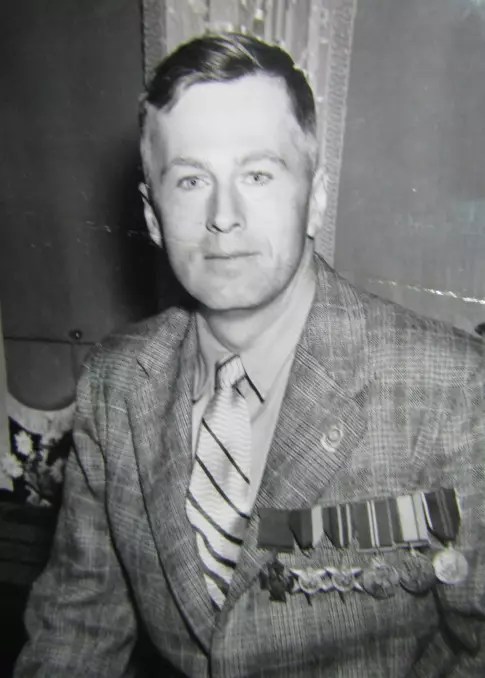
    Frank Partridge, VC

    by Greg Barron

    Of all the men who were compelled, by Government decree, to carry a rifle for Australia against the Japanese when they advanced down through the Pacific in World War Two, one man stands out.

    They said that conscripts couldn’t fight. They said that conscripts weren’t brave. They called them chocolate soldiers, who would melt in the sun. On the 24th of July 1945, on the island of Bougainville, Frank Partridge proved them wrong, with a bravery that defined heroism for a generation.

    Frank John Partridge was born in Grafton in November 1924, before moving with his family further south, to a hilly selection in a forested valley at Tewinga. The property was watered by a small waterway called Newee Creek, which ran roughly south before joining the Nambucca River near Macksville, in coastal New South Wales.

    Frank’s father, Paddy Partridge, a World War One veteran from Kempsey, had met his English wife Mary in England while on leave in 1917. They were married in Islington the same year, then returned to Australia, and a rough bush life. Their first child, Kathleen, lived for only one year before she died. Their eldest son Robert was born in 1922, and Frank in 1924.

    Life on the land was tough. Banana farming involved constant physical work, and, as they also ran a small dairy herd, the whole family all had to pitch in to keep things running. Frank attended the nearby Tewinga School only until his thirteenth birthday, when he quit to work full time on the farm. He was well-suited to the role: tough in body and mind, with an amazing ability to learn and retain facts.

    In 1939, when war broke out, Frank was not quite fifteen years old, already broad and solid. Like most youths his age, he dreamed of following older brothers and friends away to the war, but he was also committed to his family. Mary’s two brothers had died in the first war, and she prayed that this conflict would be over before she lost her sons.

    When Frank turned eighteen, conscription papers from a desperate country arrived. At that time the Japanese Imperial Forces were swarming southwards, and New Guinea looked like it would fall at any time.

    Frank’s service record begins with his enlistment on 26th March 1943 in Macksville. After basic training he was posted to the 8th Infantry Battalion which was made up mainly of Victorian Country Lads. Dependable, hard-working Frank Partridge fitted in well.

    After a stint in Darwin the battalion was shipped across to Queensland where training for overseas service took place in the Atherton Tablelands. Their first overseas posting was to Emirau Island, in the Bismarck Archipelago, where handpicked members of the battalion joined night raids in American PT boats.

    In 1945 the battalion were shifted to the Bougainville Campaign, where entrenched Japanese troops were putting up fierce resistance on the Bonis peninsula, in the island’s north.

    Frank was a member of a patrol that were engaged by Japanese machine gun units in a fortified position known as Base 5. The Australian counterattack faltered under heavy machine gun fire, with terrible casualties. Frank decided that it was time to act; to protect his pinned-down mates and bring the action to a close.

    Laying down his rifle, Frank grabbed a couple of grenades and stood up, drawing the enemy’s attention by yelling at them to ‘Come out and fight!’  He rushed the nearest bunker under heavy fire, sustaining bullet wounds to the thigh, and left arm. Still, he managed to lob at least one grenade through the firing slit, then collect a Bren gun from a fallen mate and use it to finish clearing the position.  When the Bren’s magazine was empty one Japanese soldier still remained, and the pair began a desperate hand-to-hand struggle. Frank drew the hunting knife he always carried and used it to deadly effect.

    According to some reports, Frank snatched up a loaded ‘woodpecker,’ a Japanese medium machine gun, before continuing his charge towards a second bunker. Whether this is true or not, there’s no doubt that Frank, bleeding copiously from his wounds, left the first bunker and had begun an attack on the second when he collapsed from loss of blood.  The brave attack was enough to save his mates from murderous machine gun fire and they quickly followed up the advantage gained.

    Back on the farm after the war, still a very young man, Frank enjoyed several trips to England, once with a group of other VC recipients, then again for Queen Elizabeth’s coronation. After long days on the farm, he would his evenings absorbing facts from the Encyclopedia Britannia series that sat on the shelves.

    Frank’s mother Mary died in 1960, leaving a quiet farmhouse, with only Frank and his father in permanent residence. Frank’s older brother, Robert, was a regular visitor, whenever he was home from the remote hardwood forests of the area, where he worked as a timber cutter.

    In the early sixties Frank applied for, and was accepted, as a contestant on Bob Dyer’s Pick-a-Box TV show, going on to become a viewer favourite, with a national following, and winning more than £12 000 worth of prizes.

    In February 1963 Frank married Sydney nurse Barbara Dunlop, at St Stephen’s Presbyterian Church. The engagement ring was a diamond cluster he had won on Pick-a-Box and their honeymoon was a cruise to America he had obtained in the same way. Barbara became pregnant with their child. Frank started building a five-bedroom home near Bowraville while she remained in Turramurra with her family.

    Frank Partridge wasn’t perfect. At this stage of his life, according to some sources, he developed views on racial purity that were considered extreme, even for those times. Those views appear to have prevented him from pursuing the political career that he would have otherwise been well-suited to. He was overlooked for preselection as a Country Party candidate for the seat of Cowper in 1963.

    Less than a year after his marriage, Frank was driving on the winding Bellingen-Thora Road when his Volkswagen struck a log truck driven by Dorrigo resident Herb Barton head on. The coroner, after considering police reports that included photographs of skid marks, found that Partridge’s car was on the wrong side of the road, and that the truck had braked to the point of being almost stationary when the accident occurred.

    Frank’s bride of scarcely a year was left to grieve, and care for their three-month-old son Lachlan alone. The nation could only share that grief, and wonder how a road accident so easily killed a man who had charged through a hail of bullets to save his mates.

    © 2023 Written and researched by Greg Barron

    Check out more at ozbookstore.com

  • Tom Turner – Pine Creek Cop

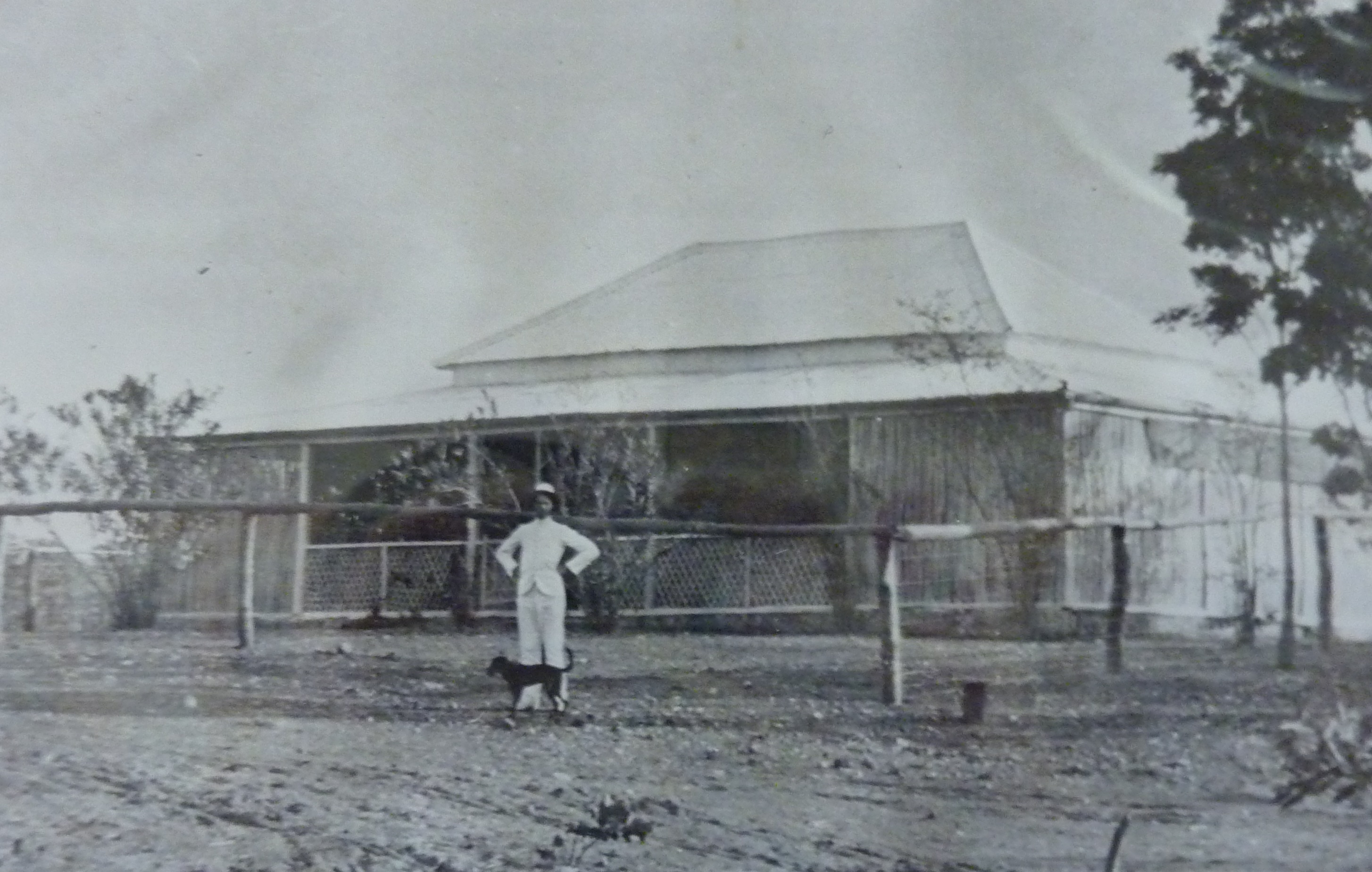
    Constable Tom Turner in front of Pine Creek Police Station Photo Pine Creek Museum.
    Constable Tom Turner in front of the Pine Creek Police Station (Photo courtesy Pine Creek Museum)

    Tom Turner was just nineteen years old when he quit his trade as an iron and wire worker, and joined the South Australian Police Force. Posted to the mining town of Kapunda in 1907, a local girl soon caught his eye. Her name was Pauline Alma Rohde.

    Tom started courting the young trainee nurse, but she was no pushover. Tom might have been tall and fit, with a curious outlook and strong character, but Alma (as she was usually known) wanted security.

    ‘We’ll wait,’ she said, ‘until you’re settled somewhere.’

    Back then the Northern Territory was governed by South Australia, and in 1910 Tom was posted to the remote town of Pine Creek. This was a rough mining town with characters as hard as the country around it, and big problems with grog and opium consumption.

    Tom and Alma agreed to become informally engaged as he headed off for the first leg of the journey north. He reached Oodnadatta by train, then travelled by camel train through the Centre. Tom soon found that he loved the outback with a passion, and that he had a talent for remote police work. He roamed far and wide on camel and horse patrols, and kept law and order in “his” town with a keen eye and iron hand.

    He also found time to compete in both cycling and foot races, winning more than a few pounds in prize money. Most of this extra cash, no doubt, went towards his savings for an upcoming honeymoon. He also loved to grow pawpaws, vegetables and mangoes in a plot behind the police station.

    Preparations for a wedding were well underway when World War One broke out, throwing their plans into disarray. Alma wrote her betrothed a tearful letter, explaining that she felt she had to play her part in the war effort, and that he would have to wait.

    The young nurse sailed off to war on the Canberra, serving in India, the Persian Gulf, and in a hospital ship off the coast of France. Her wartime duties must have taken an emotional toll, and Tom would have found it hard to understand how she had changed, despite their constant letters to and from the front lines.

    The long engagement stretched on until 1926, when the couple finally married in Adelaide. After nearly twenty years of courtship Alma headed north to share the Pine Creek Police Station with the love of her life. The trip took twenty-five days by motor car.

    In 1932 the Great Depression was beginning to bite all across Australia. An army of desperate, unemployed men hit the road. When the Northern Territory government offered a weekly wage of one pound for all comers, in return for a day’s work, men started to arrive in their thousands.

    But the Government, realising that they’d opened the floodgates for more trouble than they wanted, changed their mind so that only official residents could apply. The result was a surge of anger.

    Pine Creek erupted into nothing short of a battleground. The hotel, owned by the Young family, was banned by the mob for cutting off their credit. They then assaulted anyone who tried to drink there. Blood apparently, had to be hosed from the floorboards.

    When police reinforcements arrived from Darwin, forty or more unemployed men barricaded themselves in the abandoned hospital and were only ejected by police firing live rounds, ducking bullets from the opposition. After police arrested one of the mob and took him away, the station itself came under attack.

    Tom Turner was badly beaten with fists, boots and clubs, and that night an explosive charge was placed under the courthouse. The explosion rocked Tom and Alma’s bedroom, and Tom was badly injured, almost losing an eye and spending five weeks in Darwin hospital.

    Tom’s last Territory posting was to Daly River, where he and Alma cemented themselves as a formidable pair. With Alma’s nursing skills, and Tom’s penchant for law and order, they took a humanitarian approach, helping preserve the health, pride and welfare of some 3000 local Indigenous people. They stayed on after Darwin was bombed, and did not leave the Territory until 1944 when the crisis was over, and the military took over the police station.

    A creek in the Daly River area, Tom Turner’s Creek, was named after Tom, and retains that name to this day.

    Alma died in 1960, and, broken hearted, Tom also died just six weeks later. As I delved into this story, I couldn’t help thinking that Tom and Alma were really special Australians.

    Researched and written by Greg Barron.

    Click here to view the sources for the story.

    This is an excerpt from Galloping Jones and other True Stories from Australia’s History by Greg Barron. Available at ozbookstore.com