The Adventures of Will Jones by Greg Barron
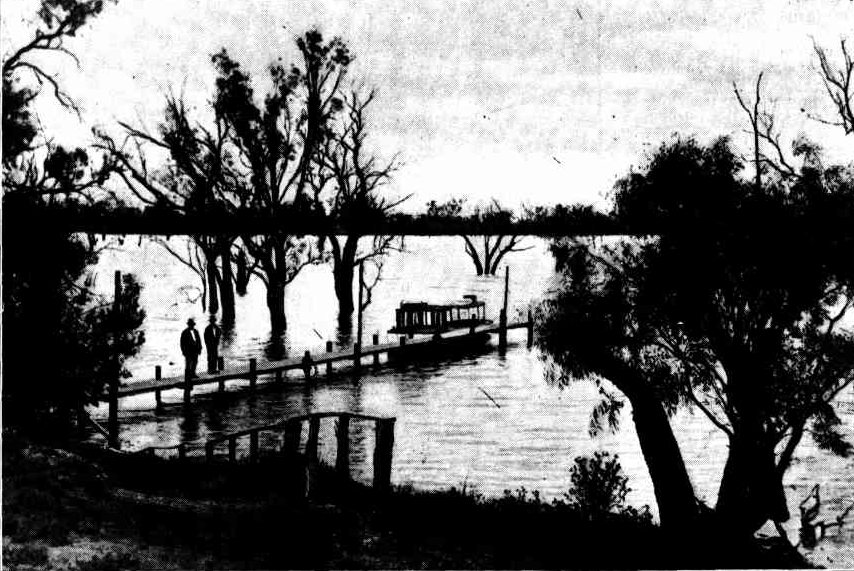
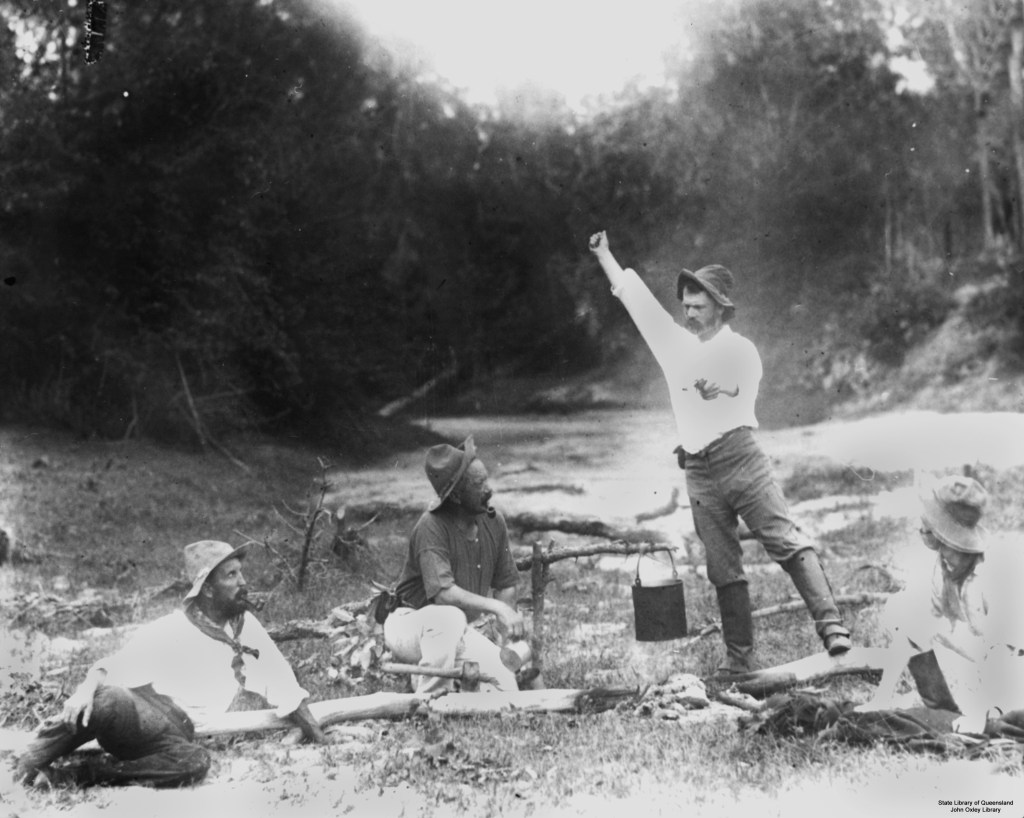
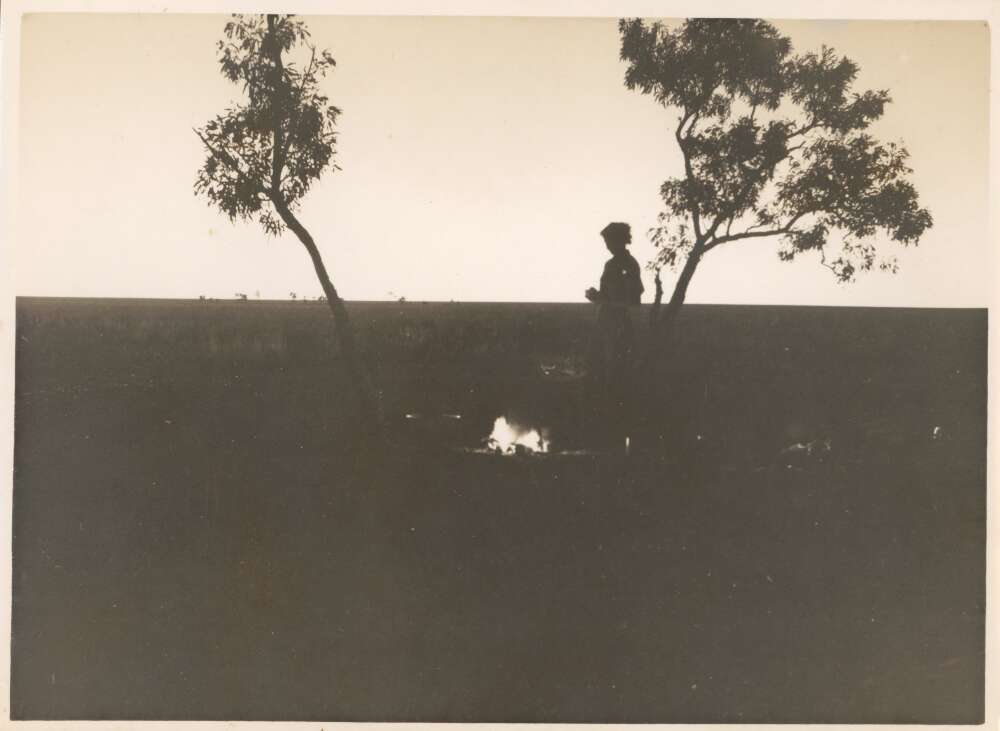
Will paid his bill at the hotel, surprised at the charges he, with Clarkie’s help, had racked up in just a few days. Then, leaving his horses where they were for the time being – Clarkie’s had by then been impounded at the police station – he stocked up on tucker and shifted camp down to the lake shore. Putting some distance between his camp and the town, Will used a long canvas tarp strung on bush poles and ropes to make a tent, then prepared a firepit nearby, his cooking gear beside it, neatly arranged.
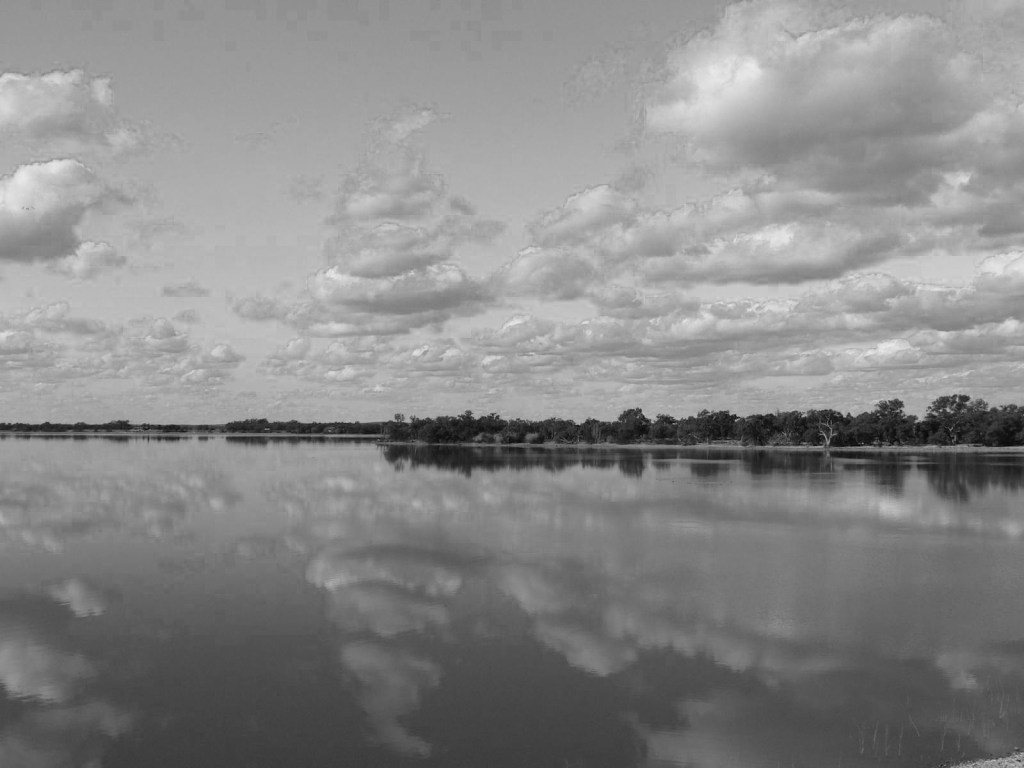
Being back in the open air made Will feel more positive, with the bonus of views across the tranquil lake. That evening he did not touch the new bottle of rum he had bought, just cooked a damper in the camp oven and fried chunks of bacon in a pan. When he had finished eating, he sat beside the fire, smoking his pipe and thinking.
Some of the firewood was still wet from being adrift on the lake when the levels were higher, and it hissed and steamed as it burned. The situation was getting complicated. The town doctor had found that Cyril Lowe had suffered a heavy blow, delivered to the side of the head, and had then subsequently drowned. The traps had been out looking for any sign of Clarkie, their only suspect, all day, mostly over on the eastern side of the lake.
The annoying thing, from Will’s point of view, was that he had been told to stay in the town or close by. It seemed a useless thing to do, but neither was he keen on running off with the New South Wales police on his tail.
He was thinking about unrolling his swag and heading off to sleep when he heard a whispered voice from the scrub up behind his camp.
‘Hoi there, Will Jones, are ya bloody deaf?’
Will felt a cold chill like an August breeze, slowly came to his feet and went for his rifle. Armed now, he took a few steps towards the patch of brush from which the sound had come, then stopped to listen again.
‘Put that bloody rifle down mate, it’s me, Clarkie.’
‘Stay away from me,’ said Will. ‘You’ve ruined everything, ya bloody mongrel.’
‘I done nothin’ wrong,’ pleaded Clarkie, keeping to the shadows.
‘What about the poor dead barsted they fished out of the lake?’
‘I never murdered him. Let me explain.’
‘Go ahead mate, tell us what happened, but don’t be offended if I keep the muzzle pointed at yer gut. I don’t plan to be the next victim.’
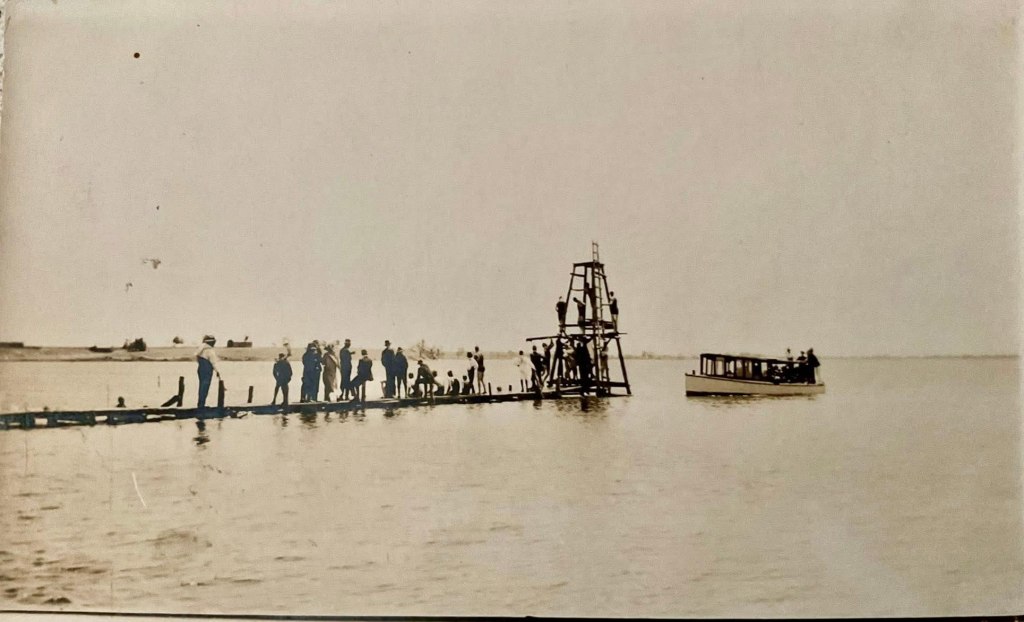
‘Well,’ began Clarkie, his face barely visible in the starlight. ‘Startin’ at the beginning – just a few days ago, was it? Seems like weeks have passed since then. Anyhow, you, my good mate, is drunk and snoring when I wakes at dawn to go out an’ meet old Cyril like we planned – good as his word he’s there at the jetty with an old cove what rowed us out in a dinghy. Once we’re aboard Cyril’s boat we pull up the anchor, and sail out onto the lake. He shows me a thing or two about which sails are which, and what ropes do what, and I get the hang of it pretty quick.
‘While we buggers about on the lake, me and Cyril have a good chat. I’m upfront with the bloke. I tell him that you and I don’t actually have, in our possession, the hunnerd quid he wants for the lease. So, I tells him to put his money where his mouth is, if he reckons we can make that back in a month, then why won’t he stake us, let us pay the money after we win it out in gold?’
Will took this in, ‘And he agreed?’
Clarkie huffed, ‘Not at first, but I talked him around.’
Will said, ‘So why did he leave that note signing the mine over to me, before it’s been paid for?’
Clarkie tapped the side of his nose with his forefinger. ‘Because Mister Lowe, pillar of the community, weren’t being straight with us. There’s another fella, some Chinese kingpin back in Sofala who also reckons he’s got the right to work that lease. We have to go in, and prove our right to the claim – that’s why Cyril signed the document now.’ Clarkie hawked in his throat, spat, then butted his head in the direction of Will’s camp. ‘You got any rum over there? I’d be grateful of a swig or two.’
Reluctantly, keeping a good lookout for anyone coming along the shore, Will went to his camp for the bottle, then returned, pulling out the cork and taking a long pull before passing it to Clarkie. He too, drank deeply, wheezed, and made an arrgh sound in his throat.
‘There’s other reasons too. The guvverment don’t allow sleepin’ partners in a gold claim. All stakeholders are s’posed to actively work the darned thing. We figured it was best for him to make the claim over to you, and then he drawed up a separate agreement between the three of us.’
‘Where’s that now?’
‘In me pocket. I left the other one on the boat so it would be, um, public knowledge that Cyril had signed the lease over.’
Will wasn’t surprised that Clarkie has succeeded in talking Cyril Lowe into deferring the payment for the lease. Nor was he surprised that the claim was disputed. The whole thing, however, sounded unnecessarily complicated.
One other question, in any case, was far more important to Will than any gold claim. ‘How did Cyril Lowe die?’ he asked.
Clarkie reached out for the bottle and took another big swallow, bubbles ticking from the neck as he did so. Then he kept on, ‘Sailing on a lake ain’t like sailing on the ocean. It’s small, so you has to keep comin’ about all the time. Cyril learned me what to do an’ I gets the hang of it. He was inside, down at the head, an’ we was aimin’ for that island. I fixed on the idea of tryin’ to come about by meself. Poor bloody Cyril came outta the cabin just as that damned boom came across, knocked him fair on the head and sent ‘im overboard.’
‘Didn’t you try to rescue the poor barsted?’ asked Will.
‘Of course I tried, but with me being a beginner at sailing I couldn’t stop the damned boat. After a bit I managed to get the canvas down, but it didn’t matter much – with that westerly wind it blew all the way to the far bank anyhow. When it grounded in the shallows I jumped off and headed for the scrub.’
‘Probably would’ve been better to stay and tell the truth,’ Will said.
‘Well, that might’a worked for a cleanskin, but I um, have what they call a, um record.’ Clarkie paused. ‘I might also say that there are things I’d rather not be questioned about.’ He gripped his own neck between thumb and forefinger. ‘You ever been hanged, lad?’
‘Nah, can’t say that I have.’
‘Well neither have I, and I aim to keep it that way.’
‘So, when did you get your things, from the hotel, and your horse?’
‘I never went back to the room, I took me money and pistol with me. But I sneaked into the stables the night after Cyril got um drowned and got me grey back – and snaffled a cheap ol’ saddle that does the job. Whose got the rest of me clothes an’ that?’
‘They’re right here, you want them?’
‘No. I’m travellin’ light with just the one horse. Carry them for me, will ya?’
Will snorted, ‘I don’t know when I’d see you again. I aren’t allowed to leave town.’ He was starting to look towards the fire. It looked far more cosy than standing here in the dark. ‘The trap sergeant reckons you were one of the fellas who robbed that mail coach down the Lachlan.’
‘No more questions,’ said Clarkie. ‘Leave them for another day. I’m off now, but I’ll be waiting. You know the Abercrombie River?’
‘I do,’ Will said without commitment. The Abercrombie flowed west from near Mount Werong to its junction with the Lachlan, South East of Cowra, not too far from the place of Will’s upbringing.
Clarkie went on, ‘There’s a crossing north of Taralga. Bummaroo they call it.’
‘I know it,’ said Will.
‘Meet me there. Soon as the traps give up and let you have that document back. I’ll be waiting for ya.’
And before Will could agree, or disagree, or even ask for more information, Clarkie was gone.
New chapter soon
© Greg Barron 2026
Read past chapters https://storiesofoz.com/category/the-adventures-of-will-jones/
More stories and books available at https://ozbookstore.com/
Image Credit: Campfire / Arthur Groom. National Library of Australia