Uncategorized

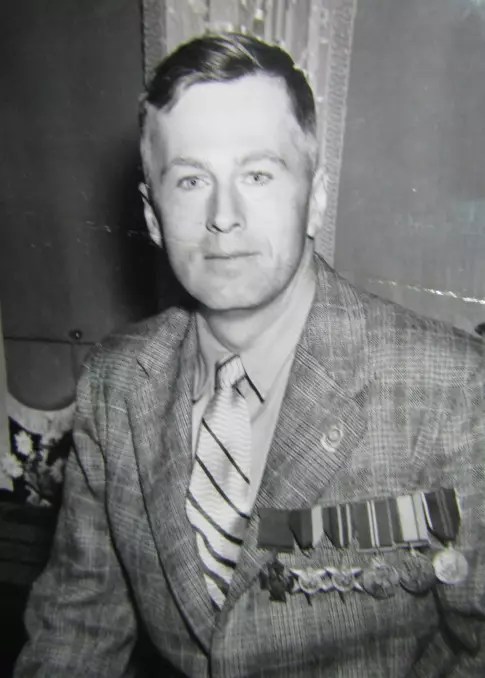
  • Frank Partridge, VC

    Frank Partridge, VC

    by Greg Barron

    Of all the men who were compelled, by Government decree, to carry a rifle for Australia against the Japanese when they advanced down through the Pacific in World War Two, one man stands out.

    They said that conscripts couldn’t fight. They said that conscripts weren’t brave. They called them chocolate soldiers, who would melt in the sun. On the 24th of July 1945, on the island of Bougainville, Frank Partridge proved them wrong, with a bravery that defined heroism for a generation.

    Frank John Partridge was born in Grafton in November 1924, before moving with his family further south, to a hilly selection in a forested valley at Tewinga. The property was watered by a small waterway called Newee Creek, which ran roughly south before joining the Nambucca River near Macksville, in coastal New South Wales.

    Frank’s father, Paddy Partridge, a World War One veteran from Kempsey, had met his English wife Mary in England while on leave in 1917. They were married in Islington the same year, then returned to Australia, and a rough bush life. Their first child, Kathleen, lived for only one year before she died. Their eldest son Robert was born in 1922, and Frank in 1924.

    Life on the land was tough. Banana farming involved constant physical work, and, as they also ran a small dairy herd, the whole family all had to pitch in to keep things running. Frank attended the nearby Tewinga School only until his thirteenth birthday, when he quit to work full time on the farm. He was well-suited to the role: tough in body and mind, with an amazing ability to learn and retain facts.

    In 1939, when war broke out, Frank was not quite fifteen years old, already broad and solid. Like most youths his age, he dreamed of following older brothers and friends away to the war, but he was also committed to his family. Mary’s two brothers had died in the first war, and she prayed that this conflict would be over before she lost her sons.

    When Frank turned eighteen, conscription papers from a desperate country arrived. At that time the Japanese Imperial Forces were swarming southwards, and New Guinea looked like it would fall at any time.

    Frank’s service record begins with his enlistment on 26th March 1943 in Macksville. After basic training he was posted to the 8th Infantry Battalion which was made up mainly of Victorian Country Lads. Dependable, hard-working Frank Partridge fitted in well.

    After a stint in Darwin the battalion was shipped across to Queensland where training for overseas service took place in the Atherton Tablelands. Their first overseas posting was to Emirau Island, in the Bismarck Archipelago, where handpicked members of the battalion joined night raids in American PT boats.

    In 1945 the battalion were shifted to the Bougainville Campaign, where entrenched Japanese troops were putting up fierce resistance on the Bonis peninsula, in the island’s north.

    Frank was a member of a patrol that were engaged by Japanese machine gun units in a fortified position known as Base 5. The Australian counterattack faltered under heavy machine gun fire, with terrible casualties. Frank decided that it was time to act; to protect his pinned-down mates and bring the action to a close.

    Laying down his rifle, Frank grabbed a couple of grenades and stood up, drawing the enemy’s attention by yelling at them to ‘Come out and fight!’  He rushed the nearest bunker under heavy fire, sustaining bullet wounds to the thigh, and left arm. Still, he managed to lob at least one grenade through the firing slit, then collect a Bren gun from a fallen mate and use it to finish clearing the position.  When the Bren’s magazine was empty one Japanese soldier still remained, and the pair began a desperate hand-to-hand struggle. Frank drew the hunting knife he always carried and used it to deadly effect.

    According to some reports, Frank snatched up a loaded ‘woodpecker,’ a Japanese medium machine gun, before continuing his charge towards a second bunker. Whether this is true or not, there’s no doubt that Frank, bleeding copiously from his wounds, left the first bunker and had begun an attack on the second when he collapsed from loss of blood.  The brave attack was enough to save his mates from murderous machine gun fire and they quickly followed up the advantage gained.

    Back on the farm after the war, still a very young man, Frank enjoyed several trips to England, once with a group of other VC recipients, then again for Queen Elizabeth’s coronation. After long days on the farm, he would his evenings absorbing facts from the Encyclopedia Britannia series that sat on the shelves.

    Frank’s mother Mary died in 1960, leaving a quiet farmhouse, with only Frank and his father in permanent residence. Frank’s older brother, Robert, was a regular visitor, whenever he was home from the remote hardwood forests of the area, where he worked as a timber cutter.

    In the early sixties Frank applied for, and was accepted, as a contestant on Bob Dyer’s Pick-a-Box TV show, going on to become a viewer favourite, with a national following, and winning more than £12 000 worth of prizes.

    In February 1963 Frank married Sydney nurse Barbara Dunlop, at St Stephen’s Presbyterian Church. The engagement ring was a diamond cluster he had won on Pick-a-Box and their honeymoon was a cruise to America he had obtained in the same way. Barbara became pregnant with their child. Frank started building a five-bedroom home near Bowraville while she remained in Turramurra with her family.

    Frank Partridge wasn’t perfect. At this stage of his life, according to some sources, he developed views on racial purity that were considered extreme, even for those times. Those views appear to have prevented him from pursuing the political career that he would have otherwise been well-suited to. He was overlooked for preselection as a Country Party candidate for the seat of Cowper in 1963.

    Less than a year after his marriage, Frank was driving on the winding Bellingen-Thora Road when his Volkswagen struck a log truck driven by Dorrigo resident Herb Barton head on. The coroner, after considering police reports that included photographs of skid marks, found that Partridge’s car was on the wrong side of the road, and that the truck had braked to the point of being almost stationary when the accident occurred.

    Frank’s bride of scarcely a year was left to grieve, and care for their three-month-old son Lachlan alone. The nation could only share that grief, and wonder how a road accident so easily killed a man who had charged through a hail of bullets to save his mates.

    © 2023 Written and researched by Greg Barron

    Check out more at ozbookstore.com
  • Country Cemeteries and their Stories

    Country Cemeteries and their Stories

    by Greg Barron

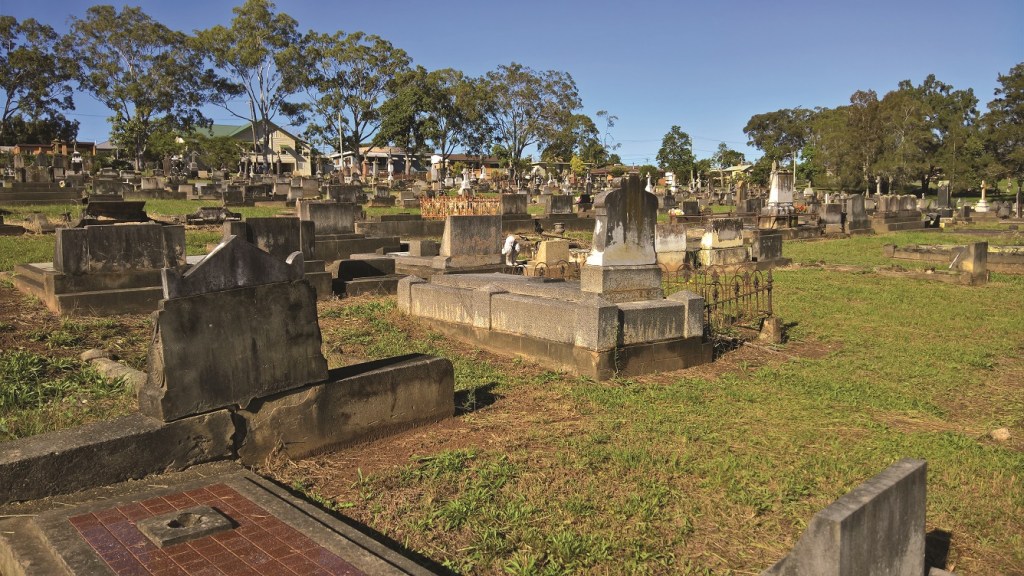
    Cemeteries. Fading rows of marble and concrete headstones. Some stand tall, others sag into the red sands of the outback, or black soils of the coast. Records of past lives, struggles, pioneering exploits and tragedy, slowly being reclaimed by the earth.

    Last July my wife and I drove into Isisford, Western Queensland, and made a bee-line for the cemetery. We saw a sign just out of town, but only one, and we were soon lost in a maze of dirt tracks. We rightly decided that a sign saying “carcass pit” referred to a dumping ground for dead livestock, not our intended destination, and drove on, finally arriving at a grassless but tidy cemetery.

    I was looking for the tombstone of a woman I’d been researching, Catherine Coleman. While she didn’t turn out to be there, I found the grave of her son William, who was found dead in his bed at the stockmen’s quarters of Arno Station in 1915. He was just 39 years old. A line at the bottom added emotion to the dry facts: “Inserted by his loving mother.”

    How did he die? There was no mention of illness, and a police report I found in a local newspaper from the time, stated that the police did not suspect foul play. The questions plagued me on that day, though most of the answers have been lost in the passage of time.

    Walking around a cemetery is a privilege, and one that should never be taken lightly.

    Some people sense the presence of souls. Most will tune into the multitude of stories interred with the dead. Sooner or later comes the humbling realisation that the world was here before we came, and will continue after we are gone, pretty much as it did before. We’re all part of this cycle of birth, love, nurturing, ambition, family and death.

    Taking a walk in a cemetery works best with some knowledge of the traditions that relate to their layout. In most cemeteries the gravestones face east. The southern precinct will often hold the most ornate headstones; the graves of the wealthy. The northern areas were often seen as less desirable. Only a very few Australian cemeteries have headstones that face south, but West Kempsey in Northern NSW is one. In some cemeteries, I’m told, ‘good’ people were buried facing east, and ‘bad’ people faced west. Husbands are usually buried on the south side of a plot, with their wives on the north.

    Suicides were, in the past, sometimes buried upside down, or outside the cemetery gates. A good friend of mine, a fifth generation farmer on the Mid North Coast of NSW, has a great-great aunt who died at the age of three. For some reason she was laid to rest outside the boundary fence of the local cemetery. Since taking her own life at that age seems unlikely, the family has long speculated as to why this occurred.

    Cemeteries were almost always segmented into religious dominations, and often then in family clusters. The founders of dynasties, with wealth at their disposal, saw it as a badge of honour to reserve premium sites for themselves and their descendants.

    There are stories in every headstone. The quality of the stone; marble or concrete, or even a mossy wooden cross. The state of repair or disrepair. And in the words themselves.

    I asked Carmel Reynen, an administrator of the Australian Cemeteries Website and also the Ballarat and District Genealogical Society, what we can learn from a walk down the rows.

    “Cemeteries can reveal the heartache families went through, many losing children to disease within a few days.  A headstone often didn’t cost a lot of money, a piece of tin or wood with details painted on it shows that someone did what they could to mark where a loved one was placed. Reading a headstone, with just a few words, can tell you a lot.”

    Epitaphs vary from a sentence, to a full blown story like this one: “In memory of Sarah, wife of Moses Moses, formerly of Hobart Town and now of Yass. Died of a broken heart from peculiar family trials, April 1st 1841 aged 47 years. Peace to her shade, may the divine creator receive her soul into everlasting rest – and pardon her former unnatural oppressor.”

    A little digging, (with a computer, not a shovel) soon turns up some facts. Moses Moses was a Jewish/English glassmaker, transported here for theft in 1815. A serial thief and escape artist, he married Sarah Brown, also a convict, in 1821. One year before Sarah’s death, Moses Moses became the licensee of the Yass Hotel. During this time he was credited with single-handedly capturing the bushranger Massey in the dining hall. Was Moses Moses the unnatural oppressor? We’ll never know.

    You might be surprised to learn that Edward Dickens, son of one of the greatest writers of all time, Charles Dickens, is buried in Moree Cemetery. Edward managed a sheep station near Wilcannia, when it was a thriving river port, and he later became an alderman on the Bourke Shire Council. He died in Moree after a long period of ill health.

    In Walcha, in the Northern Tablelands of NSW, you’ll find the grave of Australia’s greatest drover, Nat Buchanan. This was a man who did more exploration than most of our celebrated explorers, founded a number of cattle stations and managed to keep his family together at the same time.

    In the scrub down behind the camp ground at Roper Bar, Northern Territory, there stands a single marble headstone, propped up with a branch. Beneath this marker lie the remains of John Urquhart, stockman on the Durack cattle drive. He died of fever nearby in 1885, and his grave was marked with a wooden cross. His family later brought the marble stone up by wagon, and installed it on the site.

    The Reverend John Flynn, founder of the Royal Flying Doctor Service, was buried at the base of a hill a few kilometres west of Alice Springs, his grave was marked with a stone from Karlukarlu, or the Devil’s Marbles. This fact angered traditional owners, and the stone was returned in 1996. An alternative rock was provided by local elders, and Flynn’s grave is now a reserve and tourist attraction.

    These are just a few examples. There are millions of these stories, often known to their families and few others. Yet, cemeteries aren’t just life histories. They evoke a memory in many of us, of a loved one’s last hours and final moments. When my mother died, my family held vigil over her bedside all through the night, while my remaining siblings rushed to be there. She hung on, moving in and out of consciousness and recognition.

    One of my best mates, who had been through the death of his father, messaged me to say that there is a “terrible beauty” in the last hours of a person’s life. He told me to treasure it, and I do.

    I feel fortunate that I had this time to say farewell. Yet, so many deaths are accidents or rapid illnesses. When, months later, we placed Mum’s ashes in the columbarium at our local funeral home, I took the opportunity to browse the plaques. Two of the epitaphs I read were for young teenage boys and I asked a family friend, who had worked in the funeral business, what had happened.

    One, she said, had been fishing with his father when a thunderstorm hit. They came back to the beach and sheltered under a tree. Lightning struck the tree, and the boy was killed. His sister and father survived. Another had been helping his family drag their sailing boat up on to dry land, out of the river, when the mast touched overhead power lines. He was killed, and the rest of the family spared.

    No vigil, no time to grieve.

    In the outback, horse accidents accounted for most accidental deaths, with a sprinkling of murders and drownings. There are no graves in our country cemeteries for the countless young men whose bodies now lie in foreign soils. A visit to small-town cenotaphs will bring the scale of this tragedy to life.

    Finally, you’ll sometimes see the loneliest of all country graves, the many, many suicides, though they were seldom marked as such. Often these (mostly) men were not buried in town cemeteries, but outside. Many such tragedies occurred in remote areas, and the dead were interred on the spot.

    The most infamous of all Australia’s cattle routes, known for messing with a drover’s head, was the Murranji Track between Top Springs and Newcastle Waters. The bores along the way are surrounded with old graves, most of which have slowly disappeared into the lancewood and bullwaddy. 

    The important thing about cemeteries is that they remind us as much about life, as they do about death. They remind us of our mortality, and that every day is special, no matter what trials we face. Hopefully I’ll see you in some country cemetery soon, and maybe we’ll both walk away knowing a little more about the past, and perhaps more about ourselves.

  • Charlie Flannigan and the Auvergne Station Murder

    Flannigan
    Sketch by Charlie Flannigan (Photo courtesy South Australian Museum)


    September 1892. The game was cribbage for a stick of tobacco each hand. Four men whiling away a long night by the light of a slush lamp on Auvergne Station, near the NT/WA border. Even today, Auvergne is an isolated and dramatic locale; rugged mountains cut through by the Bullo, Baines and Victoria Rivers.

    Among the men playing cards in a lean-to behind the kitchen that night was Sam Croker, the acting manager. Croker was an experienced stockman, having arrived in the Territory droving a mob of breeders from Queensland to Wave Hill Station for Nat Buchanan. A stockman called McPhee and a Chinese cook, Joe Ah Wah, were also at the table.

    Another man playing cards that day was an Aboriginal stockman called Charlie Flannigan, also called McManus. Charlie had been raised by his white father in the Richmond Downs area in Queensland, and had also learned his trade with Nat Buchanan. He had arrived at Auvergne one week earlier, with just a horse, saddle, perhaps a few of the sketches of bush life he loved to draw, and a rifle.

    Before the game started Joe Ah Wah told Flannigan that he didn’t feel like a game that night.

    ‘Best you play now,’ said Flannigan bluntly. ‘For you can’t play cards when you are dead.’ Joe agreed to play a couple of hands, and when they cut the cards to choose partners, Ah Wah and Flannigan teamed up.

    Some reports of what followed cited an argument over the card game, but Joe Ah Wah’s testimony did not mention it. According to Joe, part way through the evening, Flannigan took a drink of water from a cask, then went out to the shed in which the men slept, a crude structure of poles with branches piled over the top. He came back carrying his rifle.

    Taking up position at a tree near the lean-to, Flannigan raised the rifle to his shoulder and aimed it at Croker. The men at the table were oblivious to what was about to happen.

    This, it has to be said, was not the first or last time violence had boiled over at Auvergne. The station had a chequered history in those days. As Charlie Gaunt later wrote:

    In recording sketches of the olden days I cannot pass Auvergne Station on the Baines River, where more tragedies have been enacted than any station in the North.

    I was stock-keeping on that station when Jack Skene was managing it. The manager before Skene, Hardy by name, was speared to death at the old station, down the Baines on the opposite side of the river from where the present station now stands. For years after you could see the stone spear head sticking inches in the door post where it passed through Hardy as he rushed through the door for his rifle.

    But men weren’t the only hazards on Auvergne, according to Charlie.

    Alligators … came up through the garden, tearing up pumpkin vines and into the beef house, once taking a quarter of beef off a hook.

    Charlie went on to list a litany of tragedies, including more spearings, fatal riding accidents and murder. Most bloody of all was the day Charlie Flannigan took aim at his boss part way through a game of cards.

    Flannigan fired once, and Croker slid to the floor, mortally struck in the chest.  According to the eyewitness report of Barney, a black stockman who was in the shed at the time, Croker called out ‘I am dead,’ after being shot the first time.

    Flannigan walked up and finished Croker off with a second round to the head.

    Joe ah Wah ran off into the bush, while McPhee helped Charlie wrap his victim in a blanket. Thirty-six tense hours with Flannigan in control of the station followed. Fearing reprisal he searched for and confiscated any firearms. He also forced the others to help bury Croker’s body.

    So how did a normally inoffensive stockman come to commit murder? He was a good worker, generally popular, and loved to draw pictures.

    Gordon Buchanan, who worked with Flannigan on cattle drives as well as on Wave Hill Station, described him as “… a fair horseman and stockman, and an expert in the drafting yards and branding pen. Illiterate, but fairly well spoken, he seldom swore.”

    The key might be in something Flannigan said to Joe just after the shooting. “I have let him run long enough, six months now.”

    Also, the next day, viewing the bloody, blanket wrapped body, Flannigan appeared to address the dead man directly.  “Well, old fellow, I’ve had the pleasure of sewing you up instead of you sewing me up”‘

    So if this killing was just a disagreement over a card game, why did Flannigan later tell Joe Ah Wah that he had waited six months to kill Croker. Was this the result of a long-running vendetta? On the other hand, if there was an open grudge between the two men, why would Croker have allowed Flannigan onto the station. Let alone given him a job. The answer, it seems, is lost to history.

    In any case, within two days of the murder, Flannigan extorted a cheque for his “wages” from McPhee and rode hard for the Western Australian border.

    Flannigan2
    Sketch by Charlie Flannigan (Photo courtesy South Australian Museum)

    Friends at Ord River Station, however, convinced Charlie to give himself up in Hall’s Creek. Burdened by manacles that weighed close to ten kilograms, he was taken on horseback to Wyndham, then on the steamer, Rob Roy, to Palmerston.

    In prison, Charlie had the time and the materials to pursue his love of drawing. He sketched sad images of the bush, the things he had seen. Even though he was illiterate, Flannigan copied words and letters, and some of his pictures seem to spell out words. He drew stockmen and steamers, homesteads and bush scenes. The full collection of these sketches is now held by the South Australian museum.

    A newspaper article described how white man’s justice was served on Flannigan, the first man to be hanged in the Northern Territory

    The execution of Charlie Flanagan … took place at the Fannie Bay Labour Prison at 9 o’clock to-day. Since his conviction the prisoner had maintained a cool demeanour throughout. His chief expressed desire was that he should not show the white feather. Although admitting the crime for which he was sentenced, he showed no contrition or desire to avoid the death penalty. He slept well last night, and breakfasted and smoked this morning, and mounted the scaffold alone. The whole arrangements for the execution were carried through successfully, and death was instantaneous.


    Written and researched by Greg Barron. Sources here.

    This is an excerpt from Galloping Jones and other True Stories from Australia’s History by Greg Barron. Available at ozbookstore.com


  • Charles Fisher – Cattle King

    Glencoe SLSA
    Glencoe Station Homestead (Photo: State Library of South Australia)

    Most Australians know the names of our biggest cattle kings, Sidney Kidman and John Cox. Charles Brown Fisher was in the same league, building an empire of land, men, cattle and sheep when things were much tougher.

    Charles was born in 1818, in London. Feeling restricted by city life, as a young man he moved to Northamptonshire to work on his uncle’s farm, loving country life. When his parents and eight siblings decided to emigrate to Australia, the young Charles couldn’t get on the ship quick enough.

    Settling with the family in Adelaide, Charles and his three brothers joined their father as stock agents and carriers, but that was never going to be enough for Charles. He was soon running sheep and cattle along the Little Para River, then stocked a large tract from what is now Parafield Airport to the meatworks at Gepps Cross.

    After taking control of a swathe of properties, in 1856 the Fisher Brothers partnership sheared 115 000 sheep, and sent an unknown number of cattle to the slaughterhouse.

    Charles’s mother, Elizabeth, died in 1857, and just two years later his brothers George and Hurtle were transporting three racehorses on a coastal steamer, Admella, when it struck rocks off Port Macdonnell. Hurtle and George paddled together in the water, clinging to debris, waiting for a rescue ship that came too late. George slipped beneath the cold waters while his brother watched helplessly on.

    By then Charles was living mainly in St Kilda, Melbourne. He was a regular at Flemington Racecourse, his own horses winning regularly on the track. Around this time he wooed and married Agnes Louisa Peckham. They had just one child, also named Charles.

    Meanwhile, Fisher was forging one of Australia’s biggest land empires.

    He soon owned huge tracts of land across South Australia and Victoria, including some of the country’s most valuable racehorse studs. He had leases on sixteen Queensland Stations, and with new partner JC Lyon pressed on into the Northern Territory. Glencoe Station was the Territory’s first big cattle run, and Charles engaged the best in the business, Nat Buchanan, to drove 1200 cattle across from Aramac in Queensland. Later Nat would, on Charles’s orders, undertake the biggest cattle drive in world history, 20 000 head from St George in Southern Queensland to Glencoe. (NB: Charlie Gaunt was also on that drive)

    Fisher’s ambition had no limits, and together with Lyon he obtained a lease on a huge area of land that became Victoria River Downs, at various times the biggest cattle station in the world. This was the jewel in the crown of Fisher’s holdings, then covering more than 40 000 square kilometres.

    At the peak of his expansion Charles Fisher controlled more country than most European kings.

    In the 1890s the empire fell apart. With beef sales in decline and general recession, the complicated financial structure Charles had built began to unravel. By 1895 he was declared bankrupt, though he was able to retain a residence and enough income to live on.

    Charles’s beloved Agnes died aged 60, in November 1906. Charles lived on for another 18 months, passing away in his home on Albert Terrace, Glenelg. His grave still stands at the West Terrace Cemetery, Adelaide.


    Written and researched by Greg Barron (Sources available here)

    This is an excerpt from Galloping Jones and other True Stories from Australia’s History by Greg Barron. Available at ozbookstore.com


  • The Man with a Mission

    Australian Inland Mission Southern Patrol car with Reverend John Flynn leaning against the back tray

    The year was 1882, and the sheets were wet with blood and sweat as the young woman fought to deliver her third child. The baby was born sickly and weak. Even worse, the midwife could not stop the new mother from bleeding. It was soon obvious that she was dying.

    A two-year-old boy was brought into the room, so his dying mother could see him one last time. He must have been deeply affected, although seemingly too young to understand. Who could have guessed that one day this child’s achievements would see his image gracing Australia’s $20 note!

    The boy’s schoolteacher father was unable to cope after the loss of his wife, and the boy was sent to be raised by his aunt in Sydney until he was five. At that age he returned to his father in Snake Gully, near Ballarat.

    “Good to have you home John,” said his father, ruffling his hair. “Us Flynns have to stick together.”

    After leaving school, John followed in his father’s footsteps, enrolling as a pupil-teacher, but also studying theology through the Presbyterian Church. His first appointment as a pastor was to Dunesk Mission in the Northern Flinders Ranges, and his affinity for the bush led to the Church commissioning him to visit the Northern Territory and assess the needs of the people who lived there.

    The result of that report was that Flynn was given responsibility for the newly formed Australian Inland Mission. He organised “patrols” of ministers on horseback, based in Oodnadatta, Port Hedland, Broome and Cloncurry. He set up nursing hostels in Port Hedland, Hall’s Creek, Maranboy (near Katherine) and Alice Springs.

    John was desperate to help solve the “tyranny of distance.” A badly injured drover at Wave Hill, for example, faced a journey that might stretch to weeks to reach medical help in Katherine, by which time they were often dead or suffering from gangrene.

    Two relatively new inventions were rattling around the back of John’s mind. One was the aeroplane, and the other was the two-way radio. After a long testing phase, and years of gathering support from various state governments and the church itself, the Australian Aerial Medical Service was born.

    Busy to the point of obsession, John also found time for the good things in life. He was a passionate photographer, and though he had no time for romance in his early years, he married his secretary, Jean Baird, at the age of fifty-one.

    The effect of the Flying Doctor on inland Australia can’t be overestimated. Thousands of lives have been saved, many of them the children of remote families. Even today, the Royal Flying Doctor Service operates sixty-eight aircraft, and assists a quarter of a million people each year through clinics, telehealth services, and emergency visits.

    John Flynn died of cancer, in 1951. Speaking at the funeral his former senior padre, Kingsley Partridge, said, “Across the lonely places of the land he planted kindness, and from the hearts of those who call those places home, he gathered love.” Not a bad epitaph for a man who saw his mother die in childbirth and pursued a dream, believing that medical help could reach every Australian, no matter where they lived.

    Researched and written by Greg Barron.

    Click here to view the sources for the story.

    This is an excerpt from Galloping Jones and other True Stories from Australia’s History by Greg Barron. Available at ozbookstore.com

  • The Capture of the Kenniff Brothers

    Kenniff2 (1)_edited

    It was April the 2nd 1902 when Queensland policeman, Constable Doyle, closed in on Patrick and James Kenniff at a rugged mountain hideout called Lethbridge’s Pocket. With the manager of Carnarvon Station, Albert Dahlke, and a tracker called Sam Johnson for company, Doyle stealthily approached the camp.

    Wanted for horse stealing, Jim and Patrick had been in trouble with the law before, and both had served time. Born and raised in New South Wales, they moved to Queensland one step ahead of the bailiffs. Then, from a base in the Upper Warrego area they raced horses, ran illegal books, and stole livestock at night. When police arranged for the lease on their land to be terminated, the brothers became outlaws, and rarely rode unarmed.

    Dahlke and Constable Doyle got lucky at first. Patrick managed to slip away, but they chased Jim on horseback and rode him down. When tracker Sam Johnson was sent back to fetch handcuffs he heard five gunshots. Patrick had returned for his brother, with deadly result.

    Sam was forced to ride for his life, but he returned later with a man called Burke. In two pack bags they found the charred remains of Dahlke and Doyle.

    A huge manhunt followed, but the two brothers stayed on the loose for more than two months before they were tracked to a ridge just south of Mitchell called Bottle Tree Hill (pictured above). Four policemen; Constables Tasker, Scanlan, Meston and Cramb surrounded the camp, and waited until sunrise when they were able to surprise the sleeping men. Patrick and Jim both fled on foot.

    Patrick had no time to locate a weapon, and was easily ridden down by Constable Cramb. Jim fled with both loaded rifles, but was captured on the road back towards Mitchell, near what is now called Arrest Creek.

    The brothers were placed on trial on Brisbane, and found guilty of wilful murder. Public sympathy, however, was on the side of the Kenniff brothers, in part because of a groundswell of anti-establishment feeling at the time. Jim’s sentence was commuted to life imprisonment, but Patrick was promised an appointment with the gallows.

    Four thousand people marched outside Brisbane’s Boggo Road Gaol to protest the execution, but the government held firm. Patrick had his neck broken by the rope on the 12th of January, 1903, still protesting his innocence.

    Below are the words to one of several ballads in circulation at the time. They are believed to have greatly boosted public sympathy for Patrick and his brother, who served only twelve years of his life sentence.

    THE EXECUTION OF PADDY KENNIFF
    by John Creevey 1867-1912

    With head erect he left his cell, he needed no man’s aid,
    He walked upon the scaffold, and this is what he said:
    “My name is Patrick Kenniff, I am condemned to die,
    As witness of my innocence I call my God on high.
    To my few friends I bid farewell, the last farewell I’ll say,
    My time has come and soon I’ll be a lifeless lump of clay.
    I wish to thank the warders, who have treated me so well,
    And the Rev. Father O’Riley, who saved my soul from hell.”
    Then forward came the noble priest, and shook poor Paddy’s hand,
    “Paradise is yours,” he said, “when you quit this sinful land.”
    The good priest then began to pray, he prayed ’till all was o’er,
    The lever wrenched the scaffold sprung, poor Paddy was no more;
    He may have died an innocent man, ’tis very hard to say,
    There were other men in Killman’s Gap, upon that fatal day;
    Then let’s not judge lest we be judged, by him who judges all,
    And never despise your fellow man, if he should chance to fall.


    Story researched and written by Greg Barron. Photo by Greg Barron.

    Galloping Jones and other True Stories from Australia’s History now available at ozbookstore.com
    Click here to view Sources used in this article

    This is an excerpt from Galloping Jones and other True Stories from Australia’s History by Greg Barron. Available at ozbookstore.com

  • The Town on the Flood Plain

    Gundagia

    Gundagai Flood 1900: National Library of Australia


    Australia’s worst flood drowned one third of the population of Gundagai in 1852. The town was originally built on low-lying areas around a natural river crossing and Morley’s Creek. The inhabitants were used to being cut off by floodwaters, taking refuge in their lofts when the water rose.

    Yet on June 24 1852, the rain kept falling and the river kept rising. By late that night, two metres of water had inundated or swept away many of the houses and huge floating trees were pummelling what was left.

    When the sun rose the next day, eighty-nine people were dead, and dozens more were left clinging to trees and rooftops. Rowboats were useless in the swift water.

    Yarri, Long Jimmy and Jacky Jacky, local Aboriginal men who had been warning Gundagai residents for years that their town would be washed away, launched their bark canoes in a desperate rescue attempt. Over the next two days, with the river now one mile across where the town used to be, at least forty, perhaps sixty more people were saved by the efforts of these Indigenous boatmen. Long Jimmy died from exposure after his efforts on the flooded river. Yarri and Jacky Jacky were rewarded with bronze medallions.

    The town was eventually rebuilt on higher ground, but it still suffers from the occasional inundation, with water entering the main street in 2012, thankfully without loss of life.


    Written and Researched by Greg Barron.

    This is an excerpt from Galloping Jones and other True Stories from Australia’s History by Greg Barron. Available at ozbookstore.com

  • The McGree Brothers of Taylors Arm

    badge

    John, Michael and Patrick McGree were raised on their parents’ farm on the Mid-north coast of NSW. All three answered the call to arms in 1915. The ANZAC battalions were forming up, and the brothers were determined to have their chance at glory.

    Their mother, Bridget Sullivan, had married Irishman James McGree in St Augustine’s Church, Longford, Tasmania in 1874. The young couple moved north and took up a selection on Hickey’s Creek near Kempsey. Life was tough, but like most good Catholics they welcomed children, bringing twelve boys and girls into the world over a twenty-five-year period.

    Patrick, the oldest of the three McGree boys who served, was a born adventurer. He headed off to New Zealand at an early age, living in Waiapo and Gisborne. He kept in touch with his Australian family via mail and occasional visits.

    In 1914, when war broke out, Patrick was 31 years old, yet he signed on with the Wellington Infantry, New Zealand Expeditionary Force. Michael crossed the Tasman Sea to join his brother, but was waylaid by an unscheduled love affair. He married his Kiwi girl, Nellie, just before heading off for intensive training in Egypt.

    John, still at home on the farm outside Taylors Arm, was 22 when he joined up in 1915. He was a small, wiry man, weighing just 58 kg, and of average height. In fact, none of the McGree boys were tall, but were all as tough as nails, with brilliant blue eyes and Irish charm. The doctor examining Michael for his enlistment described him as having a “grand constitution.”

    Patrick and Michael, though assigned to different units, both took their place amongst the bloody heroes of the ANZAC landings at Gallipoli. Both survived the early days of suicide charges on the well-entrenched Turks, but natural attrition took its toll. Patrick was killed on August 8, 1915, in the defence of a hill called Chunuk Bair.

    Michael was wounded in the last days of the Gallipoli campaign, and was evacuated to the Fulham Military Hospital in England. His recuperation was slow, and he endured hospitalisation for almost six months before being returned to his unit, judged as fit to serve in the hellish trenches of France.

    On the 28th of July 1916 that “tough little bastard” John McGree was one of thousands sent in human waves against the German trenches at the Battle of the River Somme. He was shot in the chest and back. He was still alive when he reached the field hospital, but died within twenty-four-hours. He was buried at the nearby Warloy-Baillon Military Cemetery.

    James and Bridget received the usual telegram from Base Records in Melbourne informing them of John’s death: a message just fourteen words long. Losing one son was hard enough. The loss of a second must have been hard to bear.

    Bridget penned a desperate letter back to Base Records.

    Dear Sir

    Please could you give me any information about the death of my son Pte John A McGree No. 3888, who died of wounds in France …  I would like to know the name of the hospital where he died, also if he was seriously wounded or what caused his death. What were his last words and where is he buried? Please send reply as soon as possible

    B. McGree,

    Taylor’s Arm, via Macksville

    Five months passed before she received any additional information: a kind letter informing her of the nature of John’s wounds and the name of the hospital and cemetery. John’s personal effects also arrived in the mail: one religious medallion, three handkerchiefs, two brushes, a cap comforter, one photograph and a notebook.

    By July 1918, the surviving brother, Michael McGree, was a veteran of three years of the most terrible warfare mankind had ever known. On the morning of July 18, 1918, just months before the end of the war, his company were ordered to attack a fortified German trench at Gommecourt Wood, France. Running into a hail of lead, Michael was killed in action, just a few kilometres away from the site of his brother John’s death, two years earlier.

    Their father, James McGree died at the age of 86, in 1928. Bridget lived on until she was 87, a highly respected local pioneer, and a matriarch of the Laverty, Brock, and McGree families. She died in 1940 and was buried in Macksville cemetery.

    The strength she must have had to shoulder the grief of three lost sons is a testament to the spirit of not just the Anzacs, but their families.


    Written and Researched by Greg Barron

    Get the book, ‘Galloping Jones and Other True Stories from Australia’s History’ at ozbookstore.com
    Click here to view the sources for this story.

    This is an excerpt from Galloping Jones and other True Stories from Australia’s History by Greg Barron. Available at ozbookstore.com