Interviews

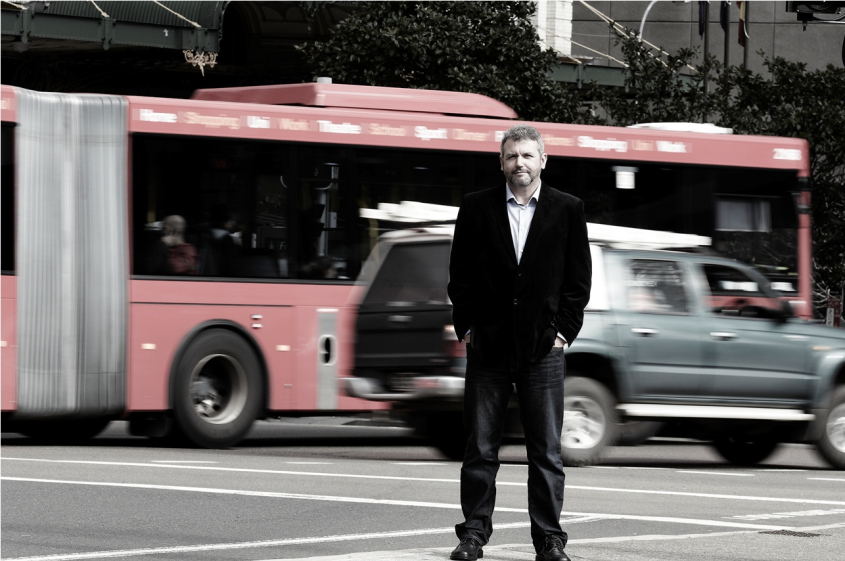
  • Greg Barron

    Greg Barron

    Author Interview – Creative Pen

    1. How did your writing aspirations and dreams begin?

    As a teenager I spent more time reading than anything else except for school and sleeping. It was a natural step to want to make my own books. I wrote some short pieces back then, but quickly found that writing good stories is not as easy as it looks.

    In my mid thirties I decided that it was now or never, and I embarked on a path to publication that would take more than a decade.


    2. Was your talent evident from a young(ish) age?

    I’m wary of the concept of talent. But … I have always been good at putting words together, and teachers, even at primary school level, often told me that I should one day do something with that skill. I don’t think it was evident that I would have the dogged persistence necessary to write a good book as I had a mind that jumped around all over the place and I wasn’t good at sustained concentration.


    3. Was / is there any writer in particular you strive to emulate?

    No, but I would love to write as vividly as Wilbur Smith, with the beautiful prose of F Scott Fitzgerald, and the detail of Leon Uris. In reality, I’ll fall short on all three counts.


    4. Was / is there any one you consider to have been or currently be a mentor to you?

    My agent, Brian Cook. He has been mentor and inspiration, and I probably would not have become a published author without him. He is my first reader and editor, friend, and adviser.


    5 Did you learn the craft – or are you a natural?

    Not only am I not a natural, but I’m a slow learner. I do recall a moment when I realised that great writing requires both clarity and imaginative embellishment in equal measure. That was about seven years after I started writing. My first drafts are clunky and terrible. Reading them over for the first time is depressing.


    7. Were you an overnight success?

    Now that makes me laugh. Success, at least in the way I imagine it, is still a long way off.


    8. What was your vision for being a writer – and how does that compare to where you are now?

    I became a professional writer, in terms of habits and attitude, long before I became published. To me the dream is not about festivals and awards, it’s about writing as a job. My vision therefore, is of me at my desk, attempting to do my best every day, falling short most of the time, but persisting.


    9. What do you do for inspiration?

    Read good books. Love my wife and children. Walk. Fish. Travel. Live.


    10. How much does playing the marketing game factor into your success?

    Marketing yourself as a writer is difficult. Particularly now that there are so many Indie writers also clamouring for attention on Social Media. They have just as much right to market themselves as I do, but we are all trying to reach a shrinking number of dedicated readers. Many internet users have switched themselves off from hype, and your only hope is to engage with them as a human being and hope they like you enough to buy.

    To be honest, I hate self promotion, and wish it wasn’t necessary.

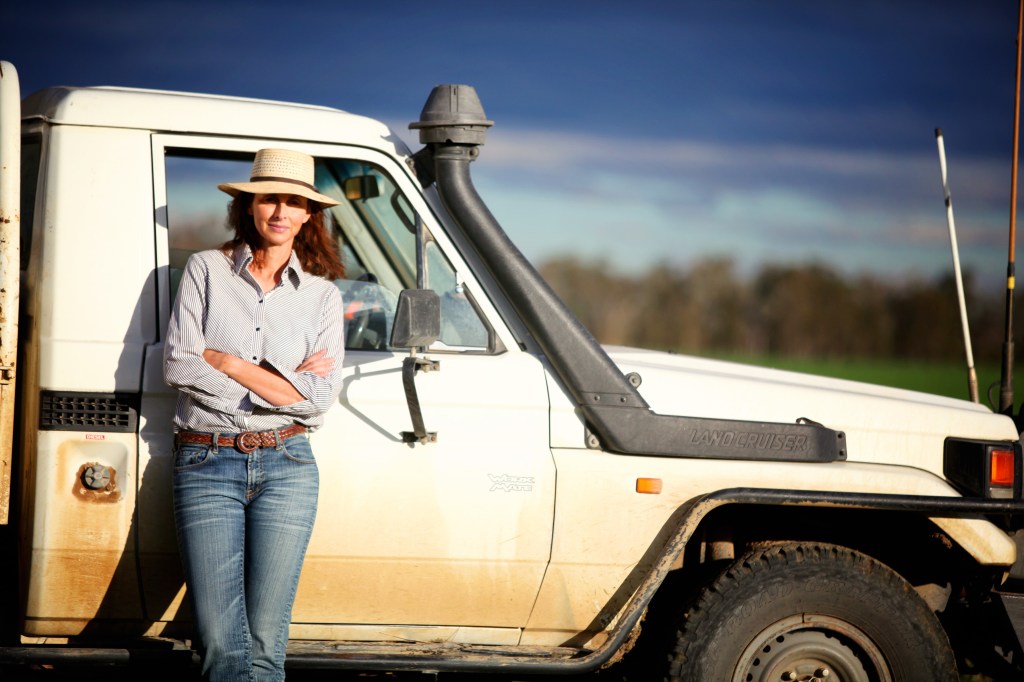
  • Nicole Alexander

    Nicole Alexander

    We asked Australian author Nicole Alexander to tell us about her life and how she started writing:

    When my great-grandfather first selected our property in 1893 he chose a site for the homestead near the banks of the Whalan Creek, a major waterway in our area, days later local Aboriginals approached him and told him that the area was subject to heavy flooding and so on their advices he selected a new site some miles to the north on a high ridge. Just as well he did. Over the last 121 years we’ve experienced our fair share of droughts and floods but during the great flood of ’76 although the water lapped the homestead floorboards for six weeks and the flood boat was tied up at the back gate, the water never entered the house. Although we did have a lot of other visitors, snakes, spiders, centipedes … 

    Our property is located 110 kilometres north-west of Moree, near the village of Boomi, population 75. It’s a great place to live and work if you don’t mind putting up with the vagaries of the weather. Running an agricultural business in times of, ‘drought and flooding rains’ is not for the faint-hearted. Life here often reminds me of a line from the classic western, Red River. ‘I don’t like it real good and I don’t like it real bad. I just like it somewhere in-between’.

    My commute to work involves a forty-five kilometre round trip along a dirt road to the main property, Murki Station where my parents live. With spring already sprung and hoped for rains yet to eventuate the road is pretty busy with kangaroos, foxes and wild pigs all out and about looking for feed, and it can become something of an obstacle course as I get closer to the main homestead with cattle and sheep also vying for road space. A typical work day for me starts at 7.30 am and could involve anything from mustering sheep and cattle, working in the stockyards, doing bookwork in the station office or checking cultivations with our agronomist. Murki is a mixed-agricultural property and we produce Hereford Beef, Merino wool, white Suffolk fat lambs, and our dry land crop programme includes: wheat, barley, oats, sorghum, faba beans and chickpeas.

    I grew up on Murki and my early education included lessons through the mail via the Correspondence School in Sydney. My mother taught myself and my siblings around the dining room table as by that stage the old school-house on the property, which still stands had been converted into extra accommodation for jackeroos. Previously the schoolhouse was used up until the mid-1940s when my father and his sisters were educated there by a series of governesses. I say series as there were 15 of them and apparently only one left due to the isolation. What a worry.

    I haven’t always lived in rural Australia. I spent time in the corporate world in both Sydney and Singapore before deciding to return in the early 1990s, for twelve months. I have to say that the longer I stayed on the property the more I appreciated working in the family business and I certainly didn’t miss the politics that can go with being involved with a large corporate. When I first returned to the bush, agriculture was still very much a male-dominated industry however I was fortunate as I was working with and for my father with a team of men, some of whom had been with us on and off for 40 years. We’re no different from any other industry. Granted our office ceiling is the sky but as with any job, timely management decisions, ability and perseverance delivers in the end.

    We’re nine hour’s drive from Sydney, 6 hours from Brisbane and a good six hours from the coast, but despite the isolation, it’s a bush life for me.

    Nicole Alexander is the author of five novels, including The Great Plains which is out now. Discover more about Nicole at www.nicolealexander.com.au or join her on facebook https://www.facebook.com/AuthorNicoleAlexander

  • Don Douglas – Outback Writer

    SONY DSC

    Australian author Don Douglas writes vivid and thrilling outback adventure stories that are hard to put down. You can tell that he lived the life he writes about – he worked as a ringer, head stockman, manager and owner of stations across Queensland. I recently took the opportunity to ask Don a few questions.


    1) You grew up on a remote cattle station. Where was it, and what was it like for a kid growing up on the land back then?

    I really don’t consider the place where I grew up to be remote. It was at Morven in south-west Queensland, 20 miles from town on a battler’s mulga, cypress, pine & range block of just 52 sq miles, almost 500 miles from Brisbane.

    I learnt to ride young of course – first buster at 2 yo. My mother was carrying me on a cushion on the pommel of her saddle. Horse shied at a mulga snake & I landed on top of the snake. I don’t remember that but must do subconsciously because I’ve been scared of snakes all my life.

    At 4yo, my only playmate was a 5yo Aboriginal boy who taught me the local dialect.

    An Aboriginal ringer (who was an ex-Light Horse Trooper) taught me to track & to use an axe & adze when I was 5 or 6.

    I first drove a D2 crawler tractor at 5 & at 6 or 7 helped my father dam-sinking, driving the tractor while he handled the single furrow mouldboard plough & working a 1.5 yard Meadowbank scoop while he drove the machine.

    I learnt fencing, yard building & ringbarking pretty young & by 10 or 12 was riding pretty lively horses. Some could hump up a bit.
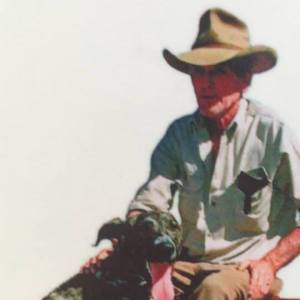
    Don

    2) How old were you & what year was it when you had your first paid job?

    I went to boarding school at 11 & after that I was usually paid a quid a week to work during the school holidays, mustering, fencing, ringbarking or whatever – left school in 1961 & went on the payroll as a first-year jackeroo on 7 pounds, 2 shillings & sixpence/week – big money I thought but a bit demeaning to be on 1st year wages with 10 or 11 years experience.

    3) Who was the toughest man or woman you’ve ever met?

    For outright oblivion to pain, an old family retainer, John Neilsen, who came to work for my great-grandfather in 1917 & never left our family. At 7 yo he had his back broken in a cave-in, while working underground in Broken Hill Mine. His family couldn’t afford a doctor & his mother nursed him for two years bedridden. He was a hunchback & his nerves must have been scrambled because he almost never experienced pain from burns, wounds or afflictions except gout.

    My father was a tough man, could ride most any horse, was a good boxer & footballer, could do hard physical work for 72 hours straight when called for. He was a hard, critical taskmaster.

    The toughest woman I ever knew was Emily Locke from Sommariva, near Charleville. She won the first-ever buckjump event in Morven but was disqualified when it was discovered she was a woman. She was rough & tough, could bash a man – looked & lived like a man. In some ways a bit like Eliza in my stories.

    4) What are some of the Australian books you enjoyed reading most?

    I’ve been a voracious reader most of my life & have pretty catholic tastes. I learnt to read before I started school by reading comics. At boarding school I read pretty much the whole library. There are so many great & good Australian books so I’ll name a few of them.

    Moleskin Midas, by Tom Ronan (& any book by him).

    The Shiralee, by Darcy Niland (& any book by him).

    Lasseter’s Last Ride, by Ion Idriess (& any book by him).

    Coal Country, by Alex Miller.

    The Gun Ringer, by Geoff Allen.

    The Long Goodbye, by PJ Parker.

    Icing on the Damper, by Marie Mahood (& her other books).

    The Cattle Duffers of the Outback, by Frances M Boyle.

    Naked Under Capricorn, by Olaf Ruhen (1958).

    The Light between Oceans, by ML Stedman.

    5) When did you start writing?

    At boarding school between 1956 – 61, firstly war or ghost stories & then westerns later on, for the school magazine.

    In High School I paid little attention in class & read a Cleveland western under the desk every day if I had one to read. I also read stuff like God’s Little Acre (which of course was banned at school).

    My westerns were maybe 3-5000 word jobs.

    I started writing full length novels in about 1995, after a few unsuccessful short stories submitted to Playboy & the ilk. My first full length novel was Curlew Enigma, which underwent much reorganization & editing by me before it was presentable for publishing. I lost count of the rejections & I was finally published by Boolarong Press in 2014.

    6) Tell us a bit about your books.

    The Curlew series follows the lives & exploits of the McDonald descendants of the matriarch, the drover & bushranger Eliza, from 1840 until the present & is a work in progress (currently writing #11 in the series, writing first person, present tense, from the point of view of an 11 year old girl). The stories gradually evolve to include murder, international espionage, mining, gem trading, Iraq, Afghanistan, US Trade Centre attack & much more.

    The Saint Clair series of 9 books, starting with Rosslyn Legacy, follows the Saint Clair family from the Civil War in America until the present (with the last in the series unearthing family documents back to the last Jacobite rebellion in Scotland). The mystery surrounding 150 years of US government persecution of the family is finally revealed. Down through the volumes the Saint Clair family intermarries with the Curlew McDonalds & the two series become entwined to an extent (although each book of each series does stand alone).

    The Chillcott series of 3 books covers the period from mid 1800s to recent times in NSW & Queensland.

    I have 5 more completed stand alone novels, including one, Gone Cop, a contemporary crime novel written with the main character in first person, present tense. I still have quite a few more already written longhand to be typed up & edited.


    If you live near Ayr, Queensland, you might see Don at the local markets selling his books. Otherwise you can get them in all good bookshops (if you can’t see them, just ask). Otherwise you can get his books direct from Boolarong Press here.

    Or as Ebooks on Amazon: Curlew Enigma, Curlew Calls, Curlew Fugitive