Drovers and dust

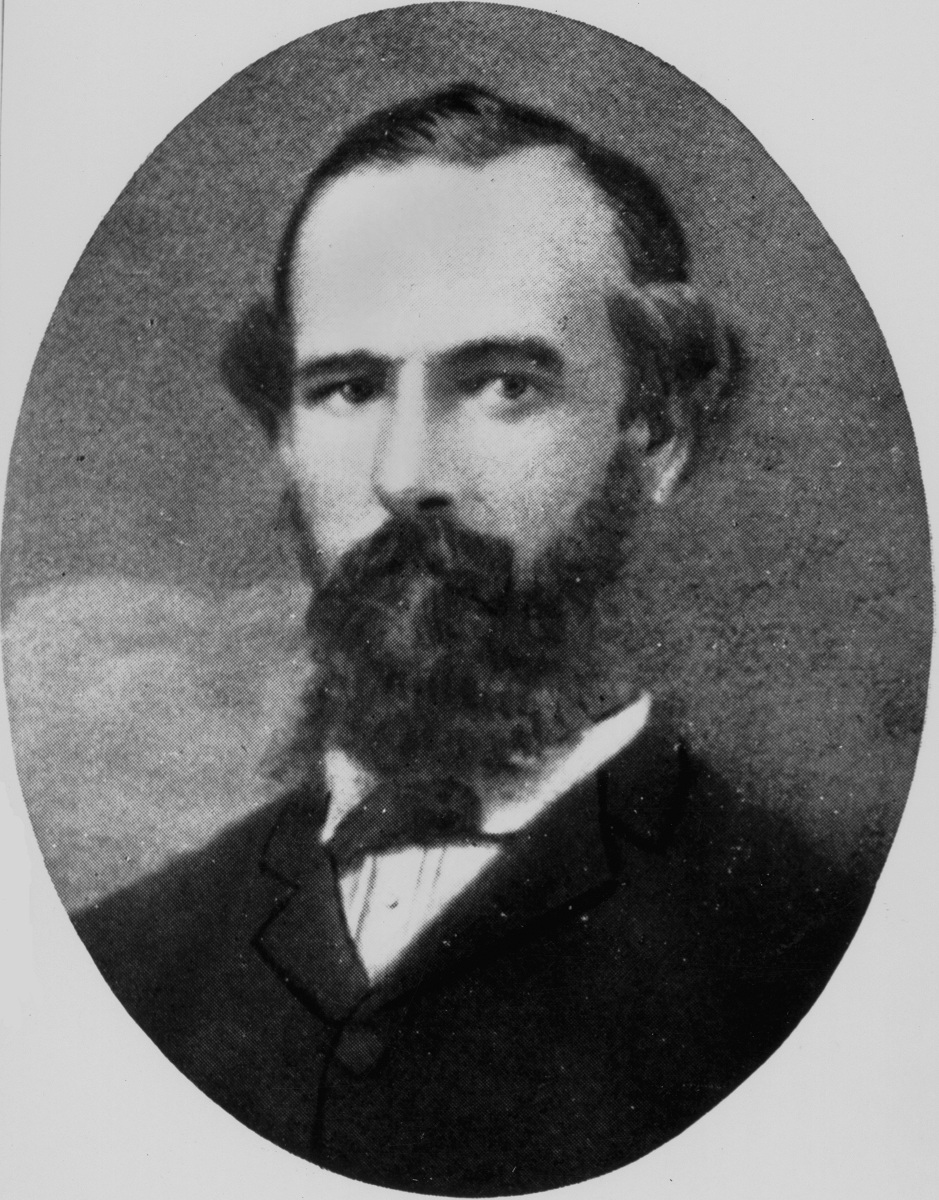
  • Nat Buchanan – The Greatest Drover

    Nat Buchanan – The Greatest Drover

    by Greg Barron

    When Irishman, Lieutenant Charles Henry Buchanan and his wife, Annie, emigrated to Australia and took up a New England station called Rimbanda, they had no idea that their son Nathaniel would one day become known as the greatest drover the world had ever seen.

    Nat ‘Bluey’ Buchanan grew from a cheerful and adventurous lad into a competent man, with an even temper, incredible organisational skills and an unerring sense of direction. He was a bushman par excellence with a passion for new horizons. He single-handedly opened up more country than some of our most famous explorers.

    In 1861, for example, Nat Buchanan and his business partner Edward Cornish were out exploring in Western Queensland. Having taken up land to create Bowen Downs Station, they decided to poke around much further to the west. Penetrating all the way to the Diamantina River they discovered the tracks of a camel train. The tracks were, it turned out, made by one of the most expensive expeditions in the history of white exploration: Burke and Wills on their way from the Cooper Creek Depot to the Gulf of Carpentaria. That Buchanan and Cornish came upon those famous men and their entourage, while ‘poking around’ out west, with just one tracker and some packhorses, is a good illustration of the difference between independent bushmen and government sponsored explorers.

    A few years earlier, Nat’s working life started out with the taking up of a station north of Guyra called Bald Blair, in partnership with his brothers Andrew and Frank. The trio also embarked on an unsuccessful trip to the Californian goldfields. When they returned, Bald Blair was laden with debt and had to be sold.

    Nat polished up his droving skills, taking herds of sheep or cattle to the goldfields and interstate, following this profession for at least a decade before heading for Queensland and the vast frontier. His first real foray into Western Queensland was from Rockhampton with William Landsborough in 1860. Within a year they had formed Bowen Downs station on the Thomson River, and Nat was installed as manager.

    Nat met the attractive brunette Catherine Gordon when by chance he rode into her family’s campsite, on the Burnett River near Rockhampton. According to Bobbie Buchanan, Nat’s grand-daughter, Kate was ‘a natural horsewoman, and an accomplished rider.’ She was also a stunning young woman, and Nat was captivated.

    The young couple were married soon after, and Nat took his bride out to Bowen Downs in a buggy.

    Married or not, Buchanan had no intention of living a settled life. After checking out much of Western Queensland he started exploring the Gulf country around Burketown, looking for suitable pastoral land for his business partners.

    The strain of constant travel did tell on him, and Kate was by then pleading for some normality. In 1870 Nat and his brother Andrew took up a selection of land on Deep Creek, near Valla, NSW. This was still wild country then, frequented by cedar-getters and fugitives. The brothers and their families built bark and slab houses on the river bank, where they raised goats and chickens, planted a few acres of corn and cleared land for cattle. The plentiful fish in the creek varied the diet nicely.

    Essential supplies were purchased via a fifty-mile ride to Kempsey, and mail was delivered into a letterbox nailed to a tree on Valla Beach, accessible by a long row downstream. Kate must have hoped that her man had grown roots, but Nat’s adventurous years were barely getting started.

    Pining for open country, and sick of the humidity, Nat moved Kate and their sons Gordon and Wattie north again. He managed Craven Station for a while, then took on his first big droving contracts. He was the first European to cross the Barkly Tablelands in 1877, sparking an explosion of land speculation. Most lease contracts, moreover, stipulated that the run had be stocked within two years. The owners were crying out for cattle and men to drove them.

    Now in his fifties, Nat led the largest cattle drive in history – 20 000 head from St George in Queensland to Glencoe in the Northern Territory. He made the record books again a few years later, delivering the first cattle to the East Kimberley. One of his most harrowing achievements was the blazing of the bleak Murranji Track, from near Daly Waters to Victoria River Downs.

    Nat’s descendant and biographer, Bobbie Buchanan, described him as a ‘confident, strong-willed and uniquely self-sufficient man of great integrity.’ His organisational skills were legendary, and his ability to keep tough men on track and working together no less impressive.

    Nat Buchanan’s rules on cattle drives were inviolate:

    1)            Travel at speed. This was a technique he referred to as, ‘giving the cattle the gooseberry,’ or just ‘the old gooseberry.’

    2)            No alcohol in camp. In 1883 when he took over a drive to the Kimberley for W.H. Osmand and JA Panton, his first act was to tip out the demijohns of rum he found hidden in the drays. He was a teetotaller himself, and knew well the effect of grog in cattle camps.

    3)            Never let ‘first-contact’ Indigenous people into a camp, male or female.

    4)            No man should be left in camp alone.

    On a drive through the Gulf in 1878, Nat was forced to head back to Normanton for provisions. He was away for some weeks, and the man he left in charge, Charles Bridson, relaxed these last two rules. Some very insistent local Aborigines who knew a few words of pidgin talked their way into the camp. This error was compounded when Bridson rode off and left another man, Travers, alone in the camp.

    Travers was making damper, dusted to the elbows in flour, when a steel hatchet that had been lying around the camp cleaved deep into the back of his skull. The event set off days of drama and revenge killings. Buchanan, on his return, was understandably incensed.

    Nat’s next plan was to bring his family together on one of the largest cattle runs in history – Wave Hill Station – one of several leases Nat took up in partnership with his brother. Unfortunately the skills that made him a great drover and adventurer did not extend to management. Distance to markets and attacks on stock by the local Gurindji people were the two most important issues.

    Nat, by the way, was known for a generally conciliatory approach to Aboriginal people, and was spoken of fondly by Indigenous workers in oral histories from the region. Cattle, fences and men were not welcomed by traditional owners – the Europeans were invaders after all – and conflict was a fact of the frontier. Buchanan, however, was never party to the ‘shoot on sight’ mentality of some frontiersmen.

    In the 1920s Territory bushman, and chronicler Tom Cole came across an old Jingali man on Wave Hill Station, who the whites called Charcoal. Charcoal had worked on Wave Hill and in droving camps with Nat Buchanan as a boy and young man.

    During an attack by wild blacks on the station, Charcoal used his rifle to shoot one attacker out of a tree. Bluey Buchanan, or Old Paraway, as his men called him, was furious, Charcoal had never seen him so angry. ‘You shot one of the poor bastards dead?’ Bluey roared. ‘Jesus Christ! You shouldn’t have done that!’

    Even at the age of seventy Nat was out exploring again, searching for a stock route from the Barkly Tableland to Western Australia. His health was poor by then, and in 1899 he retired to a small property near Walcha, New South Wales, with his beloved and long-suffering Kate. He died two years later, and his gravestone stands in the Walcha cemetery, along with a plaque commemorating his life. Kate lived on until 1924, at which time she was buried beside her husband.

    The most fitting epitaph for this great man is perhaps the words some of his contemporaries wrote about him. Charlie Gaunt wrote: ‘Buchanan had the gift of bushmanship and location. He was a fine, genial companion to have; you only had to look at Nat Buchanan to see in his physique, actions and general appearance a thorough typical bushman with the face showing dogged determination and strong will power; one who would stand by you until the bells of eternity rang.’

    Stockman Billy Linklater, in his memoir, Gather No Moss, wrote of Nat Buchanan: ‘His willpower was indomitable, yet he was mild-mannered and of a most kindly disposition.’

    Finally, in the words of singer/songwriter Ted Egan.

    Nat Buchanan, old Bluey, old Paraway

    What would you think if you came back today?

    It’s not as romantic as in your time, Old Nat,

    Not many drovers and we’re sad about that.

    Fences and bitumen and road trains galore.

    Oh they move cattle quicker, but one thing is sure

    Road trains go faster, but of drovers we sing

    And everyone knows Nat Buchanan was King.

    Written and researched by Greg Barron

    More books and stories are available direct from the publisher at ozbookstore.com

  • Tom Kilfoyle

    Tom Kilfoyle
    Tom Kilfoyle (Photo: Durack Homestead Museum)

    Tom Kilfoyle, a cousin of the pioneering Durack family, was Charlie Gaunt’s boss for much of the 1883-6 overland drive from the Channel Country in Queensland to Rosewood Station in the Kimberleys. Tom was born in County Clare, Ireland in 1842 but became a highly skilled bushman. Interestingly, he later married Catherine Byrne, a close relative of Joe Byrne from Ned Kelly’s gang.

    Charlie Gaunt described Tom Kilfoyle as:

    “a splendid bushman, stockman and of strict integrity: almost puritanically so; bluff, quick of temper but with the heart and simplicity of a child.”

    Tom died in Port Darwin in 1908, leaving behind Catherine and his son Jack, who successfully ran Rosewood Station, becoming an important figure in Western Australian pastoral history.


    Written and researched by Greg Barron

    This is an excerpt from Galloping Jones and other True Stories from Australia’s History by Greg Barron. Available at ozbookstore.com

  • James “Jimmy” Darcy

    Fred Burnett
    Fred Tuckett, the Halls Creek Postmaster (Photo courtesy National Library of Australia)

    The year was 1917, and it had been a long day in the saddle for Walter and Thomas Darcy. They drew first turn at the night watch, keeping the cattle contained on the river flats, while the rest of the crew slept.

    A rider came in from Wyndham with terrible news. Walter and Thomas’s brother Jimmy, also a stockman, had fallen from his horse on Ruby Plains Station and had been taken to Hall’s Creek on a cart with severe internal injuries. 

    The brothers wasted no time in going to Jimmy’s aid. Making sure the cattle were in safe hands they mounted fresh horses and rode for 140 miles before stopping at Turkey Creek for remounts. By the time they reached Hall’s Creek they had covered 250 miles without rest. The last 110 miles they smashed in just 15 hours. 

    Finally, arriving at Hall’s Creek, they found that, with no hospital in the town, Jimmy was in the care of the Postmaster, Fred Tuckett. After a visit with their brother the boys were troubled. Jimmy’s lower abdomen was swollen and red, and he was barely conscious. There was no doctor for a thousand miles and the situation seemed hopeless. 

    ‘He looks like he’s dying Mister,’ they pleaded with the postmaster, ‘you have to save him …’ 

    ‘I’ve sent a telegram to Perth. They’ll send someone on the steamer.’ 

    The brothers groaned. ‘That’ll be weeks. Jimmy could die by then. He needs surgery.’ 

    Another telegram was sent to Perth. This time to a man who had instructed Fred in first aid a few years earlier. Was it possible that a surgeon in Perth could help with the patient via telegram? This novel idea bore fruit, and a back-and-forth diagnosis of a ruptured bladder, complicated by infection, was made. The pressure had to be released, and only Fred could do the job! 

    While the brothers waited anxiously outside, the postmaster made an incision with a razor blade, then painstakingly stitched the wound back up, with a drain in place. The rudimentary operation helped at first, but over the following days there was little improvement. The Perth surgeon decided, via telegram, that a major operation was needed. 

    By this time major newspapers across the country were reporting the story, and Dr Holland was making his way up the vast Western Australian coast by boat, still much too far away for the operation to wait. 

    Again Mr Tuckett sterilised his razor, and with the wires running hot, completed a difficult operation that was basically successful. Australians all across the country, welcoming the respite from war news, breathed a sigh of relief. 

    It would have been nice if Jimmy made a full recovery, but unfortunately his condition was complicated by the malaria he had been suffering from for months. Again he deteriorated until his life hung by a thread. 

    Yet Dr Holland had by then arrived in Derby, and a team of experienced bushmen were standing by with a Model T Ford to carry him to Halls Creek. 

    model t
    The Model T Ford that carried Dr Holland (Photo courtesy National Library of Australia)

    Walter and Thomas Darcy urged their desperately ill brother to hold on, that help was on the way. But the wild Kimberley landscape was not kind to motor vehicles. The Model T limped closer, plagued by engine trouble and flat tyres. 

    Jimmy Darcy died the day before Dr Holland arrived. His grieving brothers laid him to rest in the Hall’s Creek cemetery. 

    The events of those weeks affected Holland so deeply that he became a founding member of the Royal Flying Doctor Service, which would go on to save thousands of lives, many with similar injuries to Jimmy Darcy. 


    Written and researched by Greg Barron. Sources here.

    This is an excerpt from Galloping Jones and other True Stories from Australia’s History by Greg Barron. Available at ozbookstore.com

  • Charles Fisher – Cattle King

    Glencoe SLSA
    Glencoe Station Homestead (Photo: State Library of South Australia)

    Most Australians know the names of our biggest cattle kings, Sidney Kidman and John Cox. Charles Brown Fisher was in the same league, building an empire of land, men, cattle and sheep when things were much tougher.

    Charles was born in 1818, in London. Feeling restricted by city life, as a young man he moved to Northamptonshire to work on his uncle’s farm, loving country life. When his parents and eight siblings decided to emigrate to Australia, the young Charles couldn’t get on the ship quick enough.

    Settling with the family in Adelaide, Charles and his three brothers joined their father as stock agents and carriers, but that was never going to be enough for Charles. He was soon running sheep and cattle along the Little Para River, then stocked a large tract from what is now Parafield Airport to the meatworks at Gepps Cross.

    After taking control of a swathe of properties, in 1856 the Fisher Brothers partnership sheared 115 000 sheep, and sent an unknown number of cattle to the slaughterhouse.

    Charles’s mother, Elizabeth, died in 1857, and just two years later his brothers George and Hurtle were transporting three racehorses on a coastal steamer, Admella, when it struck rocks off Port Macdonnell. Hurtle and George paddled together in the water, clinging to debris, waiting for a rescue ship that came too late. George slipped beneath the cold waters while his brother watched helplessly on.

    By then Charles was living mainly in St Kilda, Melbourne. He was a regular at Flemington Racecourse, his own horses winning regularly on the track. Around this time he wooed and married Agnes Louisa Peckham. They had just one child, also named Charles.

    Meanwhile, Fisher was forging one of Australia’s biggest land empires.

    He soon owned huge tracts of land across South Australia and Victoria, including some of the country’s most valuable racehorse studs. He had leases on sixteen Queensland Stations, and with new partner JC Lyon pressed on into the Northern Territory. Glencoe Station was the Territory’s first big cattle run, and Charles engaged the best in the business, Nat Buchanan, to drove 1200 cattle across from Aramac in Queensland. Later Nat would, on Charles’s orders, undertake the biggest cattle drive in world history, 20 000 head from St George in Southern Queensland to Glencoe. (NB: Charlie Gaunt was also on that drive)

    Fisher’s ambition had no limits, and together with Lyon he obtained a lease on a huge area of land that became Victoria River Downs, at various times the biggest cattle station in the world. This was the jewel in the crown of Fisher’s holdings, then covering more than 40 000 square kilometres.

    At the peak of his expansion Charles Fisher controlled more country than most European kings.

    In the 1890s the empire fell apart. With beef sales in decline and general recession, the complicated financial structure Charles had built began to unravel. By 1895 he was declared bankrupt, though he was able to retain a residence and enough income to live on.

    Charles’s beloved Agnes died aged 60, in November 1906. Charles lived on for another 18 months, passing away in his home on Albert Terrace, Glenelg. His grave still stands at the West Terrace Cemetery, Adelaide.


    Written and researched by Greg Barron (Sources available here)

    This is an excerpt from Galloping Jones and other True Stories from Australia’s History by Greg Barron. Available at ozbookstore.com


  • John Urquhart’s Grave

    Urquhart_edited

    If you ever find yourself in Roper Bar, Northern Territory, drive down the caravan park, climb over the fence at the far end and walk into the bush a hundred metres or so. There you’ll find the grave of John Urquhart. I took this photo in July, when I was researching the new book.

    John was a stockman from the Diamantina River and a self-taught veterinarian who saved countless cattle on the Durack drive and was a good mate of Charlie Gaunt. Mary Durack wrote in Kings in Grass Castles that John shot himself while delirious with fever but I haven’t found any other source to back that up.

    In writing Whistler’s Bones I decided to leave the exact cause of his death up to the reader, though malaria and strong spirits undoubtedly played their part. You’ll find the story of John’s death in Chapter Twenty-three, as Charlie and the rest of the crew are marooned by floodwaters at McMinns Bluff, near Roper Bar.


    Lo Res Cover

    The story of Charlie Gaunt is documented in the book, Whistler’s Bones by Greg Barron. The book is available from good bookstores and direct from the publisher at ozbookstore.com