
Like many men who were called Afghans in the Australian outback, Mahomet Kahuda Lashari was not from that country. Rather, he was born and bred in Balochistan – the Pakistani province that borders Iran in the west, and Afghanistan in the north.
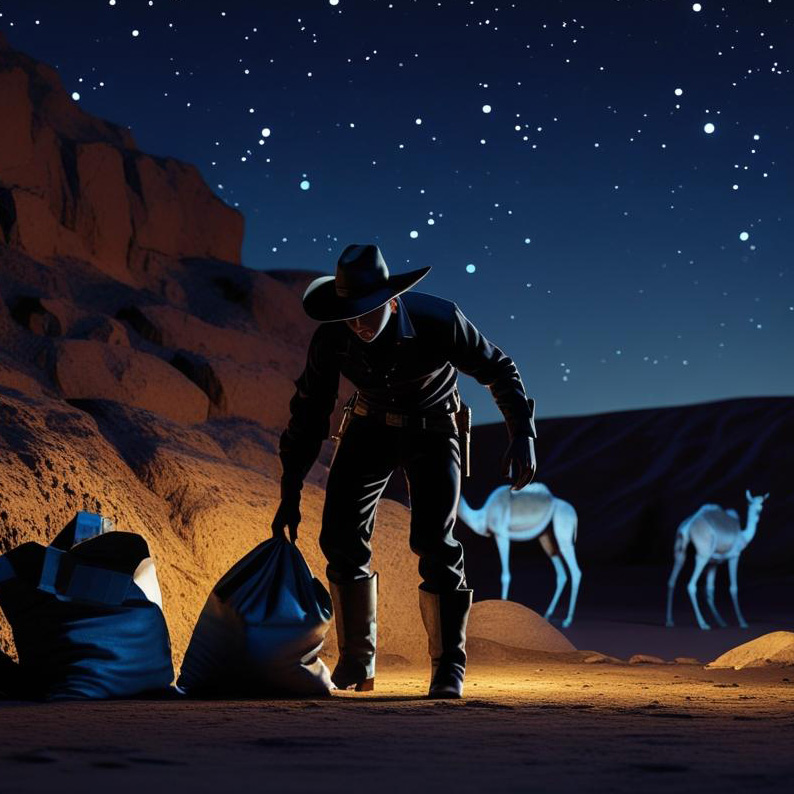
Mahomet’s homeland was the Suleman ranges, in the north-east of that vast and arid land. He learned, from the time he could walk, to work with camels. Often called dromedaries, or ushter in his native tongue, the camels of this region were famously white, with a flavour of meat revered across the sub-continent. Nomadic Balochis relied on camels for milk, clothing, meat, transport and shelter.
Mahomet had been born a twin, but his elder brother had not survived the umbilical cord that snaked around his neck and choked the life out of him. This was not a good omen, and a stigma followed the younger boy’s early life. He was constantly and unfavourably compared to the boy ‘who might have been.’
The Suleman ranges were rugged – a landscape resulting from chaotic geological faults, with sharp ridges formed of plate-like layers of sandstone and limestone. Survival was a struggle, and nothing was assured, not even tomorrow’s meal. Mahomet learned to be self-reliant, adventurous, and studious. He was clever in learning – able to count to one hundred, and perform basic mathematical equations – by the time he was ten. His reading of Arabic, necessary for study of the Koran, outpaced the lessons given in the shade of desert acacia trees and wild olives.
Mahomet, still a mere herdboy, paid attention when word reached the tribe of an Australian campaign to recruit cameleers and import camels. His cousin Natiq, five years older than Mahomet, became one of recruiter Samuel Stuckey’s 1865 shipment, transported from Karachi to Port Augusta on the schooner Blackwell, with thirty other cameleers and 124 camels. Amongst these were Natiq’s own animals – eight of the famed white camels from the Suleman Ranges.
A letter from Natiq arrived in 1869, praising his adopted land, and offering work for any young men of his clan interested in a new life. The Australian government were building a telegraph line across two-thousand-miles of desert and scrub – spanning the country from north to south. Camel teams, and cameleers to run them, were desperately needed. By the time Mahomet saw this letter, it had passed through many hands and was smudged with grime. The promise it contained, however, remained clear.
Few men were willing to break ties with their homeland, however, and head off across the sea to a life unknown. Wives and families were not permitted, by order of the South Australian government, so only single men were willing to embrace the opportunity.
Mahomet was one of these intrepid souls. He farewelled his mother and father, knowing that he would most likely never see them again, then walked the six camels he owned outright to Karachi, where he visited the agent Natiq had mentioned in his letter. He was given passage on a British steamship, travelling in steerage, cramped and ill-fed, while first class passengers strolled the promenade deck and whiled away the afternoons playing whist and drinking gin and tonic.
For the first two years in Australia, Mahomet worked for his cousin, running a train of the unique white camels, carrying stores between Port Adelaide and the ever-growing telegraph line, that mammoth project that proceeded like a spear into the wilderness. The camels worked ceaselessly, laden down with bales of cable, insulators, wrought iron poles and food supplies.
The watering points along the route soon became as familiar to Mahomet as the oases of home. Beltana, Strangways Spring, the Peake, and Charlotte Waters made the enterprise possible, were places that gave life to a generally dry wilderness.
After the first telegraph signal finally travelled all the way from Europe, across from Java, to Darwin and then south to Adelaide, Mahomet made a cash offer to buy three more camels from his cousin and go into business for himself. The deal was done over coffee in the Port Augusta camp, and an hour later Mahomet was as free as he had ever been in his life.
Heading north, up through the centre and into the burgeoning pastoral regions of the Gulf of Carpentaria, Mahomet specialised in provisioning stations, loading up with supplies at Normanton, Burketown, Southport and Georgetown. The majority of his cartage was foodstuffs, but he also carried specialist items: fabric and fine tools.
By 1874 he was married, in all but the legal meanings of that word, to a woman of the Wambaya people. Their first son died within an hour of his birth, on a dry track south of Calton Hills. Three living sons and two daughters followed.
Years later, on the day that he met Will Jones, Mahomet was an impressive figure. He was tall, almost six feet. His beard had been trimmed occasionally, but never shaved. He did not smoke tobacco or drink alcohol. Bitter coffee, spiced with cardamon, made in a saucepan each morning, was his only real vice, for the green tea he drank in preference to water could hardly be described as such.
Mahomet observed daily prayer at least three times each day, facing Mecca or as near an estimate as possible. He knew each of his camels by name – had delivered some of them with his own hands. He knew when the females came into season and could recognise pregnancy in the very early stages. He knew their quirks, and habits. They were part of his family.
Mahomet was not accepted by white society, though he was a familiar face to many. He was valued, and even liked. Yet he was not invited inside for tea and scones.
He and his family treated station owners and townspeople with gentle respect. Yet he referred to them with the word ajnabí, meaning ‘foreign.’ And so they remained. He was immersed in his family – his wife, fine sons and clever daughters. This was a life he had made for himself and would never wish to change.
Mahomet’s respect for this harsh and beautiful land grew over time, and the mother of his children was a storehouse of knowledge. Foods and medicines. Finding water. Reading the weather was something she taught him early.
On the route from Avon Downs to Alexandria, that day, he saw the storm coming and decided that it would be severe. He drove the camels hard, then steered for the hill of ribbon stone. He had his sons bring the camels in close, where they would get some protection. They erected a hide tent, with pegs driven deep into the ground.
He left this protection only to watch the party of horsemen that he had seen at Avon Downs ride in behind them, and their frenzied rush to gain shelter. He watched the pack horse stumble and fall.
They needed help. Mahomet had lived and worked in some of the remotest areas of the world. Assisting others was a tenet that he lived by.
***
The sight of Mahomet, appearing from the storm, his beard slick with rain, caused Little Blue, who was running beside Will, to start barking, and George the stallion to rear, heaving up on his forelegs and pawing at the air. Will leaned forwards in the saddle, waited for him to land back on all fours, then encouraged him to move on a few paces. Not only was the stallion unable to rear while walking, it took him out of the line of sight, of the stranger in the night.
Will stopped again, having come to the conclusion that the man on the rocks nearby meant them no harm. The rifle was an unusual one – very long and archaic. It was not pointed in a threatening way, but was being carried loosely. Besides, a flash of lightning allowed him to momentarily see the massed camels deeper in the arms of the hill – glowing almost ghostly white in the rain. This was not an armed attacker, but one of the ‘Afghans’ he had seen earlier, who they had followed on the trail.
‘Stop that,’ Will called to Little Blue, and the barking ceased. Then, to Mahomet, he called out, ‘Greetings there mate. Seems we’re in a spot of bother.’
‘You are carrying the mails, Ajnabí?’
‘That we are. An’ we’ve lost a horse with half the bags back up here.’
‘Wait,’ cried the Balochi cameleer. ‘We will help you.’
Will waited, while Mahomet called for a turbaned boy, who led a single white camel out of their camp, moving at a rapid pace. The older man waved an arm at Will to indicate that they should hurry, and Will got his mount moving, using only the vision afforded by lightning flashes to see the way ahead.
Even then, water from the rain was pouring off the brim of his hat, obscuring all but the near vicinity. The thunder resounded in his head, so his ears buzzed, and his limbs felt weak. He felt a wave of trepidation at what they might find up ahead.
The rain had still not abated when he spotted the wreckage, and the stricken horse, Flint, trying to gain his feet – half rolling – striving and falling back again. Broken panniers and shredded harness hung from his back. Will reined in and dismounted. The ground was strewn with mail bags and some supplies.
Will’s first thoughts, however, were for the horse. Seeing Poor Flint, who had carried Sam so faithfully on countless shared roads and trails, in such obvious pain, made his heart ache.
He squatted beside the injured horse. Others were coming up now – Mahomet and the boy with the camel, then Sam too walked out of the rain, his face mournful as he joined Will. He touched a hand to Flint’s neck, while the huge brown eyes swivelled plaintively.
They both knew that there was no hope or reprieve. The right leg was snapped clean through, below the knee, and the limb flopped uselessly. These bones, on a horse, were so thin and complex that it was rare to try to let one heal – and impossible on the trail.
‘I will do what must be done,’ said Sam.
Will went back to George, pulled his rifle from the scabbard, and handed it to Sam. The Cantonese man flicked the lever and held the muzzle close to the side of the horse’s head. The gunshot was muffled by the rain and the cloud, melding into the thunder and noise of the rain. The horse kicked once or twice and died.
By then Mahomet and his boy were lifting the mail bags and other rain-soaked gear into the panniers on the side of the camel. When this was done, they made a sombre procession back to Will’s camp.
The boy led the camel in close, and Lainey and Jim helped unload the mail bags, placing them with the other gear, which had been covered with a tarpaulin. Will hoped like hell that the contents of the bags would be dry – canvas was waterproof up to a point, and these would have been treated with paraffin or beeswax.
Mahomet pushed his face close to Will’s, ‘Would you come to our camp? We were here before the rain, and have dry ground.’
‘No, we’ll get something up now – we’ll be alright. Thanks to you and your boy – we are much obliged.’
Mahomet raised himself to his full height, and Will decided that there was something steady and dependable about him. A good man in a crisis.
‘We will speak again in the morning,’ said Mahomet. Then, with no fuss, he, the boy, and the camel disappeared into the chaos of that night.
***
The storm lasted for another hour, then moved on, leaving the country sodden, but the air so clear that the stars seemed close enough to touch. There was, fortunately, enough dry wood under the trees for a warming fire. The bedrolls were partly soaked, and the most cheerful thing was the mutton from Avon Downs, which Sam sawed into chops and fried in a pan.
Then, with the horses hobbled and belled, Lainey went on watch and the others settled down in their swags. For a long while Will was too worried for sleep. He had much to think on – the horse that needed to be buried in the morning and how to replace it – whether the contents of the mailbags might prove to be waterlogged and wrecked.
After a while, however, he drifted off into a deep sleep, from which he did not wake until it was his turn on watch. It was strange to wander the camp, hearing the deep, sawing bray of the camels nearby.
At three ‘o’clock in the morning by drovers’ time, Will finished his turn and kicked Lenny’s foot gently.
‘Your shift, mate.’
Lenny opened his eyes and sat up groggily. ‘Thanks mate, I’m on.’
Will went to his damp bedroll, sat down and took his boots off, before sliding under the blanket. He wanted to stay awake to keep an eye on Lenny, but he fell asleep as soon as he closed his eyes.
It must have been Little Blue who woke him, touching a wet nose to the side of the cheek. He opened his eyes. The moon was up now, but that was not what caught his attention. As well as the camels, horses and insects, he heard the sounds of shuffling paper and packaging.
Will sat up, seeing a shape at the mail packs, furtively rifling through them. He reached for his rifle, then paused. The figure, sorting through the mail, was Lenny. He was looking for something, it seemed.
This went on for some time, before Lenny suddenly seemed to relax. He held one item – a thick envelope – up to the moon and starlight, and Will heard his sigh of relief. It looked like nothing special, from that distance.
Surprisingly, Lenny put the envelope back with the other mail, shoved it all into the bag, and refastened the cords that secured it. This made no sense to Will at all. Confronting him now seemed to be the obvious thing to do, but might it not be better to let Lenny think that no one suspected him?
Will lay back down again, allowed Little Blue to wriggle a little closer and lay stiffly awake, worrying and thinking until dawn.
©2025 Greg Barron
Continued next Sunday
You can read this, and previous chapters on the website here: https://www.storiesofoz.com/category/will-jones-and-the-territory-mail/
Get previous Will Jones books, Will Jones and the Dead Man’s Letter, and Will Jones and the Blue Dog, here: https://ozbookstore.com/
 Stories of Oz
We’d love to hear your thoughts on this post!