
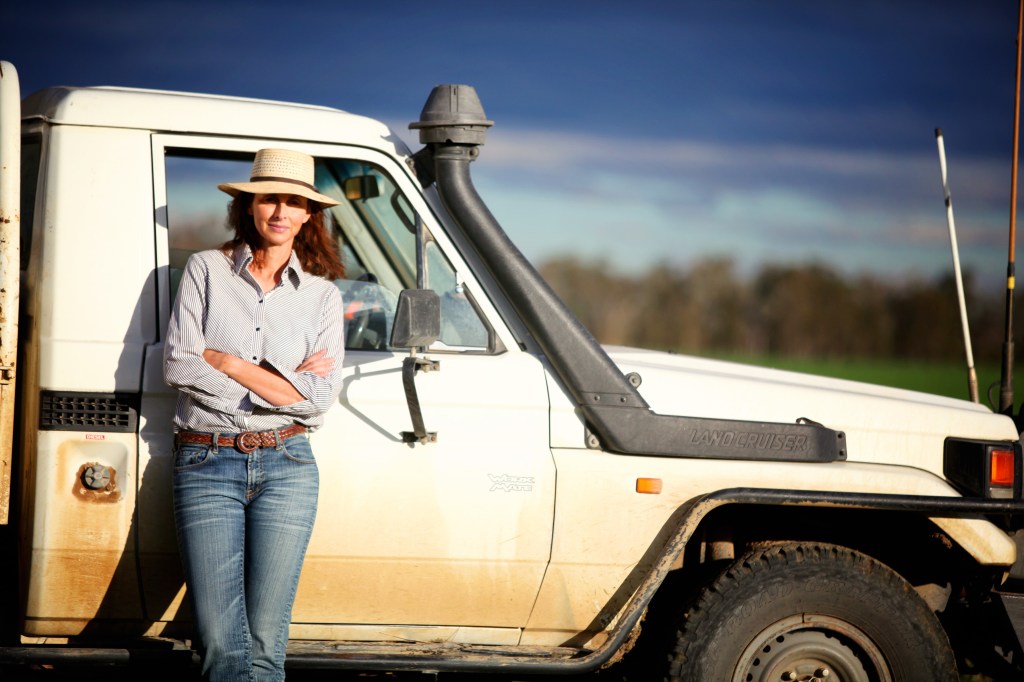
We asked Australian author Nicole Alexander to tell us about her life and how she started writing:
When my great-grandfather first selected our property in 1893 he chose a site for the homestead near the banks of the Whalan Creek, a major waterway in our area, days later local Aboriginals approached him and told him that the area was subject to heavy flooding and so on their advices he selected a new site some miles to the north on a high ridge. Just as well he did. Over the last 121 years we’ve experienced our fair share of droughts and floods but during the great flood of ’76 although the water lapped the homestead floorboards for six weeks and the flood boat was tied up at the back gate, the water never entered the house. Although we did have a lot of other visitors, snakes, spiders, centipedes …
Our property is located 110 kilometres north-west of Moree, near the village of Boomi, population 75. It’s a great place to live and work if you don’t mind putting up with the vagaries of the weather. Running an agricultural business in times of, ‘drought and flooding rains’ is not for the faint-hearted. Life here often reminds me of a line from the classic western, Red River. ‘I don’t like it real good and I don’t like it real bad. I just like it somewhere in-between’.
My commute to work involves a forty-five kilometre round trip along a dirt road to the main property, Murki Station where my parents live. With spring already sprung and hoped for rains yet to eventuate the road is pretty busy with kangaroos, foxes and wild pigs all out and about looking for feed, and it can become something of an obstacle course as I get closer to the main homestead with cattle and sheep also vying for road space. A typical work day for me starts at 7.30 am and could involve anything from mustering sheep and cattle, working in the stockyards, doing bookwork in the station office or checking cultivations with our agronomist. Murki is a mixed-agricultural property and we produce Hereford Beef, Merino wool, white Suffolk fat lambs, and our dry land crop programme includes: wheat, barley, oats, sorghum, faba beans and chickpeas.
I grew up on Murki and my early education included lessons through the mail via the Correspondence School in Sydney. My mother taught myself and my siblings around the dining room table as by that stage the old school-house on the property, which still stands had been converted into extra accommodation for jackeroos. Previously the schoolhouse was used up until the mid-1940s when my father and his sisters were educated there by a series of governesses. I say series as there were 15 of them and apparently only one left due to the isolation. What a worry.
I haven’t always lived in rural Australia. I spent time in the corporate world in both Sydney and Singapore before deciding to return in the early 1990s, for twelve months. I have to say that the longer I stayed on the property the more I appreciated working in the family business and I certainly didn’t miss the politics that can go with being involved with a large corporate. When I first returned to the bush, agriculture was still very much a male-dominated industry however I was fortunate as I was working with and for my father with a team of men, some of whom had been with us on and off for 40 years. We’re no different from any other industry. Granted our office ceiling is the sky but as with any job, timely management decisions, ability and perseverance delivers in the end.
We’re nine hour’s drive from Sydney, 6 hours from Brisbane and a good six hours from the coast, but despite the isolation, it’s a bush life for me.
Nicole Alexander is the author of five novels, including The Great Plains which is out now. Discover more about Nicole at www.nicolealexander.com.au or join her on facebook https://www.facebook.com/AuthorNicoleAlexander
 Stories of Oz
We’d love to hear your thoughts on this post!